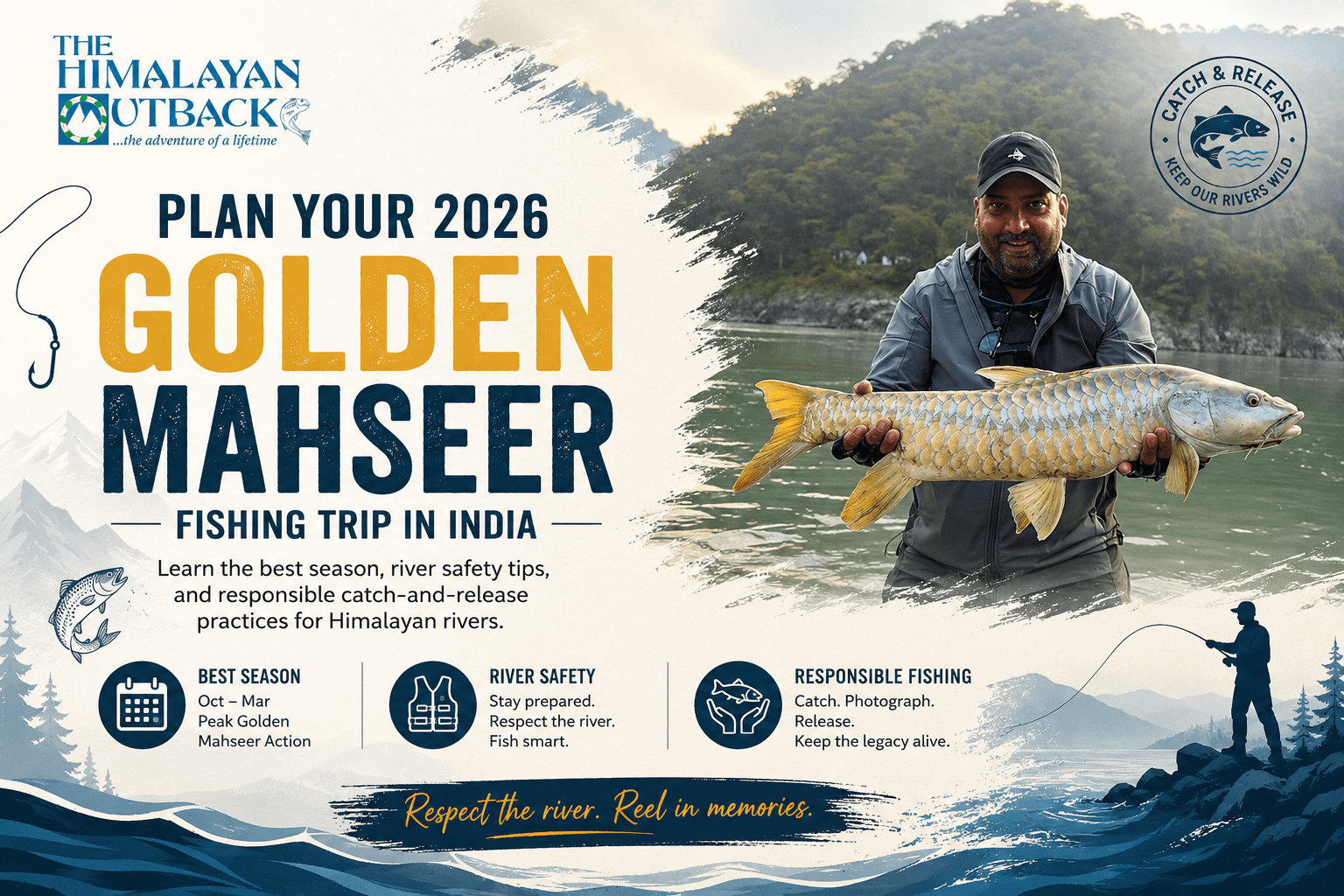
Quick answer: The Golden Mahseer is a prized freshwater sport fish found in India’s Himalayan rivers, celebrated for its strength and the challenge it offers anglers. Planning a successful trip in 2026 means understanding the fishing season, river conditions, safety, and responsible catch-and-release practices before you travel.
Few freshwater fish inspire the same respect among anglers as the Golden Mahseer. Found in the fast-flowing rivers of the Indian Himalayas, this legendary sport fish has drawn passionate anglers from across the world for generations. Its power, its wild surroundings, and the skill required to hook one make Mahseer fishing in India a bucket-list pursuit for serious sport fishing enthusiasts.
But a great fishing trip takes more than enthusiasm. To make the most of a 2026 trip, anglers need to understand when to go, how river conditions affect fishing, how to stay safe, and how to practice responsible catch-and-release. These factors shape both the quality of your experience and the health of the rivers you fish in.
This guide walks you through everything worth knowing before you plan a Golden Mahseer fishing trip. From season timing to safety and conservation, here’s how to approach one of India’s most rewarding angling adventures the right way.
What Is the Golden Mahseer?
The Golden Mahseer is a large freshwater fish native to the rivers of the Indian subcontinent, particularly the fast-moving waters of the Himalayan foothills. Known for its golden-hued scales and impressive fighting ability, it belongs to the carp family and thrives in clean, oxygen-rich rivers.
Anglers value the Golden Mahseer because it puts up a genuine fight. Hooking one in strong Himalayan currents tests patience, skill, and technique. That challenge is a big part of why the species has earned near-mythical status among sport fishers.
The Golden Mahseer depends on healthy, free-flowing rivers to survive. Because of this, responsible fishing matters enormously. Practicing catch-and-release and following local rules helps protect this fish so future generations of anglers can enjoy the same thrill.
Why Is Golden Mahseer Fishing Popular in India?
Golden Mahseer fishing combines two things anglers love: a demanding catch and a stunning natural setting. The fish is hard-fighting and unpredictable, which appeals to those who want more than an easy day on the water.
The Himalayan rivers add to the appeal. Fishing here means casting your line surrounded by forested mountains, clear water, and the sounds of Himalayan wildlife. For many, the scenery is as memorable as the fishing itself.
There’s also the adventure factor. Reaching prime Mahseer waters often involves travel into remote, peaceful corners of India. This mix of sport, landscape, and exploration makes Mahseer fishing trips a favorite among adventure travelers and experienced anglers alike. Increasingly, it also connects with a wider interest in responsible outdoor tourism, where the goal is to enjoy nature without harming it.
Golden Mahseer Fishing Season in India 2026
Timing is one of the most important parts of planning a Mahseer fishing trip. Fishing conditions are not fixed, they shift with the seasons and with the specific river you choose.
Several factors influence the fishing season, including river levels, rainfall, water clarity, and temperature. Monsoon rains, for example, can raise water levels and reduce clarity, making fishing more difficult. Cooler, clearer conditions often create better opportunities.
Accessibility matters too. Remote Himalayan rivers can be harder to reach during certain months, and local regulations may limit fishing at specific times to protect the fish.
For 2026, there is no single season that applies to every Mahseer river in India. Conditions vary widely from one destination to another. The smart approach is to confirm current river conditions and any applicable fishing rules for your chosen location before you finalize your plans. Working with an experienced local operator makes this far easier.
What Is the Best Time for Mahseer Fishing?
The best time to fish for Golden Mahseer depends on when river conditions favor active, feeding fish. When water is clear and levels are stable, fish tend to be more active and easier to target.
River conditions influence nearly everything about your trip. Clarity affects how fish respond to lures and flies. Water levels affect which sections of the river are accessible. Temperature shifts influence fish behavior throughout the day.
Some anglers travel in the cooler, drier windows before and after the monsoon, when many Himalayan rivers run clearer. However, these general windows are not guaranteed. What works well on one river may not apply to another.
Because of this, treat any suggested months as a starting point rather than a promise. Always check current conditions for your specific destination before booking.
Where Can You Experience Mahseer Fishing in India?
India’s Himalayan rivers are the heartland of Golden Mahseer fishing. These waters wind through remote valleys and forested hills, offering both a challenging catch and a beautiful backdrop.
One well-known destination for this kind of experience is the Saryu River in the Kumaon region of Uttarakhand. This river, along with its confluence with the Mahakali River near Pancheshwar, has long been associated with Mahseer fishing in the Himalayas. Anglers interested in a guided Mahseer fishing experience often look to this area for its combination of wild scenery and sport fishing tradition.
Keep in mind that fishing spots, access, and local rules can change from season to season. Rather than assuming availability, check current conditions and regulations for your chosen river before you travel. A trusted local operator can help you understand what’s realistic for the time of year you plan to visit.
Quick Answer: When Is the Best Time for Golden Mahseer Fishing in India?
The best time for Golden Mahseer fishing depends on the river, rainfall, water level, water clarity, local regulations, and seasonal conditions. Anglers planning a 2026 trip should confirm current river conditions and fishing rules for their chosen destination rather than relying on one fixed season that applies to all Indian Mahseer rivers.
How to Prepare for a Mahseer Fishing Trip
Good preparation turns a good fishing trip into a great one. Start by checking the local fishing regulations for your destination, since rules can differ from river to river.
Next, learn as much as you can about river conditions for the time you plan to visit. This helps you pack the right gear. Choose fishing equipment suited to strong currents and hard-fighting fish, and bring backups where you can.
Clothing matters more than many first-timers expect. Himalayan weather can change quickly, so pack layers, quick-drying clothes, and appropriate footwear. Carry essential safety gear, stay hydrated, and be ready for shifts in temperature throughout the day.
Perhaps most importantly, lean on the guidance of experienced local operators. Guides who know the river well can help you fish more effectively and stay safe on unfamiliar water.
River Safety Tips for Mahseer Fishing
Himalayan rivers are beautiful, but they demand respect. Never underestimate the power of river currents, which can be far stronger than they look.
Avoid entering unfamiliar water, and be careful around wet, slippery rocks along the banks. Sturdy, appropriate footwear helps you keep your footing on uneven terrain.
Keep an eye on the weather. Conditions in the mountains can change fast, and rising water levels can quickly turn a calm stretch dangerous. Carry essential safety equipment and know the basic emergency procedures for your location.
It’s also wise to avoid fishing alone in remote or unfamiliar terrain. Fishing with a local guide adds an important layer of safety, since they understand the river’s moods and can respond if something goes wrong. Above all, respect changing river and weather conditions rather than pushing your luck.
What Is Catch-and-Release Fishing?
Catch-and-release fishing means landing a fish, then returning it to the water alive. It’s a cornerstone of responsible sport fishing, especially for prized species like the Golden Mahseer.
The goal is simple: enjoy the challenge and thrill of the catch while minimizing stress and injury to the fish. Instead of keeping the fish, the angler carefully releases it back into the river.
This approach helps protect fish populations and keeps rivers healthy. For a species that means so much to anglers, catch-and-release helps ensure the sport can continue for years to come.
Golden Mahseer Catch-and-Release Guide
Responsible handling makes catch-and-release effective. Here are the key principles to keep in mind when releasing a Golden Mahseer.
Minimize the Time Out of Water
The less time a fish spends out of water, the better. Keeping handling brief helps reduce stress and gives the fish a stronger chance of recovering once it’s released.
Handle the Fish Carefully
If you must handle the fish, wet your hands first. This helps protect the fish’s natural protective coating. Support the fish gently and follow your guide’s instructions rather than gripping it tightly.
Avoid Unnecessary Handling
Try not to repeatedly touch, move, or pose with the fish. Every extra moment of handling adds stress, so keep contact to what’s genuinely necessary.
Use Appropriate Fishing Equipment
Suitable tackle helps you land the fish more efficiently. Well-matched equipment can shorten the fight, which reduces exhaustion and stress on the fish before release.
Release the Fish Responsibly
Return the fish to suitable water as gently and quickly as you can. Follow your guide’s advice on how and where to release, giving the fish the best chance to swim off strongly.
Why Responsible Golden Mahseer Fishing Matters
Responsible angling and healthy rivers go hand in hand. Every careful release, every followed rule, and every respectful choice helps protect the waters that make Mahseer fishing possible.
Reducing unnecessary stress on fish supports their recovery after release. Respecting river environments and local wildlife keeps these ecosystems intact. Following local fishing rules ensures your trip contributes to conservation rather than harm.
There’s a bigger picture, too. Responsible practices help sustain outdoor experiences for the future. By fishing thoughtfully today, anglers help make sure the next generation can enjoy the same thrill of hooking a wild Golden Mahseer.
What Should You Know Before Booking a Mahseer Fishing Trip?
Before booking, take time to understand the fishing location and the conditions you can expect. River conditions and season timing shape the entire experience, so ask how these align with your travel dates.
Local fishing regulations deserve close attention. A reputable operator will be transparent about the rules, the fishing methods used, and their catch-and-release policy. These details tell you a lot about how seriously they take conservation.
Guide support and safety arrangements are equally important. Experienced guides improve both your results and your safety, especially on unfamiliar Himalayan rivers. Ask about their team, their knowledge of the river, and the safety measures they have in place.
Finally, clarify the practical side. Understand the travel requirements, what equipment you should bring versus what’s provided, how weather may affect plans, and what’s included in the trip. Clear answers here help you avoid surprises later.
When comparing operators, it also helps to do a little online research. Checking The Himalayan Outback’s Google Business Profile is a useful way to find available business information, reviews, photos, and other details that can help you decide before making an enquiry. This kind of research gives you a clearer sense of what an operator offers and how past guests have experienced their trips.
Experience Mahseer Fishing with The Himalayan Outback
For anglers who want to experience Golden Mahseer fishing in a genuine Himalayan setting, The Himalayan Outback offers guided fishing trips on the Saryu River. Based in the Kumaon region of Uttarakhand, their fishing camp sits in a remote and scenic stretch of river country near Pancheshwar.
The experience combines Mahseer fishing with dramatic Himalayan river landscapes, adventure, and a focus on responsible angling. Guests fish alongside an experienced team of fishing guides who know the river well and can help both seasoned anglers and newcomers approach the sport thoughtfully.
If a guided Golden Mahseer fishing trip on a Himalayan river appeals to you, it’s worth exploring what The Himalayan Outback offers. As always, confirm current trip conditions and requirements directly before planning your visit.
Frequently Asked Questions
What is the Golden Mahseer?
The Golden Mahseer is a large freshwater sport fish found in India’s Himalayan rivers. Part of the carp family, it’s prized by anglers for its golden scales, strength, and the challenge it offers in fast-flowing water.
When is the best time for Mahseer fishing in India?
It depends on the river. Fishing conditions vary with rainfall, water levels, clarity, temperature, and local rules. There’s no single season for all Mahseer rivers, so confirm current conditions for your chosen destination before planning a 2026 trip.
Is Golden Mahseer fishing suitable for beginners?
Yes, beginners can enjoy Mahseer fishing, especially with experienced guides. Guided trips help newcomers learn techniques, understand river safety, and practice responsible catch-and-release while still experiencing the thrill of this challenging sport fish.
What does catch-and-release mean in Mahseer fishing?
Catch-and-release means landing a fish and returning it to the water alive. It reduces stress and injury to the Golden Mahseer, helping protect fish populations and support healthy rivers for future anglers.
Plan Your Golden Mahseer Fishing Experience
A memorable Mahseer fishing trip comes down to planning around the right factors: season, river conditions, safety, local rules, and responsible catch-and-release. Get these right, and you set yourself up for an adventure that respects both the fish and the wild rivers it calls home.
The reward is more than just the catch. It’s the challenge, the Himalayan scenery, and the satisfaction of fishing in a way that keeps these waters healthy for years to come.
If you’re ready to explore a Golden Mahseer fishing experience in India, reach out to The Himalayan Outback to learn more about Mahseer fishing opportunities, current trip conditions, and planning requirements. Enquire about a Mahseer fishing trip on the Saryu River to start planning your Himalayan adventure.