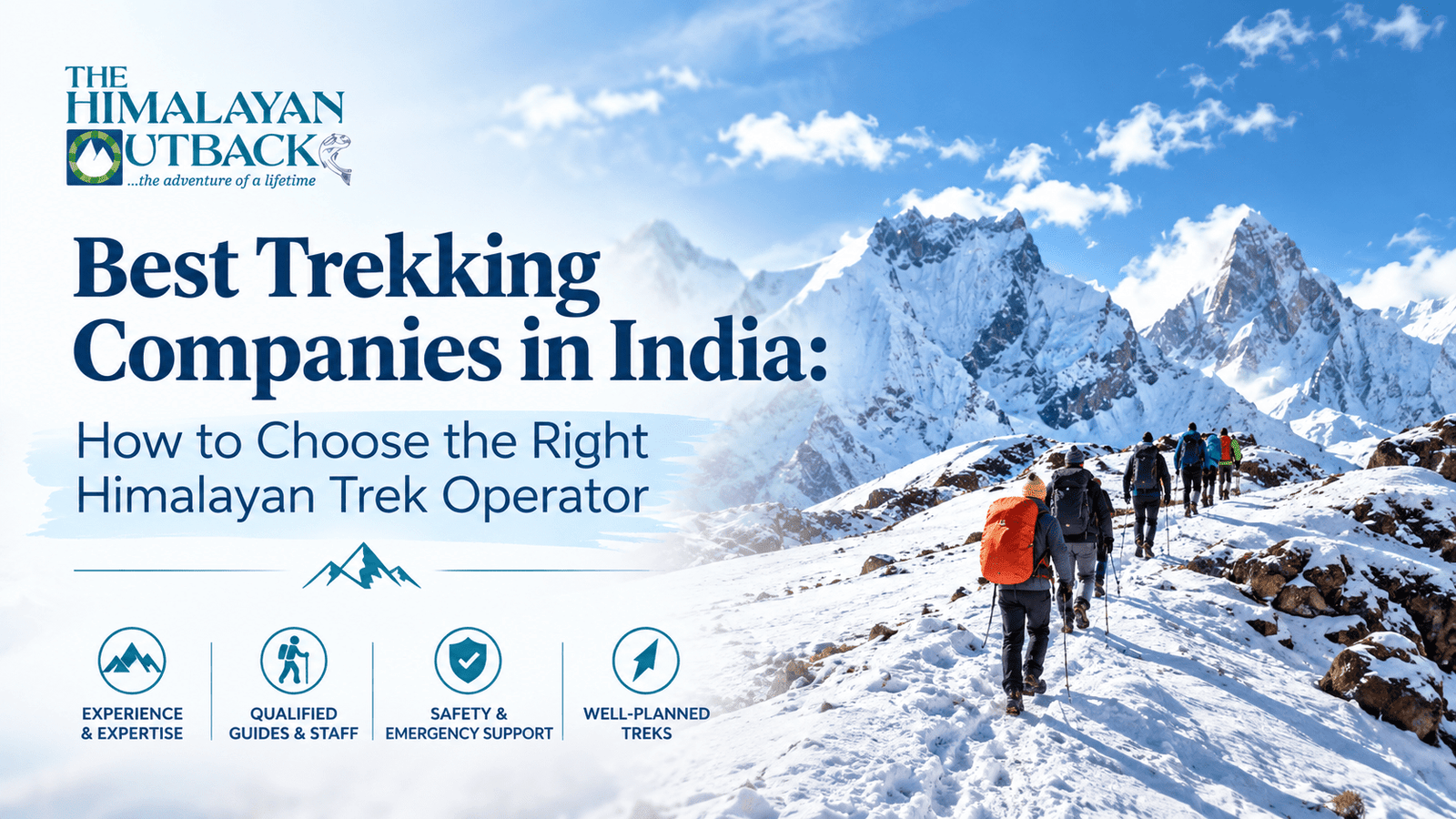
Quick answer: Choosing the right trekking company in India means evaluating experience, guide quality, safety protocols, transparent inclusions, genuine reviews, and communication before booking — not just comparing prices. A reliable operator supports trek planning, permits, accommodation, and emergency preparedness, directly shaping your overall Himalayan trekking experience.
Planning a Himalayan trek involves more than picking a scenic destination or hunting for the lowest price. Trekking in India spans wildly different terrains, altitudes, and seasons, and the company you choose to guide you through it can determine whether your trip is safe, well-organized, and genuinely memorable.
Many first-time trekkers assume that any operator offering a trek to a popular route will provide a similar experience. In reality, the quality of planning, guides, safety protocols, and on-ground support can vary enormously between companies. A well-run trekking company handles far more than logistics — it manages route knowledge, permits, accommodation, meals, transportation, and emergency preparedness, all of which affect how smoothly your trek unfolds.
So how do you know which trekking company is actually right for your Himalayan trek? This guide breaks down the practical factors worth evaluating before you book, so you can approach trekking in India with confidence rather than guesswork.
Why Choosing the Right Trek Operator Matters
Selecting a trekking company is one of the most consequential decisions in planning a Himalayan trip. A dependable operator coordinates trek planning, route information, guides and support staff, accommodation, meals, transportation, permits, safety procedures, and emergency support. Miss any one of these, and a trek that should have been rewarding can quickly become stressful or even dangerous.
Different trekkers need different levels of support. A solo traveler with prior high-altitude experience may only need route guidance and permits, while a family or a group of beginners might need a fuller package that includes acclimatization planning, porters, and closer guide supervision. Understanding your own needs first makes it easier to judge whether an operator’s offering is actually a good fit.
Check the Company’s Trekking Experience
Experience is one of the clearest indicators of reliability when comparing trekking companies in India. Consider how long the company has operated, its familiarity with specific Himalayan routes, and its understanding of local terrain and seasonal shifts.
An operator with years of on-ground experience in a region typically has better insight into route conditions, weather patterns, and how to adjust plans when circumstances change. This matters more in the Himalayas than in most other trekking destinations, since altitude, terrain, and weather can vary dramatically even within the same state. Look for evidence of experience across different trek difficulties, not just easier, well-trodden routes.
Evaluate the Guides and Trek Staff
The guides assigned to your trek can make or break the experience. Beyond simply knowing the path, a good guide should demonstrate strong route knowledge, clear communication, an understanding of altitude and terrain-related risks, sound group management skills, and the ability to respond calmly if something goes wrong.
A responsible guide manages the entire trekking experience, not just the walking. That includes pacing the group appropriately, watching for signs of altitude sickness, and keeping communication open so trekkers feel informed rather than simply led. When researching operators, ask about guide qualifications and experience levels directly.
Look at Safety and Emergency Preparedness
Safety deserves careful attention before booking any Himalayan trek. Before committing, ask potential operators about their emergency procedures, first-aid availability, communication systems in remote areas, weather monitoring practices, altitude-related protocols, evacuation planning, and guide-to-group ratios.
Himalayan terrain can be unpredictable, and remote sections of a trek often have limited connectivity or access to medical help. A trustworthy operator should be able to explain its safety procedures clearly and confidently, without dismissing your questions. If a company is vague or evasive about safety planning, treat that as a warning sign.
Understand the Trek Difficulty
Trek difficulty should guide your choice as much as scenery does. Factors like fitness level, previous trekking experience, altitude, distance, terrain, duration, weather, and elevation gain all influence how demanding a trek will feel.
There’s a meaningful difference between an operator that simply sells a trek package and one that helps you honestly assess whether that trek suits your ability. A trustworthy company will ask about your fitness and experience before recommending a route, rather than pushing you toward whichever trek is easiest to sell.
Check What Is Included in the Trek Package
Trek packages can look similar on the surface while differing significantly in what they actually include. Read inclusions and exclusions carefully. Common inclusions may cover accommodation, meals, a trek guide, support staff, permits, transportation, equipment where applicable, and camping arrangements.
Just as importantly, check for potential additional charges — equipment rental, permit fees, or transportation add-ons can change the total cost significantly. Understanding exactly what’s covered helps you compare trekking packages in India on equal terms, rather than comparing headline prices alone.
Comparing Trekking Companies at a Glance
|
Factor |
What to Look For in a Trek Operator | Why It Matters |
| Experience | Proven Himalayan trekking experience |
Better route and logistical knowledge |
|
Guides |
Experienced and responsible guides | Better support during the trek |
| Safety | Clear emergency procedures |
Important in remote terrain |
|
Trek Difficulty |
Transparent difficulty information | Helps travelers choose appropriately |
| Inclusions | Clearly explained package details |
Avoids unexpected costs |
|
Group Size |
Clearly communicated group structure | Affects trekking experience |
| Equipment | Clearly stated equipment/support |
Helps travelers prepare |
|
Reviews |
Genuine traveler feedback | Provides useful real-world insight |
|
Communication |
Responsive pre-trip support |
Makes planning easier |
| Sustainability | Responsible local practices |
Supports the environment and communities |
Read Genuine Reviews and Testimonials
Reviews offer a window into how a trekking company actually performs, but they’re most useful when read carefully. Look for recent, detailed reviews that mention specific experiences with guides, safety, organization, communication, accommodation, and food.
Star ratings alone don’t tell the full story. A company with a high average rating but several detailed complaints about disorganized logistics or unresponsive guides deserves more scrutiny. Look for consistent patterns across multiple reviews rather than judging based on a handful of glowing or negative comments.
Compare Price With Overall Value
The cheapest trekking company isn’t always the best value. Lower prices sometimes reflect fewer safety measures, less experienced guides, more basic accommodation, or reduced support staff. When comparing costs, weigh what’s actually included — safety standards, guide experience, food quality, transportation, group size, permits, and equipment — rather than the number on the price tag alone.
A slightly higher price that includes experienced guides, proper safety planning, and transparent logistics often represents better value than a bargain trek with hidden gaps in support.
Check Communication Before Booking
How an operator communicates before you book often predicts how it will handle your trek. A reliable company should answer questions clearly about trek difficulty, fitness requirements, itinerary details, packing recommendations, accommodation, meals, transportation, weather expectations, safety measures, and cancellation or rescheduling policies.
If a company is slow to respond, vague in its answers, or unwilling to address specific concerns, that’s worth factoring into your decision. You should feel comfortable asking questions and confident in the answers before committing.
Consider Local Knowledge and Responsible Trekking
Local knowledge adds real value to a Himalayan trekking experience — it shapes route choices, timing, and how well an operator can adapt to conditions on the ground. Responsible trekking practices matter just as much. Look for operators that respect local communities, avoid littering, follow marked routes, respect wildlife, minimize environmental impact, and support local economies through employment and sourcing.
Responsible tourism isn’t a separate consideration from trek quality — the two are closely connected, since operators who invest in their local relationships and environment tend to run more thoughtful, well-supported treks.
How to Compare Trekking Companies Before Booking
Once you’ve gathered information, compare operators against a consistent checklist:
- Trek experience and route familiarity
- Guide qualifications and group management skills
- Safety standards and emergency preparedness
- Genuine, detailed reviews
- Clear itinerary and inclusions/exclusions
- Group size and structure
- Responsiveness and quality of communication
- Cancellation and rescheduling policies
- Responsible tourism practices
- Overall value relative to price
Running potential operators through this list makes it easier to spot the differences that matter, rather than getting swayed by marketing alone.
Why The Himalayan OutBack Can Be Considered
For travelers exploring mountain trekking in India, The Himalayan OutBack is one option worth researching. The operator works across Himalayan routes and offers guidance on trip planning and the practical requirements involved in organizing a trek — details that matter when you’re weighing the factors outlined above.
As with any trekking company, it’s worth applying the same evaluation criteria discussed in this guide: ask about experience, guide qualifications, safety procedures, and package inclusions before making a decision.
Planning Your Himalayan Trekking Experience
Trekking in India offers extraordinary variety, from high-altitude passes to forested valley trails, but the quality of that experience depends heavily on the operator behind it. Taking the time to evaluate experience, guides, safety measures, inclusions, reviews, and communication puts you in a far stronger position to choose confidently.
If you’re planning a Himalayan trekking experience and want to discuss trek options, difficulty levels, or trip requirements, consider reaching out to The Himalayan OutBack to talk through your preferred trek, experience level, fitness, and group needs before booking.
Frequently Asked Questions
How do I choose the right trekking company in India?
Evaluate the company’s Himalayan experience, guide qualifications, safety procedures, genuine traveler reviews, package inclusions, and responsiveness to questions. Comparing these factors together, rather than focusing on price alone, helps identify a reliable operator.
What should I check before booking a Himalayan trek?
Review the trek’s difficulty level, detailed itinerary, safety and emergency procedures, what’s included in the package, guide experience, and any preparation requirements like fitness or gear needs.
Is trekking in India suitable for beginners?
Yes. Beginners can choose treks suited to their fitness level and experience, typically shorter, lower-altitude routes with strong guide support. A good operator will help assess which trek difficulty matches your ability.
How can I plan a Himalayan trek with The Himalayan OutBack?
Reach out directly to discuss your preferred trek, fitness and experience level, group size, and travel preferences, so the itinerary and support can be tailored to your needs.