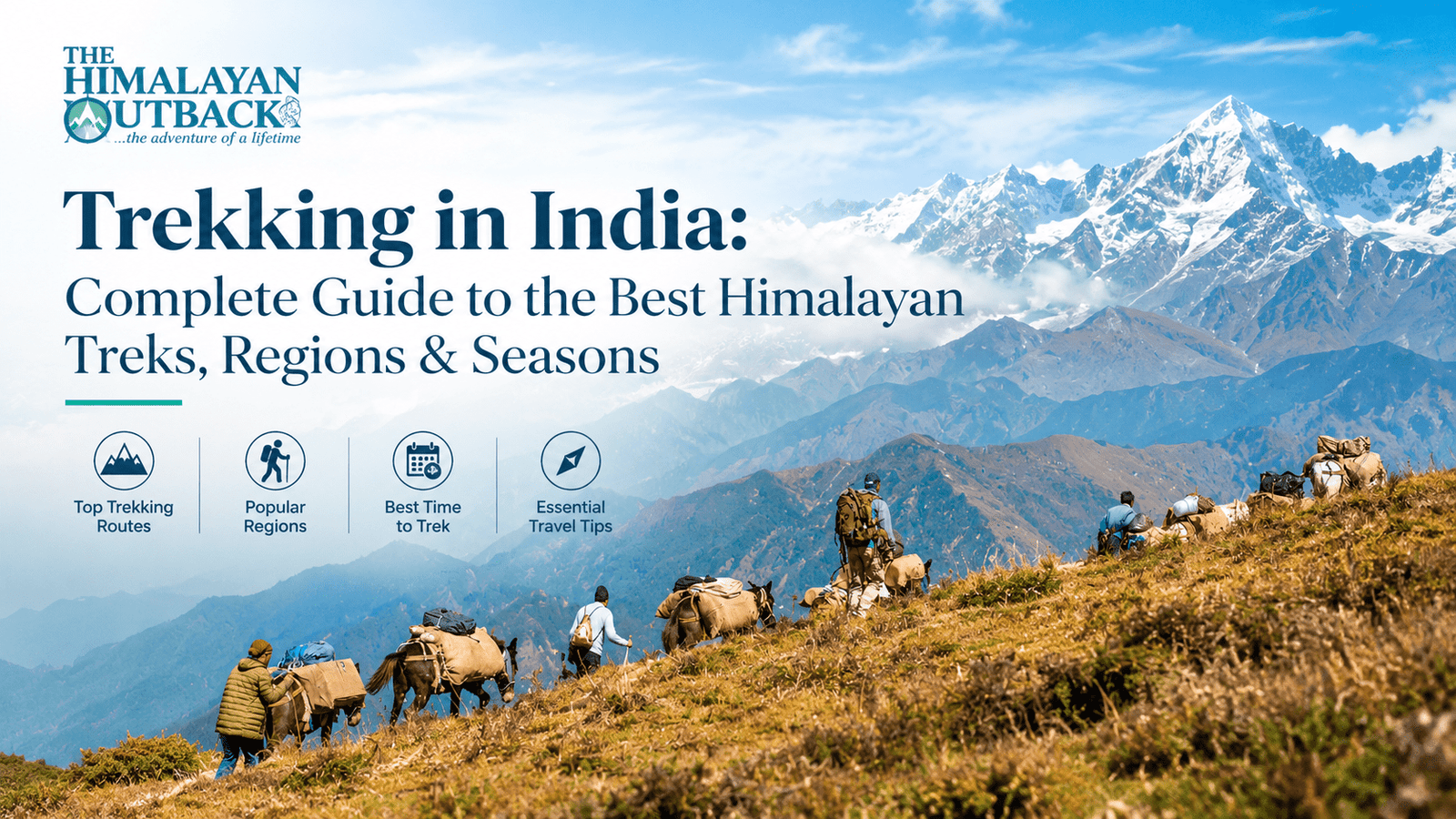
Quick answer: Trekking in India spans four major Himalayan regions—Himachal Pradesh, Uttarakhand, Jammu and Kashmir, and Ladakh—each offering distinct landscapes, altitudes, and seasonal windows. The right trek depends on your experience level, fitness, and preferred season, ranging from beginner-friendly meadow walks to demanding high-altitude routes requiring careful acclimatization.
Few countries pack as much trekking diversity into one mountain range as India does. From gentle alpine meadows in Himachal to the stark, high-altitude terrain of Ladakh, trekking in India offers something for nearly every kind of adventurer. A first-time trekker might spend three days wandering through pine forests and quiet villages, while an experienced mountaineer could be tackling a multi-day pass crossing at over 15,000 feet just a few hundred kilometers away.
This variety is exactly what makes planning a trek in India both exciting and a little overwhelming. The Himalayas stretch across multiple states, each with its own climate patterns, terrain types, and trekking seasons. Choosing the wrong combination of region and season can mean the difference between a comfortable adventure and a frustrating one.
This guide breaks down the major Himalayan trekking regions, explains how seasons affect trail conditions, and helps you match a trek to your experience level. Whether you’re planning your first Himalayan trek or your tenth, understanding these fundamentals will help you make a more informed choice.
Why Trekking in India Offers So Many Different Experiences
India’s trekking appeal comes down to sheer geographic range. The Himalayas here aren’t a single, uniform mountain range—they shift dramatically in character as you move from east to west and from foothill to high peak.
In one region, you’ll find dense forest trails and rhododendron groves. A few hundred kilometers away, the landscape turns into cold desert, with jagged peaks and barely any vegetation. This is what makes trekking in India so distinctive: the same broad mountain system produces alpine meadows, glacial valleys, remote mountain passes, and culturally rich villages, sometimes within a single state.
Altitude plays a major role too. Treks can range from moderate elevations of 8,000–10,000 feet to high-altitude routes crossing 16,000 feet or more. Climate varies just as much, with some regions receiving heavy monsoon rainfall while others, like Ladakh, sit in a rain shadow and stay dry for most of the year.
Because of this range, no single “best trek” exists. The right choice depends on what kind of landscape, difficulty, and season you’re looking for.
The Major Himalayan Regions for Trekking in India
Four regions dominate the Himalayan trekking scene in India, and each has its own personality. Choosing between them comes down to a few practical factors: the season you’re traveling in, your experience level, the landscape you want to see, the altitude you’re comfortable with, and how many days you have available.
Himachal Pradesh
Himachal Pradesh is often the starting point for many trekkers exploring the Indian Himalayas, and it’s easy to see why. The state offers an unusually wide spread of landscapes within relatively short distances.
Areas like Kullu and the Manali region are known for lush valleys, pine forests, and accessible trailheads, making them popular with trekkers who want scenic routes without extreme difficulty. Further into the mountains, Spiti and Kinnaur reveal a completely different side of Himachal—high-altitude, arid, and dramatically beautiful, closer in feel to the Tibetan plateau than to the green valleys below. The Dhauladhar range, visible from towns like Dharamshala, adds another layer of options with its steep ridgelines and panoramic views.
What makes Himachal so appealing is this range of intensity in one state. A trekker can choose a moderate valley walk one year and a high-altitude Spiti crossing the next, all within the same broader region.
Uttarakhand
Uttarakhand holds a special place in Himalayan trekking in India, partly because it’s home to some of the most iconic mountain views in the country. This is a region defined by alpine meadows, dense forests, and close-up views of major peaks.
The appeal here often centers on seasonal trekking experiences. Meadows that stay snow-covered in winter transform into carpets of wildflowers by early summer, drawing trekkers who want to time their trip around specific landscapes. Uttarakhand also offers routes suited to different experience levels, from shorter meadow walks accessible to first-timers to longer high-altitude treks for those with more mountain experience.
The state’s trekking infrastructure, developed over decades, also makes it a practical entry point for travelers new to Himalayan trekking in India.
Jammu and Kashmir
Kashmir has long been associated with some of the most scenic trekking landscapes in the Himalayas. Alpine lakes, expansive meadows, and dramatic mountain valleys define much of the region’s trekking appeal.
Summer is typically when this region comes alive for trekkers, as snow melts to reveal grazing meadows and turquoise lakes framed by peaks. The trekking experience here tends to be less about extreme altitude and more about immersive scenery—walking through valleys that shift from forest to open meadow within a single day’s hike.
As with any Himalayan region, trail conditions and accessibility can vary by year and specific route, so checking current conditions before finalizing plans is worthwhile.
Ladakh and the Trans-Himalayan Region
Ladakh offers something entirely different from the greener regions further south and west. This is high-altitude, trans-Himalayan terrain—dry, stark, and shaped by wind and rock rather than forest and rainfall.
Trekking here typically means higher base elevations from the start, with many routes beginning above 10,000 feet and climbing significantly from there. The landscape is remote, with wide valleys, dramatic rock formations, and a sense of isolation that’s hard to find elsewhere in the Himalayas.
Because of the altitude involved, trekking in Ladakh requires careful preparation and proper acclimatization. Travelers should plan for extra time to adjust before undertaking any significant elevation gain, and route-specific guidance from experienced operators is particularly valuable in this region.
Best Himalayan Trekking Regions in India at a Glance
Comparing these regions side by side can help clarify which one aligns with your interests. Keep in mind that conditions vary by specific route, trek duration, and year, so this table offers a general overview rather than a fixed guarantee.
| Trekking Region | Typical Landscape | Suitable Season | General Experience |
| Himachal Pradesh | Valleys, mountains and high-altitude terrain | Varies by trek and altitude | Diverse trekking options |
| Uttarakhand | Meadows, forests and Himalayan views | Seasonal | Suitable for different experience levels |
| Jammu & Kashmir | Alpine meadows and mountain valleys | Mainly seasonal | Scenic mountain trekking |
| Ladakh | High-altitude and dry Himalayan terrain | Seasonal | More altitude-focused experiences |
Best Seasons for Trekking in India
There’s no universal “best” season for trekking in India—it depends heavily on the region, the altitude of the trek, and the kind of experience you’re after. A season that’s perfect for a Himachal valley walk might be entirely unsuitable for a high-altitude Ladakh crossing.
Summer Trekking
Summer is generally considered a favorable window for trekking in many Himalayan regions, particularly those at higher elevations that remain snowbound earlier in the year. Warmer temperatures often open up access to higher routes, and landscapes tend to be at their greenest in regions like Uttarakhand and Himachal.
That said, specific weather conditions can’t be guaranteed for any given trip, and trail access still depends on that year’s snowmelt and local conditions.
Monsoon Trekking
Monsoon season brings a different kind of appeal, along with real challenges. Rain can significantly affect trail conditions in many regions, particularly in the wetter parts of Himachal and Uttarakhand, where landslides and slippery paths become more common.
Some rain-shadow areas, such as parts of Ladakh and Spiti, are less affected by monsoon weather and can still be viable during this period. Trekkers considering a monsoon trip should choose routes carefully and travel with updated local guidance, since conditions can change quickly and vary by specific trail.
Autumn Trekking
Many experienced trekkers consider autumn a favorable time for trekking in several Himalayan regions. Post-monsoon skies often bring clearer mountain visibility when conditions cooperate, and the landscape transitions into golden and amber tones that differ from the greenery of summer.
Comfortable trekking temperatures are common during this period in many regions, though this depends on specific altitude and location, so it’s worth confirming conditions for your chosen route.
Winter Trekking
Winter trekking holds particular appeal for travelers drawn to snow-covered mountain landscapes and quieter trails. Some lower-altitude routes remain accessible during this period, offering a starkly different experience from the greener months.
However, winter conditions can increase overall difficulty, with cold temperatures, shorter daylight hours, and potential snow blocking higher routes. Some treks may become inaccessible entirely during peak winter, while others require experienced guidance to navigate safely.
How to Choose the Right Trek Based on Your Experience Level
The most rewarding trek isn’t necessarily the highest or most difficult one. It’s the one that matches your fitness, experience, and comfort level.
A few factors are worth weighing before committing to a route: your previous trekking experience, current physical fitness, how many days you can commit, the amount of daily walking involved, the altitude you’ll reach, the terrain type, expected weather, and simply how much discomfort you’re willing to tolerate for the sake of the view.
First-time trekkers are generally better served starting with a shorter, well-guided route at moderate altitude before attempting anything more demanding. Building experience gradually, rather than jumping straight into a high-altitude multi-day trek, tends to make for a safer and more enjoyable introduction to Himalayan trekking in India.
Popular Types of Trekking Experiences in India
Trekking in India isn’t a single kind of activity—it covers a wide spectrum of experiences that suit different goals and skill levels.
Beginner-friendly Himalayan treks tend to involve shorter distances, lower altitudes, and well-established trails, often set in regions like Uttarakhand or lower Himachal. These routes introduce trekkers to mountain walking without the added complexity of extreme elevation.
High-altitude trekking sits at the other end of the spectrum, involving routes that climb well above 12,000 feet and demand proper acclimatization, fitness, and often prior experience. Alpine meadow treks, common in Uttarakhand and Kashmir, offer a gentler middle ground, combining scenic reward with manageable difficulty.
Mountain pass treks add another layer of challenge, requiring trekkers to cross high saddles between valleys, often at significant elevation. Snow treks, generally undertaken in winter or at very high altitudes, appeal to those seeking a more extreme and visually striking experience. Multi-day expeditions, which can stretch beyond a week, combine several of these elements and are typically reserved for trekkers with solid prior experience.
What Makes Himalayan Trekking Different from Other Adventure Travel?
Himalayan trekking carries a distinct character that separates it from most other adventure travel. Constantly changing terrain, shifting altitude, and remote environments create a physical and mental challenge that few other activities replicate.
Unlike a single-day hike or a controlled outdoor activity, Himalayan treks often place travelers in areas with limited connectivity and variable weather, sometimes days from the nearest town. This sense of exploration is part of the appeal, but it also means conditions can change with little warning—a sunny morning can turn into a snowstorm at higher elevations within hours.
This unpredictability is precisely why responsible preparation matters so much. Mountain conditions in India’s Himalayas don’t follow a fixed script, and trekkers who plan accordingly tend to have a far better experience than those who treat it like a casual walk.
How to Plan Your Trekking Experience in India
Good planning starts well before you reach the trailhead. Choosing the right season for your chosen region is the first step, followed by selecting a route that matches your fitness and experience level.
From there, it’s worth reviewing the specific requirements of your route: daily distances, elevation gain, and any technical sections. Gear needs will vary depending on season and altitude, so packing appropriately for cold nights, sudden rain, or high-altitude sun exposure is essential.
Altitude and acclimatization deserve particular attention on any high-elevation trek. Building in rest days and ascending gradually can make a significant difference to how your body adapts. Checking current local conditions, including trail status and weather forecasts, closer to your travel dates is also important, since conditions can shift from what’s typical for that season.
For route-specific requirements, especially in remote or high-altitude regions, seeking guidance from an experienced trekking operator is a practical step that removes much of the guesswork.
Why Guided Trekking Can Improve the Himalayan Experience
Organized trekking offers real advantages, particularly for those new to Himalayan terrain or unfamiliar with a specific route. First-time trekkers benefit from structured itineraries and on-the-ground support, while groups often find that logistics run more smoothly with local coordination handling permits, campsites, and transport.
Travelers heading into remote regions, where infrastructure and connectivity are limited, also gain from having experienced guides who understand the terrain and can adapt plans if conditions change. This is especially relevant on treks involving variable mountain weather, where local knowledge often makes the difference between a smooth adjustment and a stalled itinerary.
An experienced trekking operator can help travelers understand route requirements, seasonal considerations, and what to expect at different altitudes, allowing for a more informed and better-prepared journey.
Plan Your Next Himalayan Trek with The Himalayan Outback
If you’re weighing your options for trekking in India, working with an established operator can simplify much of the decision-making. The Himalayan Outback is a travel and adventure company with experience organizing treks and Himalayan travel across Himachal, Uttarakhand, Kashmir, and Ladakh.
Travelers interested in Himalayan trekking experiences can reach out to discuss options suited to their interests, travel preferences, and experience level, whether that means a gentler introductory route or a more demanding high-altitude journey. You can explore trekking adventures and learn more about the regions, seasons, and trek types available.
Not Sure Which Himalayan Trek Matches Your Experience?
Choosing between regions, seasons, and difficulty levels can feel like a lot to navigate alone, particularly if this is your first Himalayan trek. Discussing your goals with an experienced operator before booking can help narrow down the right combination of region and season for what you’re hoping to get out of the trip.
Frequently Asked Questions
What is the best region for trekking in India?
There isn’t one single “best” region—it depends on your goals. Himachal Pradesh offers diverse landscapes, Uttarakhand suits varied experience levels, Kashmir is known for alpine scenery, and Ladakh appeals to those seeking high-altitude terrain.
Which season is best for Himalayan trekking?
It varies by region and altitude. Summer and autumn generally offer favorable conditions in many areas, while winter suits snow-focused treks and monsoon requires careful route selection due to rain-related trail disruptions.
Can beginners go trekking in the Indian Himalayas?
Yes, but not every trek suits beginners. First-timers should choose shorter, lower-altitude routes with guided support rather than attempting high-altitude or technically demanding treks straight away.
How do I choose the right trek for my experience level?
Consider your fitness, prior trekking experience, comfort with altitude, and available time. Starting with a moderate, well-guided trek before progressing to more challenging routes is generally a sound approach.
Choosing a Trek That Fits, Not Just One That Challenges
Trekking in India offers remarkable range, from gentle meadow walks in Uttarakhand to demanding high-altitude crossings in Ladakh. The right experience depends on matching region, season, and difficulty to your own fitness and preferences, rather than defaulting to the most extreme option available.
Understanding how seasons affect trail conditions, recognizing the differences between Himalayan regions, and honestly assessing your experience level all play a part in building a trip you’ll actually enjoy. Checking current route conditions and planning with experienced guidance, particularly for high-altitude or remote treks, rounds out a responsible approach to Himalayan travel.
Ready to Plan Your Next Trekking Adventure in India?
If you’re ready to start planning your Himalayan journey, The Himalayan Outback can help you think through the details specific to your trip. Reach out to discuss your preferred trekking season, experience level, fitness and comfort level, preferred region, travel dates, and the type of trekking experience you’re after.