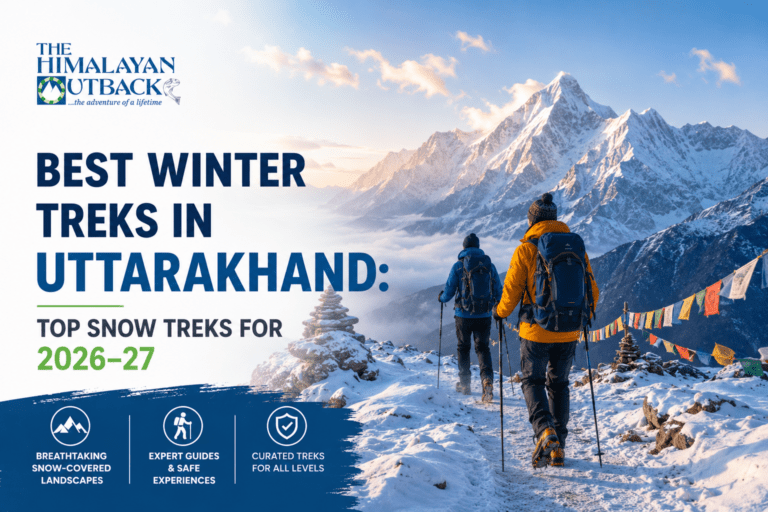
Best Winter Treks in Uttarakhand: Top Snow Treks for 2026–27

Best Winter Treks in Uttarakhand Top Snow Treks for 2026–27

Quick answer: Uttarakhand offers some of India’s finest winter trekking experiences, with snow-covered trails at Kedarkantha, DayaraBugyal, Brahmatal, Kuari Pass, and Chopta–Tungnath–Chandrashila. Each trek varies in difficulty and landscape, making the region suitable for both first-time and experienced Himalayan trekkers during the 2026–27 winter season.

Every winter, something shifts in the Himalayas. The meadows that blazed green through monsoon turn white. Pine forests grow heavy with snow. The trails grow quieter—and, for a particular kind of traveller, far more compelling.

Uttarakhand draws trekkers year-round, but the winter season brings a different energy altogether. The sky is clearer, the mountain views more defined, and the trails carry a stillness that no other season quite replicates. For those planning a Himalayan adventure in the 2026–27 winter season, the question isn’t whether to go—it’s which trail to choose.

Trekking in Uttarakhand during winter requires thoughtful planning. Conditions vary significantly by altitude, trail, and month. Some routes are well-suited to beginners making their first snow trek. Others demand prior high-altitude experience and strong physical preparation. This guide covers the most popular winter treks, what makes each one distinctive, how to prepare, and what to consider before you set off.

Whether you’re a college student planning a December escape, a group of friends chasing their first snow experience, or an experienced trekker adding another Himalayan route to your list, this guide is built for you.

Why Choose Uttarakhand for Winter Trekking?

Uttarakhand sits in the western Himalayas and shares borders with Tibet and Nepal, giving it access to some of the most dramatic high-altitude terrain in India. The state is home to a wide variety of trekking trails—from dense oak and rhododendron forests at lower elevations to open alpine meadows and snow-laden ridgelines above 3,500 metres.

During winter, these landscapes transform. Snow covers the meadows, ice forms along stream edges, and the panoramic views of peaks like Swargarohini, Bandarpoonch, Chaukhamba, and Nanda Devi become sharper and more vivid. The air is drier, the skies are often clear blue, and the trails are noticeably less crowded than during peak autumn months.

Accessibility is another key advantage. Dehradun, Haridwar, and Rishikesh—all well-connected to Delhi and other northern Indian cities by road, rail, and air—serve as common starting points for most Uttarakhand winter treks. This makes Uttarakhand snow trekking realistic for a weekend extension or a short holiday without needing a long-haul journey.

The variety of difficulty levels is equally important. Uttarakhand’s winter trail network includes genuinely beginner-friendly options alongside routes that challenge even seasoned trekkers, meaning there’s a suitable starting point regardless of your prior experience.

Best Winter Treks in Uttarakhand for 2026–27

The treks listed below are widely regarded as the most rewarding Himalayan winter treks in Uttarakhand. Each one offers a distinct experience in terms of terrain, altitude, scenery, and difficulty. Conditions on any trail can change during winter depending on snowfall, temperature, and trail accessibility, so always verify current conditions before finalising your plans.

Kedarkantha — A Popular Choice for Snow Trekking

Kedarkantha is perhaps the most widely recognised winter trek in Uttarakhand, and for good reason. Located in the Govind Wildlife Sanctuary near Sankri in the Uttarkashi district, the trail passes through dense pine forests, frozen streams, and wide snow-covered clearings before reaching a summit that offers sweeping views of the surrounding Himalayan ranges.

The trek is moderately graded and is often recommended for trekkers who have some walking experience but may not have attempted a high-altitude snow trek before. The summit push, typically done in the early morning hours to catch sunrise, is physically demanding, but the reward—a panoramic view of peaks like Bandarpoonch, Swargarohini, and Black Peak—makes the effort worthwhile.

During the 2026–27 winter season, Kedarkantha is likely to remain one of the most sought-after snow trekking destinations in Uttarakhand. If you’re considering this route, focus on building leg strength and cardiovascular fitness well in advance. Appropriate layering, good-quality trekking boots with ankle support, and gaiters for snow walking are particularly important here.

DayaraBugyal — Winter Meadows and Himalayan Views

DayaraBugyal is one of the highest alpine meadows in Uttarakhand, sitting above the treeline at an elevation that transforms into a vast, rolling snowfield during winter. The meadow, located near Barkot in Uttarkashi district, offers unobstructed views of the Gangotri range, including Draupadi Ka Danda and Bandarpoonch.

What makes DayaraBugyal special in winter is its open, expansive character. Unlike forested treks where views are framed by trees, Dayara opens into a wide white plateau where the horizon seems to stretch endlessly. On a clear day, the contrast between the snow-covered meadow and the dark blue sky above the peaks is genuinely spectacular.

The trek is considered moderate in difficulty and is suitable for trekkers with reasonable fitness. The trail is not as technically demanding as some other Himalayan winter treks, making it a strong option for those who want a meaningful snow trekking experience without tackling a high-altitude summit. That said, winter conditions at altitude should never be underestimated, and proper gear and guidance remain essential.

Brahmatal — A Classic Himalayan Winter Trek

Brahmatal has grown steadily in popularity as a winter trekking destination, partly because it offers the rare opportunity to trek through high-altitude terrain with views of Trishul and Mt. Nanda Ghunti—all during the winter months when these ranges are at their most dramatic.

The trek begins from Lohajung in the Chamoli district and passes through rhododendron forests, frozen lakes, and open ridgelines. The Brahmatal lake, which sits at high altitude, is often frozen during winter, creating a striking visual centrepiece for the trek.

Brahmatal is generally considered a moderate trek, though winter conditions add a layer of physical and logistical challenge. Cold temperatures at camp, snow on the trail in higher sections, and the need for appropriate sleeping gear and insulation make preparation especially important. Trekkers who have previously completed at least one multi-day trek will find themselves better prepared for what Brahmatal demands in winter.

Kuari Pass — A Winter Adventure for Experienced Trekkers

Kuari Pass is a high-altitude trek that traverses some of the most breathtaking terrain in the Garhwal Himalayas. Known historically as Lord Curzon’s Trail, the route crosses through oak forests, rhododendron groves, and open ridges before reaching the pass itself, which offers views of peaks including Nanda Devi, Dronagiri, Kamet, and Chaukhamba.

In winter, the Kuari Pass trek becomes considerably more demanding. Snow on the trail, colder temperatures at higher camps, and the physical challenge of the final push to the pass require trekkers to be genuinely prepared. This is not a route for first-timers during the winter season. Prior high-altitude trekking experience, good physical fitness, and appropriate cold-weather equipment are all important considerations before attempting this trek.

That said, for experienced trekkers, Kuari Pass in winter delivers some of the most remarkable Himalayan panoramas available on any accessible trail in India. Professional guidance is strongly advisable here, given the conditions and the importance of sound route knowledge during this season.

Chopta–Tungnath–Chandrashila — A Scenic Winter Route

The Chopta–Tungnath–Chandrashila route is one of Uttarakhand’s most scenic trekking corridors and holds both natural and cultural significance. Tungnath is one of the Panch Kedar shrines, and the trail to Chandrashila summit passes directly through it. At approximately 4,000 metres, Chandrashila offers panoramic views of the Chaukhamba massif, Nanda Devi, Kedarnath, and Trisul.

In winter, the area around Chopta receives heavy snowfall, and the forest road leading to the base can become inaccessible depending on conditions. Trekkers willing to walk the road section when it is blocked by snow will find the effort rewarded by an unusually quiet and beautiful version of a route that sees heavy footfall during autumn. The ascent to Chandrashila in winter conditions requires caution and appropriate footwear, as the trail can become icy.

This trek is accessible for moderately fit trekkers, but winter conditions elevate the effort level. Checking road accessibility and trail conditions in advance—and going with a knowledgeable guide—is particularly advisable during the 2026–27 season.

Trek Comparison: Which Uttarakhand Winter Trek Is Right for You?

Trek Difficulty Winter Appeal Suitable For Key Highlight
Kedarkantha Moderate Snow forests, summit views Beginners with some fitness Panoramic Himalayan sunrise from summit
DayaraBugyal Moderate Open snowfields, meadow views Beginners to intermediates Vast alpine meadow with Gangotri range views
Brahmatal Moderate Frozen lake, ridge views Trekkers with prior experience Trishul and Nanda Ghunti views; frozen lake
Kuari Pass Moderate–Challenging High-altitude panoramas Experienced trekkers Nanda Devi and multi-peak views
Chopta–Chandrashila Easy–Moderate Snow trail, Himalayan vistas Moderately fit trekkers Chandrashila summit and Tungnath temple

Note: Difficulty assessments are general guides only. Winter conditions can significantly affect trail demands. Always verify current conditions before setting off.

Which Winter Trek in Uttarakhand Is Best for Beginners?

There is no single universally “best” answer here—the right trek depends on your fitness level, prior experience, travel dates, tolerance for cold, and how comfortable you are with snow underfoot.

That said, Kedarkantha and DayaraBugyal are the two routes most commonly recommended for those attempting their first snow trek in Uttarakhand. Both are moderate in difficulty, well-established in terms of trail infrastructure during the winter season, and offer strong visual rewards relative to the physical effort required.

Chopta–Tungnath–Chandrashila is another option worth considering for beginners, particularly those traveling in small groups. The trail is shorter and the altitude gain is more gradual than on Kedarkantha. However, winter trail conditions near Chopta can vary significantly, so checking accessibility before travel is essential.

The availability of professional guidance should also factor into your decision. Trekking with an experienced guide during winter reduces route uncertainty and allows you to make better decisions when conditions change unexpectedly. If you’re planning your first Himalayan snow trek, going with a reputable operator is worth prioritising over attempting a self-guided route.

What to Pack for a Winter Snow Trek in Uttarakhand

Packing correctly for a winter trek is one of the most important things you can do to ensure a safe and enjoyable experience. The key principle is layering—wearing multiple thinner layers allows you to adjust your insulation as you move and stop, which is particularly important during strenuous ascents followed by cold camp conditions.

Start with a thermal base layer that sits close to the skin and draws moisture away from the body. Over this, add a mid-layer for insulation—a fleece or down jacket works well. Your outer layer should be waterproof and windproof to protect against snow and exposed ridgelines. Good-quality trekking pants with thermal leggings underneath are preferable to jeans, which absorb moisture and dry slowly.

Footwear deserves special attention. Trekking boots should be waterproof, well-insulated, and provide firm ankle support. Gaiters are useful for keeping snow out of your boots on deeper snow sections. Carry at least two pairs of warm wool or synthetic socks.

For accessories, a woollen or fleece-lined hat, insulated gloves, a neck gaiter or balaclava, UV-protective sunglasses, and a high-SPF sunscreen are all essential. Snow reflection intensifies UV exposure, so sun protection matters even on overcast days.

Other important items include a reliable headlamp with spare batteries, a personal first-aid kit including any prescription medication, a reusable insulated water bottle, a lightweight high-calorie snack supply, and a backpack rain cover. Pack light where possible—every extra kilogram compounds quickly over multiple days of trekking.

How to Prepare for Trekking in Uttarakhand During Winter

Physical preparation for a winter trek should ideally begin six to eight weeks before your departure date. The goal is to build aerobic capacity, leg strength, and overall endurance—three qualities that directly affect how you perform on the trail.

Start with regular walks of 45 to 60 minutes at a steady pace, gradually increasing both distance and gradient over the weeks leading up to your trek. Running, cycling, and swimming are all effective for building cardiovascular fitness. Bodyweight exercises such as squats, lunges, and step-ups will strengthen the leg muscles most engaged during uphill and downhill trekking.

If possible, practice hiking with a loaded backpack to simulate real trail conditions. Even 8 to 10 kilograms in a pack changes how your body moves and what muscles are engaged. Doing this on stairs or inclined terrain is particularly useful.

Hydration habits matter too. Many trekkers underestimate how much water they need at altitude, especially when it’s cold. Train yourself to drink regularly throughout physical activity, even when you don’t feel thirsty.

Rest and sleep are equally important components of preparation. Your body adapts and strengthens during recovery, not during the workout itself. Prioritise consistent sleep in the weeks before your trek.

Altitude can affect people differently regardless of fitness level. If you experience headaches, nausea, dizziness, or difficulty breathing during the trek, slow down, descend if necessary, and inform your guide. Anyone with underlying health conditions, cardiovascular concerns, or respiratory issues should consult a qualified healthcare professional before undertaking high-altitude activity.

Is Winter Trekking in Uttarakhand Safe?

Winter trekking carries real risks that should be understood honestly rather than minimised. Snow and ice make trails slippery, temperatures drop significantly at night, and weather in the Himalayas can change quickly and without much warning. Reduced daylight hours mean timing on the trail is more critical, and certain routes may have limited or no mobile network coverage.

That said, thousands of trekkers complete winter snow treks in Uttarakhand each year without serious incident—because they prepare carefully, carry appropriate gear, go with experienced guides, and make responsible decisions on the trail.

Safety on a winter trek is largely determined by preparation and behaviour, not luck. Wearing the right footwear reduces the risk of slipping. Acclimatising properly reduces altitude-related health risks. Starting early reduces exposure to afternoon weather changes. Listening to your guide’s assessment of the trail reduces route-related risks.

No trek can be guaranteed completely safe, particularly in winter conditions. What a good operator, proper gear, and careful preparation do is reduce risk to a manageable level and ensure that if conditions deteriorate, you have the knowledge and resources to respond appropriately.

Why Choose a Professional Trekking Operator for Your Winter Trek?

Self-guided trekking can work well on summer trails with well-marked routes and established infrastructure. In winter, the calculus changes. Snow can obscure trail markers, conditions can shift within hours, and the consequences of a wrong turn or equipment failure are more serious when temperatures are well below zero.

A professional trekking operator brings route knowledge, local contacts, logistical coordination, and emergency protocols that are genuinely difficult to replicate independently. Experienced guides know which sections of trail become hazardous after fresh snowfall, how to read changing weather, and what to do if a trekker shows signs of altitude sickness.

Beyond safety, a good operator handles the logistical complexity that often derails independent winter trekking trips—accommodation or camping coordination, equipment guidance, permits, transportation, and group management. This frees you to focus on the experience itself rather than troubleshooting logistics in unfamiliar terrain.

For anyone planning a winter snow trek in Uttarakhand for the 2026–27 season, The Himalayan Outback offers guided trekking support across Uttarakhand’s mountain regions. Whether you’re deciding between routes, working out what fitness preparation makes sense for your goals, or coordinating logistics for a group, their team can help you plan a winter trekking experience that matches your experience level and expectations. Explore your trekking in Uttarakhand options with The Himalayan Outback to get started.

Plan Your Winter Uttarakhand Trek with The Himalayan Outback

Planning a Himalayan winter trek involves more decisions than most people anticipate—choosing the right route for your fitness and experience, understanding what to pack, working out how to get to the trailhead, and knowing what to do if conditions change. Getting these decisions right at the start makes the entire experience significantly more rewarding.

The Himalayan Outback works with trekkers at various experience levels to help plan winter trekking experiences in Uttarakhand that are suited to individual requirements. If you’re trying to work out which trail fits your fitness level, how to prepare for your first snow trek, or how to coordinate a group trip for the 2026–27 season, their team is a practical first point of contact.

Frequently Asked Questions

Which are the best winter treks in Uttarakhand for 2026–27?
Kedarkantha, DayaraBugyal, Brahmatal, Kuari Pass, and Chopta–Tungnath–Chandrashila are among the most well-regarded winter snow treks in Uttarakhand. Each varies in difficulty and terrain. The best choice depends on your fitness level, prior experience, and preferred landscape. Verify current trail conditions before finalising any route.

Which Uttarakhand winter trek is suitable for beginners?
Kedarkantha and DayaraBugyal are frequently recommended for first-time snow trekkers, as both are moderate in difficulty and offer well-established trail infrastructure during the winter season. Chopta–Tungnath–Chandrashila is another accessible option. Going with an experienced guide significantly improves safety and confidence for beginner trekkers.

What should I pack for a snow trek in Uttarakhand?
Essential items include thermal base layers, an insulating mid-layer, a waterproof outer jacket and pants, waterproof trekking boots, warm socks, insulated gloves, a woollen cap, UV-protective sunglasses, sunscreen, a headlamp, a personal first-aid kit, an insulated water bottle, and a backpack rain cover. Layering is the key principle for winter trekking.

Is winter trekking in Uttarakhand safe?
Winter trekking carries real risks including slippery trails, cold exposure, changing weather, and altitude-related challenges. These risks are significantly reduced by thorough preparation, appropriate gear, and trekking with an experienced professional guide. No trail is entirely risk-free in winter conditions, but responsible preparation and sound decision-making on the trail make a substantial difference to your safety.

Ready to Plan Your Winter Trek?

The 2026–27 winter season offers a genuine opportunity to experience Uttarakhand’s Himalayan trails at their most atmospheric. Snow-covered forests, frozen meadows, clear mountain air, and views of the greater Himalayan ranges—these are experiences that reward the effort of good preparation and thoughtful planning.

Before you finalise your winter trekking plans, talk to a team that knows these trails. The Himalayan Outback can help you choose a route suited to your experience level, advise on preparation and gear, and coordinate the logistics of your winter trek in Uttarakhand.

Visit himalayanoutback.com/uttarakhand-trekking to discuss your winter trekking plans and find the right Uttarakhand trekking option for the 2026–27 season.