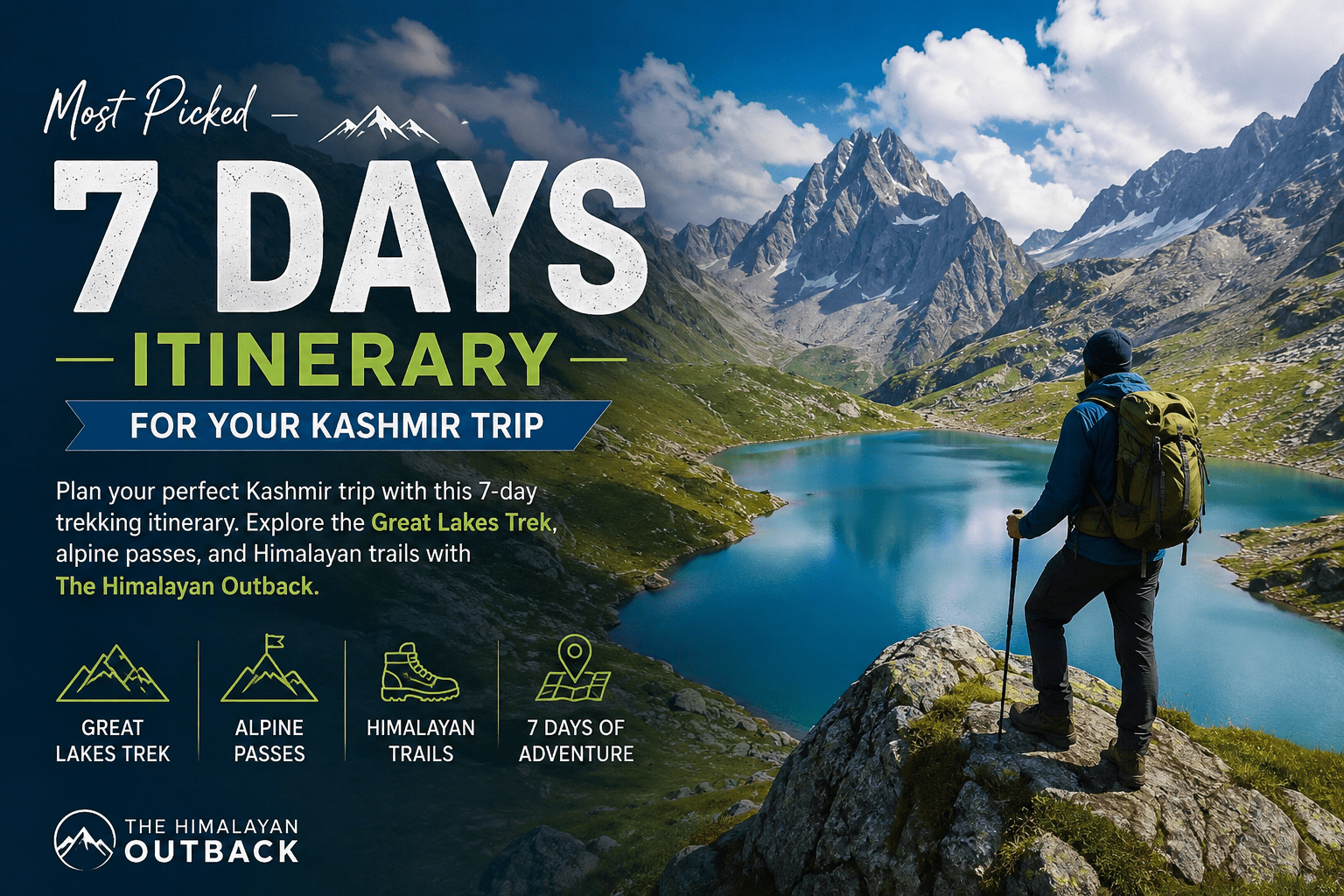
Quick Answer: A 7-day Kashmir trip itinerary typically covers arrival in Srinagar, acclimatization walks, the start of the Kashmir Great Lakes Trek through alpine meadows and mountain passes, exploration of high-altitude lakes like Vishnusar and Kishansar, and a return journey to Srinagar—offering a well-rounded Kashmir trekking experience for adventure travellers.
Kashmir is one of India’s most breathtaking destinations, offering snow-covered mountains, alpine lakes, lush valleys, and unforgettable trekking experiences. A well-planned 7-day itinerary allows travellers to explore the beauty of the region while experiencing the adventure of Kashmir trekking through scenic Himalayan trails. Whether you’re a first-time trekker or a seasoned mountain explorer, Kashmir offers an experience unlike any other in the Indian Himalayas.
Planning the right itinerary makes all the difference. Too rushed, and you miss the magic of the alpine meadows. Too loose, and you lose valuable trekking days. This guide breaks down the most popular 7-day Kashmir travel itinerary—day by day—so you can plan confidently, trek safely, and experience the Himalayas at their finest.
Why Choose a 7-Day Kashmir Itinerary?
Seven days strikes the perfect balance between depth and accessibility. You get enough time to begin the Kashmir Great Lakes Trek, pass through some of the most scenic alpine terrain in India, and return without feeling rushed. It’s long enough to experience the highlands, yet short enough for travellers with limited leave.
A 7-day format also allows for proper acclimatization. Jumping into high-altitude trekking without preparation is one of the most common mistakes first-time Himalayan trekkers make. Building in arrival and adjustment days dramatically improves both safety and enjoyment. For those looking to extend into the full 13-day Kashmir Great Lakes Trek, this 7-day version serves as an ideal introduction.
| Day | Experience |
| Day 1 | Arrival and preparation |
| Day 2 | Trek beginning |
| Day 3 | Mountain trail exploration |
| Day 4 | Alpine lakes and landscapes |
| Day 5 | Kashmir Great Lakes experience |
| Day 6 | Trek completion |
| Day 7 | Departure |
Most Picked 7 Days Kashmir Trip Itinerary
Day 1: Arrival in Kashmir and Trek Preparation
Your Kashmir adventure begins in Srinagar, the valley’s cultural and geographical heart. After landing at Srinagar International Airport, take time to settle into your accommodation and absorb the surroundings. The city itself is worth exploring—from the iconic Dal Lake and its floating markets to the Mughal gardens and the winding lanes of the old city.
This day is also critical for preparation. Use the afternoon to check your gear, confirm your permits, and meet your guide. If you’re travelling with The Himalayan Outback, their team will brief you on trail conditions, safety protocols, and what to expect in the days ahead. Starting a trek well-informed is starting a trek well.
Day 2: Starting the Kashmir Trekking Journey
Day two marks the beginning of your trekking experience. A scenic three-hour drive along the Sindh River takes you to the trailhead. The route itself is visually stunning—watch for nomadic Gujjar and Bakarwal tribes moving their livestock toward summer pastures as you wind through the foothills.
The first section of the trail climbs moderately through Maple and Silver Birch forests before opening into alpine meadows near Shekdur Village. You’ll camp at an elevation of around 3,150 meters—high enough to feel the altitude, low enough to ease into it. The first evening at camp, surrounded by mountain silence and a sky full of stars, tends to be a moment trekkers remember for years.
Day 3: Exploring Alpine Landscapes and Mountain Trails
Day three introduces you to the full character of the Himalayan landscape. The trail passes through beautiful meadows before entering a forest canopy that eventually gives way to the open Nichnai Valley. Massive boulders scatter the grassland, creating a dramatic, otherworldly scene.
The campsite at Nichnai sits at approximately 3,650 meters. By now, your body is adjusting to the altitude and your legs are finding their rhythm. Take this day slowly—observe the birdlife, photograph the wildflowers, and let the Himalayas reveal themselves at their own pace. This is what trekking in Kashmir is truly about.
Day 4: Discovering Lakes and Valley Views
This is one of the most rewarding days of the trek. The trail climbs through alpine grasslands toward Nichnai Pass at 3,825 meters—your first significant pass crossing. The views from the top are panoramic and breathtaking. On a clear morning, the ridgeline stretches endlessly in both directions.
From the pass, a steep descent leads into a wide, open valley before the trail flattens and winds toward Vishnusar. The twin lakes of Kishansar and Vishnusar come into view as you approach camp, their turquoise waters reflecting the surrounding peaks. For photographers, this stretch of the Kashmir trekking experience is among the most rewarding in the entire Himalayas.
Day 5: Experiencing the Kashmir Great Lakes Trek
Day five is the heart of the journey. The trail from Vishnusar climbs to Gadsar Pass at 4,200 meters—the highest point of this 7-day itinerary. The ascent is demanding, but the views from the top make every step worthwhile. Kishansar and Vishnusar Lakes shimmer far below, and the scale of the Himalayan landscape becomes fully apparent.
The descent into the Gadsar Valley is long and sweeping, eventually settling into meadow terrain where the evening camp awaits at around 3,310 meters. This day encapsulates everything that makes the Kashmir Great Lakes Trek one of the most celebrated adventure tours in India—raw, immersive, and genuinely awe-inspiring.
Day 6: Final Trekking Adventures and Return Journey
The final trekking day brings a mix of emotions. The trail from Gadsar climbs again over a ridge before descending into a wide, meadow-filled valley. It’s a longer day on the trail—around six hours—but the terrain is varied enough to hold your attention throughout.
This is the day to appreciate what you’ve accomplished. The landscape of the Kashmir Valley Trek unfolds around you one last time before the trail meets the road and the mountains give way to the valley below. Many trekkers describe this final stretch as profoundly satisfying—not just physically, but mentally. The Himalayas have a way of resetting perspective.
Day 7: Departure and Travel Memories
Your last day in Kashmir is for reflection and departure. Return to Srinagar for a final morning on the lake, a quiet breakfast, and the inevitable process of packing memories alongside gear. If time allows, pick up saffron, Pashmina, or Kashmiri dry fruits from the local markets—the region’s crafts and flavours are as distinctive as its landscapes.
Most travellers leave Kashmir already thinking about their return. The valley has that effect. Whether you’re heading back to Delhi or onward to another destination, you’ll carry the Himalayan trekking experience with you long after the journey ends.
Why Is the Kashmir Great Lakes Trek a Must-Experience Adventure?
The Kashmir Great Lakes Trek is widely regarded as one of the most scenic treks in all of India—and for good reason. The route passes through six or more alpine lakes, each sitting in its own distinct valley setting. From Vishnusar and Kishansar to Gadsar and Gangabal, every lake has a different character, colour, and surrounding landscape.
| Trek Factor | Details |
| Duration | 7 Days (introductory format) |
| Location | Kashmir Himalayas |
| Experience | Trekking and nature exploration |
| Suitable For | Adventure travellers |
The trek also crosses two high-altitude passes—Nichnai Pass (3,825m) and Gadsar Pass (4,200m)—offering trekkers a genuine sense of achievement alongside the scenic rewards. The diversity of the terrain, from dense birch forests to open glacial valleys, keeps the experience fresh from day to day. For anyone planning a Himalayan trekking experience in India, this route belongs at the very top of the list.
What Is the Best Time for Kashmir Trekking?
The trekking season in Kashmir runs from late June through mid-September. This window offers the most stable weather conditions, clear trail access, and snow-free passes. June and July bring lush green meadows and wildflower blooms. August and September offer drier conditions, longer visibility, and a quieter trail experience as the peak tourist season begins to ease.
Avoid trekking in Kashmir outside this window. The passes remain snow-covered through May and can become icy and inaccessible again by October. Winter conditions arrive quickly at altitude, and the margin for error narrows significantly. Planning your Kashmir adventure tour within the June–September season gives you the best chance of a safe and rewarding experience.
Essential Tips Before Starting Your Kashmir Trek
Physical preparation matters more than most trekkers expect. Even moderate-difficulty treks at altitude feel significantly harder than trails at sea level. Begin cardio training—running, cycling, or stair climbing—at least six to eight weeks before departure. Your body will thank you on the passes.
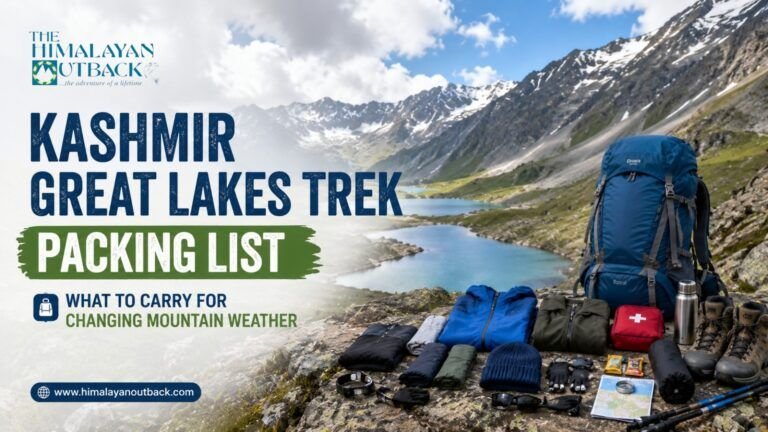
Packing smart is equally important. Bring layered clothing for temperature swings, waterproof gear for unexpected rain, and broken-in trekking boots. Don’t underestimate the importance of a quality sleeping bag—temperatures drop sharply at camp after sunset, even in summer. Poles, sunscreen, and a reliable water purification method round out the essentials.
Responsible trekking practices protect the ecosystem for future visitors. Stick to marked trails, pack out all waste, and respect wildlife and local nomadic communities. The Kashmir Himalayas are ecologically sensitive and culturally rich—tread thoughtfully.
Why Choose The Himalayan Outback for Kashmir Trekking?
The Himalayan Outback brings deep expertise and genuine passion to every Kashmir trekking tour. Their guides are experienced mountain professionals with intimate knowledge of the Great Lakes route, its conditions, and its challenges. Group sizes are kept intentionally small—a maximum of eight guests—ensuring a personalized, safe, and immersive experience.
Every detail of the journey is carefully considered, from acclimatization schedules and campsite selection to meal planning and emergency protocols. The Himalayan Outback’s approach prioritizes safety without sacrificing the authentic, exploratory spirit that defines Himalayan adventure travel. For travellers seeking a Kashmir adventure tour with professional guidance and local expertise, The Himalayan Outback is a trusted and experienced partner.
Start Planning Your Kashmir Trekking Adventure
A 7-day Kashmir itinerary offers the ideal entry point into one of the most stunning mountain landscapes on Earth. The combination of alpine lakes, high-altitude passes, and wide Himalayan valleys creates a trekking experience that genuinely exceeds expectations—for first-timers and experienced trekkers alike.
The key to making the most of your Kashmir trekking trip is preparation and the right travel partner. The Himalayan Outback specializes in expertly guided Kashmir trekking experiences, offering deep local knowledge, professional mountain guidance, and carefully planned itineraries that balance adventure with safety.
Ready to explore the Kashmir Himalayas? Connect with The Himalayan Outback to plan your trekking itinerary, get expert advice, and book your place on the trail.
Frequently Asked Questions (FAQs)
How difficult is Kashmir trekking for beginners?
Kashmir trekking is rated moderate in difficulty. Beginners who are physically active and allow time for acclimatization can complete the trek comfortably. Choosing an experienced guide through a provider like The Himalayan Outback significantly improves safety and overall experience.
What is the best time to do the Kashmir Great Lakes Trek?
The best time for the Kashmir Great Lakes Trek is between late June and mid-September. This window offers stable weather, clear passes, and access to lush alpine meadows—ideal conditions for a rewarding Himalayan trekking experience.
How long does the Kashmir Great Lakes Trek take in full?
The complete Kashmir Great Lakes Trek with The Himalayan Outback spans 13 days. The 7-day format described in this guide covers the introductory and most scenic sections, making it suitable for travellers with limited time.
What permits are required for trekking in Kashmir?
Trekkers in Kashmir require entry permits for restricted areas within the national park. Your trekking operator typically arranges these permits as part of the package. Always confirm permit requirements with your guide before departure.