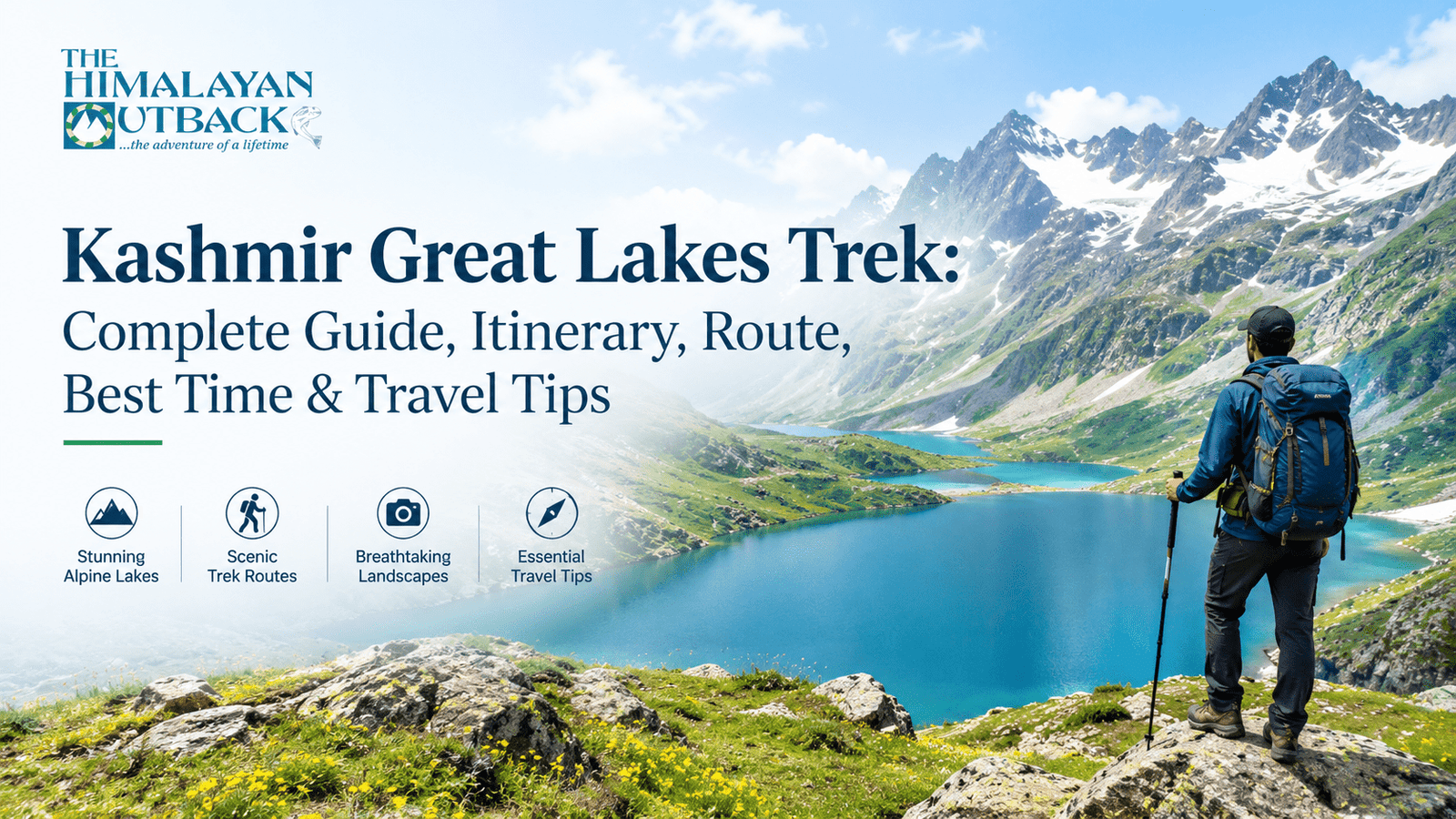
Quick answer: The Kashmir Great Lakes Trek is a multi-day Himalayan trekking journey through alpine meadows and glacial lakes in Kashmir, including Vishansar, Gadsar, Satsar, and Gangabal. The trek typically spans about two weeks with several days of continuous walking, reaches its highest point at Gadsar Pass, and is best attempted between late June and mid-September.
Few Himalayan journeys pack in as much variety as the Kashmir Great Lakes Trek. Over the course of several days, trekkers move through pine forests, wildflower-covered meadows, and high mountain passes before arriving at a string of glacial lakes that shift color with the light. This isn’t a casual walk in the hills. Kashmir Great Lakes Treks demand genuine planning, a clear understanding of the route, and physical preparation suited to high-altitude conditions.
This guide walks through what matters most before you commit to the trail: the general route, a sample itinerary, the lakes and landscapes you’ll pass, the best time to go, how difficult the trek really is, and how to prepare for the journey ahead. By the end, you’ll have a realistic picture of what Kashmir Great Lakes Treks involve and how to plan one that suits your experience level.
What Is the Kashmir Great Lakes Trek?
The Kashmir Great Lakes Trek is a multi-day Himalayan trekking route that links a series of high-altitude lakes across the Kashmir Valley. Unlike single-destination hikes, this trek strings together changing landscapes, including dense forest, open meadows, glacial valleys, and mountain passes, into one continuous journey.
What sets Kashmir Great Lakes Treks apart is the sheer variety packed into a relatively short span. Trekkers pass through several distinct alpine lakes, each with its own character, while crossing terrain that shifts from lush pastures to rocky, exposed passes. Add in views of peaks like Harmukh and the presence of nomadic Bakarwal shepherd communities grazing livestock in summer meadows, and the trek offers an immersive slice of Himalayan life alongside its natural scenery.
This combination of scenery and challenge is precisely why the trek has become one of India’s most recognized multi-day Himalayan trekking experiences, drawing both domestic and international travelers seeking something beyond a standard hill station visit.
Kashmir Great Lakes Trek Route at a Glance
The general route for the Kashmir Great Lakes Trek begins near Sonamarg and works its way through a sequence of valleys, passes, and lake basins before concluding near Naranag. Along the way, trekkers typically pass through or near Shekdur, Nichnai, Vishansar, Gadsar, Satsar, and Gangabal.
The journey usually opens with a forested climb out of the Sonamarg region, transitioning into open meadows as elevation increases. From there, the route crosses the Nichnai Pass before descending into the Vishansar basin, home to twin lakes and some of the trek’s most striking alpine scenery. The path then continues over Gadsar Pass, the trek’s highest point, before winding through Satsar’s cluster of lakes and finally reaching Gangabal, beneath the towering Harmukh peak. The trek typically concludes with a descent to Naranag, where trekkers rejoin road access.
It’s worth noting that exact campsites, daily distances, and route sequencing can vary depending on weather conditions, trail status, and the specific itinerary an operator follows. No single version of the route should be treated as fixed or universal — conditions in the Himalayas change from season to season, and a good trek operator will adjust plans accordingly.
Typical Kashmir Great Lakes Trek Itinerary Overview
Before diving into the day-by-day flow, it helps to see the trek’s overall structure at a glance. The table below offers a general overview of how a typical itinerary progresses — keep in mind that specific timings, campsite names, and daily distances vary by operator, season, and trail conditions.
| Trek Stage | Typical Area or Location | General Experience | What Trekkers Can Expect |
| Arrival and preparation | Srinagar or trek approach region | Travel and preparation | Final journey planning and trek readiness |
| Trek approach | Sonamarg region | Starting point access | Transition towards the Himalayan trekking environment |
| Early trek stages | Nichnai and surrounding areas | Valleys and mountain trails | Gradual immersion into the trek |
| Lake region | Vishansar and nearby areas | Alpine lake landscapes | High-altitude trekking and changing scenery |
| Middle route | Gadsar and Satsar region | Lakes and mountain terrain | Continued multi-day trekking |
| Final stages | Gangabal and surrounding areas | Mountain lake landscapes | Completion of the main trekking journey |
| Exit route | Naranag or relevant exit point | Trek conclusion | Return journey and onward travel |
A Typical Day-by-Day Kashmir Great Lakes Trek Itinerary
Most Kashmir Great Lakes Treks begin with arrival in Srinagar, followed by a day or two of acclimatization and short conditioning walks in the surrounding hills. This isn’t wasted time — adjusting to Kashmir’s elevation before the trek begins makes a real difference once the climbing starts.
Once the trek proper begins, a drive from Srinagar brings trekkers to the starting point near Sonamarg. The first day or two usually involves a moderate climb through forested terrain, opening into meadows where nomadic herding communities often graze livestock through the summer months.
From there, the route pushes deeper into the mountains, crossing the Nichnai Pass and descending toward the Vishansar basin. Many itineraries build in a rest day here, giving trekkers a chance to explore the twin lakes at a slower pace before continuing. The middle stretch of the trek is typically the most demanding, crossing Gadsar Pass, the trek’s highest point, before continuing through the Satsar lake cluster.
The later stages bring trekkers to Gangabal, often considered the visual highlight of the journey thanks to its setting beneath Harmukh peak. From Gangabal, the trek concludes with a descent toward Naranag, where road transport typically resumes for the return to Srinagar.
Throughout this journey, Kashmir Great Lakes Treks test both stamina and adaptability, since weather and trail conditions can shift the day’s plan even for well-prepared groups.
Key Lakes and Landscapes You May Experience
Vishansar Lake
Vishansar is often one of the first major lakes encountered on the route and sets the tone for what follows. Set within a wide alpine basin, it’s typically visited alongside its neighboring twin lake, Kishansar, and offers a natural rest point for trekkers to acclimatize before tackling higher terrain.
Gadsar Region
The area surrounding Gadsar Pass marks the highest and often most physically demanding section of the trek. Views from near the top can extend back toward Vishansar and Kishansar, making the climb a rewarding, if strenuous, part of the journey.
Satsar Lakes
Satsar refers to a cluster of smaller lakes rather than a single body of water. This section of the route offers a different rhythm from the trek’s larger lakes, with the terrain opening into a series of interconnected basins.
Gangabal Lake
Gangabal is frequently cited as a highlight of the entire trek, largely due to its dramatic setting beneath Harmukh peak. Paired with the nearby Nandkol Lake, this stretch represents the scenic peak of the journey before the descent toward Naranag begins.
Best Time for the Kashmir Great Lakes Trek
Timing matters more on this trek than many others, since trail access depends heavily on snow melt and seasonal weather patterns.
Early Season
In late June, snow can still linger on higher sections of the route, particularly around mountain passes. Trail conditions at this time may be less predictable, and trekkers should be prepared for cooler temperatures and potential snow crossings.
Peak Trekking Period
Most Kashmir Great Lakes Treks are scheduled between late June and mid-September, with July and August generally considered the most reliable window. During this stretch, meadows are typically in full bloom and trail access tends to be more consistent, though mountain weather can still change quickly.
Later Season
By September, temperatures begin to drop and the landscape starts to shift toward autumn tones. Some trekkers prefer this quieter period, though shorter daylight hours and cooler nights are worth factoring into planning.
Regardless of when you go, checking current trail and weather conditions close to your travel dates is essential — mountain conditions in Kashmir can change from one season to the next.
How Difficult Is the Kashmir Great Lakes Trek?
The Kashmir Great Lakes Trek is generally considered a moderate to challenging trek, and it shouldn’t be underestimated. Several factors shape how demanding the experience feels:
Multi-day walking at high altitude puts sustained strain on the body, particularly over the trek’s longer stretches. Crossing passes like Gadsar (around 4,200 meters) adds a genuine altitude challenge, and terrain underfoot ranges from soft meadow trails to rocky, uneven passes. Weather can shift quickly at elevation, and trekking days can run long, especially during pass crossings.
Fitness level, prior trekking experience, and how well someone acclimatizes all shape how challenging the trek feels in practice. It’s not accurate to describe this trek as easy for everyone — even experienced trekkers should approach it with proper preparation and respect for the terrain.
Is the Kashmir Great Lakes Trek Suitable for Beginners?
This is a common question, and the honest answer is: it depends. Some first-time multi-day trekkers do complete the Kashmir Great Lakes Trek successfully, but suitability comes down to physical preparation, general fitness, and the ability to handle sustained walking days and high-altitude conditions.
Beginners considering this trek should build up walking endurance well in advance and go in with realistic expectations about the physical demands involved. Guided support can make a meaningful difference here, since experienced trek leaders can help manage pacing, acclimatization, and unexpected trail conditions. No trek operator can guarantee comfort or safety, but preparation and guidance significantly improve the odds of a positive experience.
How to Prepare for the Kashmir Great Lakes Trek
Preparation for this trek goes well beyond packing a bag. Building walking endurance in the weeks or months beforehand makes a real difference once you’re on the trail for six or more consecutive days. Cardiovascular fitness, paired with some experience walking on uneven terrain, helps the body adapt more easily to the demands of each trekking day.
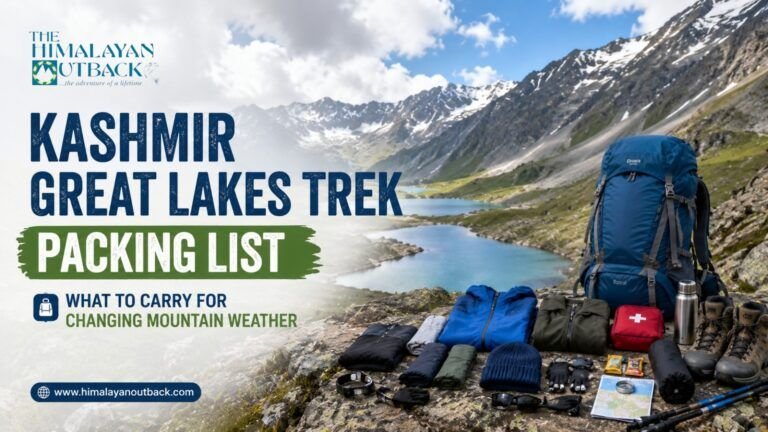
Mountain weather in Kashmir can shift quickly, so packing layers suited to both warm daytime sun and cold, damp evenings matters more than bringing excess gear. Selecting the right footwear and a well-fitted backpack is worth prioritizing over quantity — overpacking often becomes its own burden on a multi-day trek.
It’s also worth taking time to understand the general difficulty of the specific itinerary you’re booking, since routes and daily distances can vary between operators. Before departure, check what your trek organizer expects in terms of fitness level, gear, and prior experience, and address any gaps well ahead of time rather than on the trail itself.
Travel Tips Before Starting the Trek
Most journeys to the Kashmir Great Lakes Trek begin with a flight into Srinagar, often via Delhi. Building in a buffer day or two before the trek starts allows for both acclimatization and a cushion against flight delays, which aren’t uncommon given Srinagar’s weather-dependent air traffic.
Keep your onward travel plans flexible where possible. Mountain conditions can occasionally shift trek start dates or durations, and rigid connecting flights can add unnecessary stress. It’s also worth confirming current travel requirements and regional conditions closer to your departure date, since these can change.
Finally, take time to review your specific trek itinerary in detail before departure. Understanding the daily flow, rest days, and pass crossings in advance helps you arrive mentally prepared, not just physically.
Planning the Kashmir Great Lakes Trek for the First Time?
Understanding the route and trek requirements before you finalize your journey puts you in a much stronger position to enjoy the experience rather than simply survive it.
Why the Right Trek Planning Matters
A multi-day Himalayan trek isn’t a holiday you can plan the way you’d book a beach trip. Kashmir Great Lakes Treks involve variable terrain, changing weather, and physical demands that require honest self-assessment.
Understanding trek difficulty, current route conditions, seasonal shifts, and your own fitness level all factor into whether the experience matches your expectations. Choosing appropriate gear and understanding what your trek organizer requires — from fitness benchmarks to packing lists — reduces the chances of unpleasant surprises on the trail.
Selecting a trek based purely on photographs or popularity is one of the more common planning mistakes. The lakes may look similar across marketing materials, but the itinerary, pacing, and support structure behind each trek can differ substantially.
Why Choose a Guided Kashmir Trekking Experience?
Guided trekking offers real advantages, particularly for first-time multi-day trekkers or travelers unfamiliar with Kashmir’s mountain routes. An experienced operator brings knowledge of current trail conditions, pacing strategies suited to group fitness levels, and support for navigating unpredictable weather.
Groups, in particular, benefit from organized logistics — coordinating permits, campsites, and meals across a multi-day trek is a considerable undertaking on your own. For anyone unsure about route conditions, altitude management, or itinerary structure, discussing plans with an experienced operator before departure helps set realistic expectations. That said, no guide or operator can guarantee safety or successful completion — mountain trekking always carries inherent risk that preparation can reduce but not eliminate.
Plan Your Kashmir Great Lakes Trek with The Himalayan Outback
The Himalayan Outback is an adventure travel company that specializes in guiding travelers through Himalayan trekking experiences, including the Kashmir Great Lakes Trek. Their itinerary takes trekkers from Srinagar through Shekdur, Nichnai, Vishansar, Gadsar, Satsar, and Gangabal, before concluding at Naranag, typically over a 13-day journey with a maximum group size of 8.
Travelers interested in exploring the Kashmir Great Lakes trekking experience can reach out to The Himalayan Outback to discuss itinerary details, seasonal timing, difficulty expectations, and preparation requirements specific to their fitness level and travel plans. Their scheduled departures generally run between late June and early July, and mid-August through mid-September, aligning with the trek’s most favorable trail conditions.
Discuss Your Kashmir Trek Plans with The Himalayan Outback
Before finalizing dates or packing a bag, it’s worth having a direct conversation about what your specific trek will involve — trail conditions, group logistics, and realistic difficulty expectations included.
Planning Your Himalayan Trekking Journey
The Kashmir Great Lakes Trek offers a rare combination of alpine lakes, shifting landscapes, and genuine physical challenge, but the reward depends heavily on preparation. Understanding the route, choosing the right season, respecting the trek’s difficulty, and preparing both physically and logistically all shape whether the journey feels manageable or overwhelming.
Kashmir Great Lakes Treks aren’t a box to check off a list — they’re a commitment that rewards travelers who take the planning seriously. Reviewing current route and weather information, choosing gear thoughtfully, and considering guided support when needed all contribute to a trek that matches your expectations and capabilities.
Ready to Plan Your Kashmir Great Lakes Trek?
Travelers ready to move forward with their Kashmir Great Lakes Treks can contact The Himalayan Outback to plan your Himalayan trekking journey in detail — covering preferred travel dates, trekking experience, fitness and preparation level, group size, and any specific questions about the route or itinerary. While availability and weather conditions can’t be guaranteed, a direct conversation with an experienced operator is the most reliable way to plan a trek suited to your goals.
Frequently Asked Questions
What is the best time for Kashmir Great Lakes Treks?
The most reliable window is late June through mid-September, with July and August offering the most consistent trail access and blooming meadows. Early and late season dates may involve lingering snow or cooler temperatures, so checking current conditions before booking is recommended.
How difficult is the Kashmir Great Lakes Trek?
It’s generally rated moderate to challenging, involving multiple consecutive trekking days, high-altitude pass crossings up to around 4,200 meters, and variable terrain. Fitness level, acclimatization, and weather all influence how demanding the experience feels.
Can beginners attempt the Kashmir Great Lakes Trek?
Some first-time trekkers do complete it successfully, but suitability depends on physical preparation and endurance built up beforehand. Guided support is particularly valuable for beginners navigating high-altitude terrain for the first time.
What should I know before planning the Kashmir Great Lakes Trek?
Understand that routes, schedules, and conditions can vary by operator and season, so treat any single itinerary as a general guide rather than a fixed plan. Prioritize physical preparation, appropriate gear, and checking current trail conditions before departure.