Quick answer: Trekking in India increasingly attracts solo travellers who want structure without crowds. Small-group treks offer personal attention, flexible pacing, and closer connections to remote Himalayan landscapes than large commercial batches. Before booking, solo travellers should confirm group size, guide experience, and joining arrangements directly with the trekking operator.
For many independent travellers, the hardest part of planning a Himalayan trip isn’t choosing a destination—it’s choosing the right kind of group. Trekking in India has grown rapidly over the past decade, and with that growth has come an explosion of large commercial batches, some carrying twenty or more trekkers on a single trail. For solo travellers who value a slower pace, a quieter trail, and a guide who actually knows their name, this model often falls short.
That’s why a growing number of adventurers are seeking out small-group treks instead. These trips combine the safety and structure of a guided expedition with the intimacy and flexibility that solo travellers crave. You get expert navigation through unfamiliar terrain, companionship from like-minded trekkers, and none of the logistical chaos that comes with managing a crowd on a narrow mountain path.
This guide explores why trekking in India is evolving toward smaller, more remote experiences, what solo travellers should look for in a trekking operator, and how to prepare for the Himalayan trails that reward patience and respect for the mountains. Whether you’re an experienced hiker chasing high-altitude passes or a first-time trekker testing your limits, understanding these details will help you choose a trip that actually matches how you like to travel.
Why Solo Travellers Are Choosing Small-Group Treks
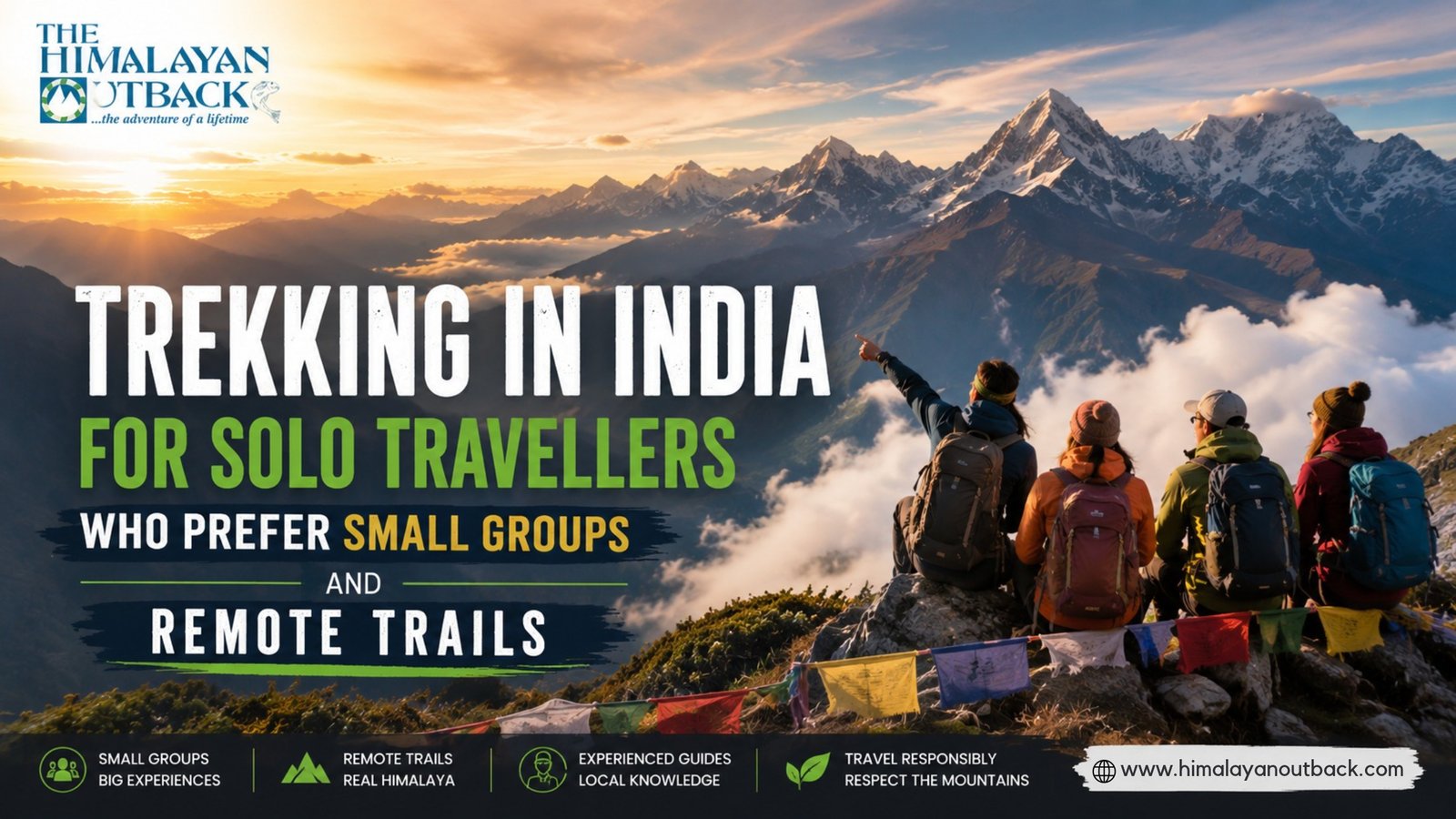
Trekking in India as a solo traveller doesn’t have to mean trekking alone. Joining a small guided group lets you travel independently while still benefiting from shared logistics, local expertise, and companionship along the trail.
The appeal of travelling independently within a guided group
Solo travellers often want freedom of choice—no fixed travel partners, no obligations back home—while still having the safety net of an organised trip. A small group strikes that balance. You arrive alone, but you don’t trek alone. Over the course of several days on remote trails, conversations naturally develop between trekkers who share a love of mountains, photography, or long-distance walking.
More personal attention, closer connection to the landscape
In a group of eight, a guide can answer your questions, adjust the pace to suit you, and point out details in the landscape that would be lost on a batch of thirty. Smaller numbers also mean less noise and less disruption, which matters when wildlife and birdlife are part of the appeal of trekking in India’s high-altitude ecosystems.
Small groups versus large commercial batches
Large commercial trekking batches can offer lower prices through volume, but they often sacrifice flexibility. Group decisions—when to stop, how fast to move, whether to wait for stragglers—become harder to manage as numbers grow. Smaller cohorts generally move more cohesively, and guides can respond faster to changes in weather, terrain, or individual fatigue.
What to check before booking a small-group trek
Before committing, solo travellers should verify the maximum group size listed for a specific departure and ask how the operator handles solo joiners. Not every trek guarantees a scheduled group departure, and not every operator matches solo trekkers automatically with others. Confirming these arrangements directly with the operator avoids surprises later.
Why Remote Trails Offer a Different Himalayan Experience
Trekking in India isn’t limited to the handful of routes that appear on every travel blog. Remote trails—through forests, alpine meadows, and villages far from main roads—offer a noticeably different experience from heavily trafficked circuits.
Quieter routes, deeper engagement with the mountains
Fewer trekkers on a trail generally means more opportunities to notice details: a change in bird calls, the texture of alpine meadows underfoot, or the rhythm of life in a mountain village. These moments are harder to find on routes crowded with multiple large groups moving through at once.
Responsible trekking and respect for local communities
Remote trails often pass through villages and grazing lands that communities depend on for their livelihood. Responsible trekking means following the guidance of local guides, minimising environmental impact, and treating these communities as hosts rather than scenery. It’s worth noting that few, if any, Himalayan trails remain truly untouched; most have long histories of use by shepherds, traders, and pilgrims, even where modern tourism has yet to arrive in large numbers.
The Importance of Experienced Local Guides
Trekking in India’s high-altitude terrain requires more than enthusiasm. It requires route knowledge that only comes from years of walking the same mountains in different seasons.
Why local knowledge matters
Weather in the Himalayas can shift quickly, and trail conditions vary by season, snowfall, and altitude. Guides with local experience understand how to plan a day’s walk around these variables, manage acclimatisation schedules, and coordinate a group safely across exposed terrain like mountain passes.
What solo travellers should verify
Before booking, ask about the lead guide’s experience on the specific route, and ask how the operator handles emergencies, weather delays, or altitude-related symptoms. The Himalayan Outback, for instance, brings together a trekking team built around experience conducting Himalayan treks across multiple regions, including named staff such as Pritam Singh Pundhir, listed as Head of Wildlife and Trekking, and Virender Kumar “Bittu,” part of the trekking guide and service team.
How to Choose the Right Trek Based on Fitness and Experience
Not every Himalayan trek suits every traveller, and that’s especially true when trekking in India’s more remote regions, where support infrastructure is thinner than on popular short routes.
Understanding difficulty levels
Treks are typically graded easy, moderate, or challenging based on walking distances, daily altitude gain, terrain difficulty, and overall duration. A moderate trek might involve several hours of walking a day at altitudes above 3,000 metres, while a challenging trek adds technical terrain, extreme altitude, or longer daily distances.
Reviewing the itinerary matters
Before committing, read the day-by-day itinerary carefully. Look at acclimatisation days, maximum altitude, and total trekking days. Beginners should choose routes matched to their current fitness rather than assuming they’ll adapt mid-trek.
Remote treks demand more preparation
A remote trek often requires more self-sufficiency than a short, popular route close to a trailhead town. Fewer resupply points, less mobile network coverage, and longer distances from medical help all mean preparation should start weeks, not days, before departure.
What Solo Travellers Should Check Before Booking
Trekking in India as a solo traveller works best when you ask the right questions upfront. Confirm the following directly with your chosen operator:
- Maximum group size for your selected departure.
- Whether solo travellers can join scheduled group departures, and whether a minimum number of participants is required for the trip to run.
- Accommodation and meal arrangements along the route.
- Guide and support staff ratios, including porters or support crew if applicable.
- Transport and meeting points for the start and end of the trek.
- Required trekking equipment and packing lists.
- Cancellation and weather-related policies, including how last-minute changes are handled.
- Emergency communication arrangements in areas with limited connectivity.
Group departures and availability vary by trek, season, and operator capacity. None of these details should be assumed; always confirm them before booking.
Preparing for Remote Himalayan Trails
Good preparation makes the difference between enjoying a remote trek and struggling through it. Preparation needs will vary depending on the specific route, season, and altitude involved, but a few fundamentals apply broadly to trekking in India’s mountain regions.
- Build cardiovascular fitness through regular walking, hiking, or stair training in the weeks before departure.
- Invest in proper trekking shoes and layered clothing suited to variable mountain weather.
- Pack weather-appropriate gear, including rain protection and insulation for cold nights at altitude.
- Prioritise hydration and nutrition suited to physical exertion at elevation.
- Carry basic first-aid supplies and familiarise yourself with symptoms of altitude sickness.
- Arrange travel insurance that covers high-altitude trekking and emergency evacuation.
- Respect local customs and environmental guidelines throughout the trek.
Why Consider The Himalayan Outback for a Guided Trekking Experience
The Himalayan Outback was founded in 2004 by Mickey Sidhu and Misty Dhillon and has since built experience conducting Himalayan treks across multiple regions. The company offers customised trekking experiences in Himachal Pradesh, Uttarakhand, Kashmir, and Ladakh, with route options for travellers seeking both popular and remote Himalayan terrain.
The operator emphasises knowledgeable guides, attention to detail, safety, food quality, and service throughout its trips. Its listed accommodation style leans toward off-the-beaten-path lodges and remote campsites, which may appeal to trekkers who prefer a quieter, less commercial setting over large resort-style camps.
For solo travellers evaluating trekking in India options, these factors—regional variety, an established guide team, and a stated focus on remote settings—are worth weighing against your own priorities. As with any operator, specific group sizes, solo-joining arrangements, and availability should be confirmed directly before booking.
Featured Himalayan Treks to Consider
The Himalayan Outback’s trekking offerings span several regions. Here’s a closer look at some of the routes listed on the company’s trekking pages.
Dayara Bugyal Trek, Uttarakhand
The Dayara Bugyal Trek is a 10-day moderate trek reaching a highest altitude of 3,810 metres, with a maximum listed group size of 8 guests. The route starts from Barsu village in Uttarkashi and passes through mountain meadows, alpine landscapes, and forests, with views of Himalayan peaks along the way. The website lists the first week of June as its season.
This combination of a moderate difficulty rating and a capped group size makes Dayara Bugyal worth considering for travellers who want a manageable introduction to high-altitude trekking in India without joining a large batch.
Kashmir Great Lakes Trek, Kashmir
The Kashmir Great Lakes Trek runs for 13 days at a moderate difficulty level, reaching its highest point of 4,200 metres at Gadsar Pass. Group size is capped at 8 guests, with departure periods listed from 25 June to 10 July and 15 August to 15 September. The route is known for alpine lakes, meadows, mountain landscapes, and seasonal wildflowers.
Given its longer duration and higher altitude, this trek may suit experienced solo travellers who enjoy extended mountain journeys through scenic, less crowded terrain.
Kuari Pass Trek, Uttarakhand
Kuari Pass is another Himalayan trekking experience listed on The Himalayan Outback’s trekking page. It’s a notable addition for travellers exploring Uttarakhand’s trekking options, though specific duration, difficulty, altitude, group size, and departure dates should be confirmed directly with the operator.
Shepherds Trail, Himachal Pradesh
The Shepherds Trail appears among the trekking experiences listed on the company’s Himachal Pradesh trekking offerings. It’s worth exploring for travellers drawn to Himachal’s mountain routes, though itinerary details and technical specifications aren’t published and should be requested from the operator.
Great Himalayan National Park Trekking Experience
The Great Himalayan National Park is another trekking option featured on the company’s trekking page, appealing to travellers interested in protected mountain landscapes and natural surroundings. As with the other unlisted routes above, specific duration, difficulty, altitude, and inclusions should be confirmed before booking.
Comparing Dayara Bugyal and Kashmir Great Lakes
|
Trek |
Region | Duration | Difficulty | Highest Altitude | Maximum Group Size |
|
Dayara Bugyal |
Uttarakhand | 10 days | Moderate | 3,810 m | 8 guests |
| Kashmir Great Lakes | Kashmir | 13 days | Moderate | 4,200 m |
8 guests |
Both treks share a moderate difficulty rating and a small group cap, but they differ in duration, region, and maximum altitude. Choose based on your available time, comfort with higher elevations, preferred season, and which landscape—Uttarakhand’s alpine meadows or Kashmir’s high-altitude lakes—appeals to you more.
Large-group versus small-group trekking
|
Factor |
Large-Group Trekking | Small-Group Trekking |
|
Typical headcount |
15–30+ trekkers | Around 8 guests |
|
Pace flexibility |
Limited, fixed to group average | Easier to adjust |
| Guide attention per person | Lower |
Higher |
|
Trail impact |
Greater |
Comparatively lower |
| Social dynamic | Larger, more anonymous |
Closer, more personal |
Responsible Trekking and Solo Travel Safety
Smaller groups reduce some of the friction of trekking in India’s remote regions, but they don’t eliminate the inherent risks of high-altitude travel. Safe trekking still depends on preparation and discipline.
- Follow the trek leader’s instructions, especially around pacing and route changes.
- Stay with the group on remote or exposed sections of trail.
- Carry suitable clothing, water, and essential supplies at all times.
- Follow acclimatisation recommendations rather than rushing ahead.
- Respect wildlife and local communities encountered along the way.
- Avoid littering and follow Leave No Trace principles throughout the trek.
- Share your travel plans and emergency contacts with someone outside the group.
- Check weather conditions and route updates before and during the trek.
Solo travellers should assess their own fitness honestly and follow their guide’s professional judgement, particularly at altitude, where symptoms can develop quickly.
The Himalayan Outback: Trekking in India Since 2004
Travellers searching for trekking in India with a team that knows the terrain may want to consider The Himalayan Outback. Operating since 2004, the company has built customised trekking experiences across Himachal Pradesh, Uttarakhand, Kashmir, and Ladakh, drawing on years of route knowledge across these regions. Its approach centres on knowledgeable guides and personalised adventure planning rather than one-size-fits-all itineraries. For travellers weighing their options—whether a moderate trek like Dayara Bugyal or a longer journey like the Kashmir Great Lakes Trek—reaching out directly is the best way to discuss suitable routes, group sizes, itineraries, and current availability before booking.
Frequently Asked Questions
Can solo travellers join small-group trekking tours in India?
Yes, many operators run small-group treks that solo travellers can join, typically capped around 8 guests. However, group availability and whether solo trekkers are matched with existing departures should be confirmed directly with the trekking operator before booking.
Which Himalayan treks are suitable for travellers who prefer smaller groups?
Treks like the Dayara Bugyal Trek and Kashmir Great Lakes Trek list a maximum group size of 8 guests, making them suitable options. Other routes, such as Kuari Pass or the Shepherds Trail, may also run in smaller groups, but specific group sizes should be confirmed with the operator.
What should solo travellers check before booking a remote Himalayan trek?
Key details to verify include maximum group size, whether solo joiners are accepted on scheduled departures, accommodation and meal arrangements, guide experience, and emergency communication plans. Confirming cancellation policies is also important given the unpredictability of mountain weather.
How can I choose the right Himalayan trek based on my fitness and experience?
Review the trek’s difficulty rating, daily walking distances, altitude gain, and acclimatisation schedule before booking. Beginners should start with moderate routes and shorter durations, while experienced hikers may be better suited to longer, higher-altitude treks like the Kashmir Great Lakes.
Plan Your Next Himalayan Trek
Trekking in India rewards those who choose their route, group, and guide carefully. Whether you’re drawn to the alpine meadows of Dayara Bugyal or the high-altitude lakes of Kashmir, matching the trip to your fitness, schedule, and preference for smaller groups makes all the difference.
If you’re ready to start planning, get in touch with The Himalayan Outback to discuss suitable routes, customised itineraries, group size and solo-joining arrangements, trekking seasons, fitness requirements, and accommodation options. Reaching out before booking helps ensure the trekking experience you choose genuinely fits how you like to travel.
Website: himalayanoutback.com
Phone: +91 9815605847
Email: info@himalayanoutback.com
Contact page: himalayanoutback.com/contact-us