Quick answer: The Kashmir Great Lakes Treks is a 13-day Himalayan journey through alpine meadows, pine forests, and high mountain passes connecting several glacial lakes in Kashmir, including Vishansar, Krishansar, Gadsar, Gangabal, and Nundkol. The Himalayan Outback runs this moderate-difficulty trek with a maximum group size of eight guests, reaching its highest point at Gadsar Pass, approximately 4,200 meters above sea level.
Few trails in the Indian Himalayas pack as much visual variety into a single journey. One day you’re walking beneath silver birch trees, the next you’re staring down at a turquoise lake framed by snow-streaked peaks. This is the essence of Kashmir Great Lakes Treks: a shifting landscape that rewards every uphill climb with something unexpected.
For adventure travelers researching Himalayan trekking in India, this trail stands out for its combination of accessibility and raw scenery. It’s demanding enough to satisfy experienced trekkers, yet structured enough that physically active beginners can prepare for it with the right training. Along the way, nomadic grazing meadows, glacial basins, and dramatic passes come together to form a route that feels different at every turn.
This article walks through what makes the trail special, what the official itinerary involves, and what trekkers should know before signing up with The Himalayan Outback.
The Magic Behind the Kashmir Great Lakes Trail
The reputation of Kashmir Great Lakes Treks comes from their sheer diversity of scenery packed into a relatively short window of trekking days. Instead of one long climb toward a single destination, the trail strings together multiple ecosystems: dense forest, wide-open meadows, high alpine basins, and rocky mountain passes.
What makes this landscape distinctive is the constant contrast. Trekkers move from the cool shade of Maple and Silver Birch forests into expansive grasslands dotted with wildflowers, then climb toward exposed ridgelines where the terrain turns rocky and the air thins. Each environment has its own rhythm, and the transitions between them are part of what keeps the journey engaging day after day.
Therefore, the trail isn’t defined by a single highlight. It’s defined by the sum of its parts: the lakes, the meadows, the passes, and the mountain backdrops that frame all of it. Because of this variety, the Kashmir Great Lakes Trek in Kashmir consistently ranks among the most talked-about multi-day routes in the Indian Himalayas.
Seven Lakes, Seven Different Experiences
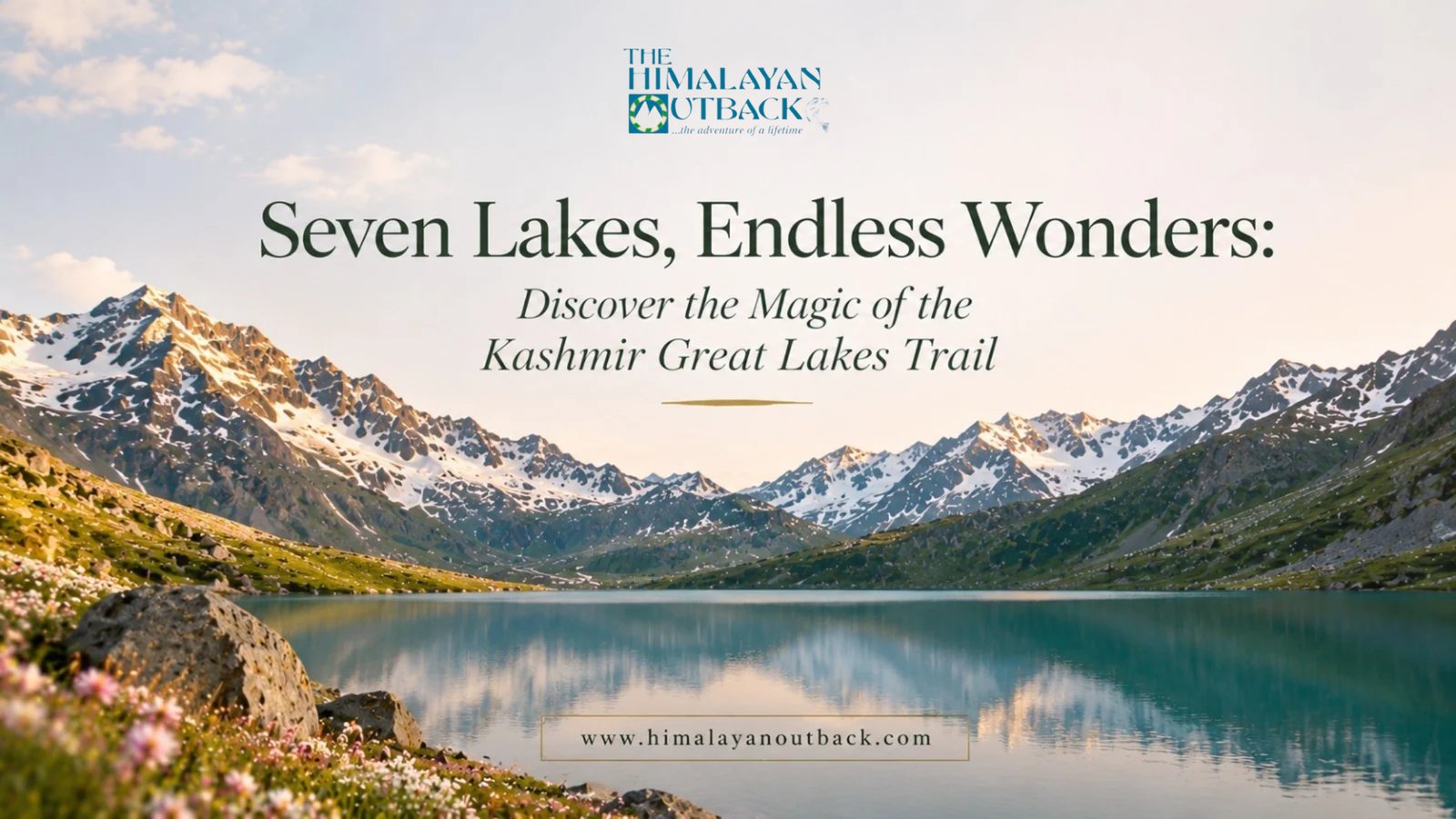
The trail takes its popular name from the string of alpine lakes it’s associated with across the broader Kashmir Himalayan trek network. These typically include Vishansar, Krishansar, Satsar (a cluster of small lakes rather than a single body of water), Gadsar, Gangabal, and Nundkol. Not every operator’s route passes each one, and conditions can determine which lakes are reached on a given departure.
On The Himalayan Outback’s itinerary, trekkers encounter Vishansar and Krishansar as twin lakes set close together, offering a chance to rest, picnic, and even try fly fishing nearby. Their still waters often reflect the surrounding ridgelines, creating a calm contrast to the climbing still ahead.
Gadsar Lake sits below the pass of the same name and offers striking views on the approach from Vishansar. From near the top of Gadsar Pass, trekkers can look back and see both Vishansar and Krishansar spread out below, a vantage point that’s often described as one of the trek’s most memorable moments.
Further along the route, Gangabal and Nundkol lakes lie at the base of Harmukh Peak. Reaching them involves a steep descent over narrow, rocky slopes, but the reward is a campsite beside one of the most scenic lake settings on the entire trail. Seeing Gangabal against the backdrop of Harmukh is frequently cited as a highlight of Kashmir Great Lakes Treks.
A Journey Through Meadows, Valleys and Mountain Passes
Beyond the lakes themselves, the terrain in between shapes much of the overall trekking experience. Early sections wind through forested slopes before opening into alpine grasslands used by nomadic shepherds during the summer grazing season.
Nichnai Pass marks one of the trail’s key crossings, situated at roughly 3,825 meters. The approach involves a moderate climb through grasslands, followed by a steep descent into a wide valley scattered with boulders. This pattern of climb-and-descend repeats throughout the route, testing stamina while delivering constantly changing views.
Gadsar Pass, at approximately 4,200 meters, is the highest point along the trail, as stated on The Himalayan Outback’s official trek page. Crossing it involves a steep, sustained climb, and the payoff is a sweeping view of the lakes below. High-altitude trekking like this demands careful pacing, since thinner air and exposed terrain can make even short climbs feel more strenuous than their distance suggests.
These passes and valleys aren’t simply obstacles between lakes. They give the Kashmir Great Lakes Trek its sense of scale, reminding trekkers that they’re moving through a genuine high-altitude wilderness rather than a curated scenic walk.
What Does the Kashmir Great Lakes Trek Itinerary Look Like?
The Himalayan Outback runs this journey as a 13-day itinerary that extends well beyond the trekking days themselves. The trip begins with arrival in Delhi, followed by a flight to Srinagar and a day set aside for acclimatization and conditioning walks in the Zabarwan mountains.
From there, a three-hour drive brings trekkers to the trailhead near Shekdur, where the six-day trekking section begins. This stretch covers the route through Nichnai, Vishnusar, Gadsar, Mangan Tak, and finally Gangabal, with a rest day built in near Vishnusar to allow for acclimatization and exploration.
After the final trekking day, the route descends to the roadhead at Naranag, followed by a drive back to Srinagar. The remaining days cover the return flight to Delhi and departure, rounding out an itinerary that balances cultural stops in Srinagar with the core six-day trek through the lakes.
Because the schedule includes time for altitude adjustment before and during the trek, it reflects the kind of preparation that high-altitude routes require. This structure is central to how The Himalayan Outback organizes its Kashmir Great Lakes Treks, and it shouldn’t be confused with shorter itineraries offered by other operators covering similar terrain.
When Is the Best Time to Experience the Trail?
According to The Himalayan Outback’s official trek page, the listed trekking windows are 25 June to 10 July and 15 August to 15 September. These periods generally align with more stable summer conditions in the Kashmir Himalayas, though exact conditions vary from year to year.
Early-season departures can still carry traces of snow at higher elevations and around the passes, while meadows tend to be especially green and fresh. Later departures, closer to mid-September, often bring clearer skies and more vivid wildflower displays in the lower valleys, though temperatures can drop more sharply at night.
However, weather at altitude is never fully predictable. Mountain conditions can shift quickly, and this can affect trail access, pass crossings, or daily plans. For this reason, readers interested in Kashmir Great Lakes Treks should confirm current departure dates and trail conditions directly with The Himalayan Outback before booking, rather than assuming fixed weather or lake conditions.
How Difficult Is the Kashmir Great Lakes Trek?
The Himalayan Outback classifies this trek as moderate in difficulty. That rating reflects a combination of factors: long trekking days, significant ascents and descents, uneven and sometimes rocky terrain, and the physical demands of high-altitude trekking.
Crossing passes like Nichnai and Gadsar involves sustained climbing followed by steep, often loose-surfaced descents. Add to that six consecutive days of trekking at elevations above 3,000 meters, and it becomes clear that this isn’t a casual walk, even though the scenery might suggest otherwise.
Beautiful photographs of turquoise lakes and green meadows shouldn’t create the impression that the route is easy. Kashmir Great Lakes Treks reward preparation and reasonable trekking experience, and they aren’t suited to every traveler without some prior conditioning.
How Should Trekkers Prepare for the Journey?
Preparing for a multi-day high-altitude trek starts months, not weeks, before departure. Building cardiovascular fitness through regular walking, hiking, or stair climbing helps the body adjust to sustained exertion at altitude.
Leg strength and stamina matter just as much as general fitness. Trekkers benefit from practicing on hilly terrain with a loaded daypack, since this mimics the uneven ground and pack weight they’ll encounter on the actual trail. Additionally, gradually increasing walking distances in the months leading up to departure helps build the endurance these six trekking days demand.
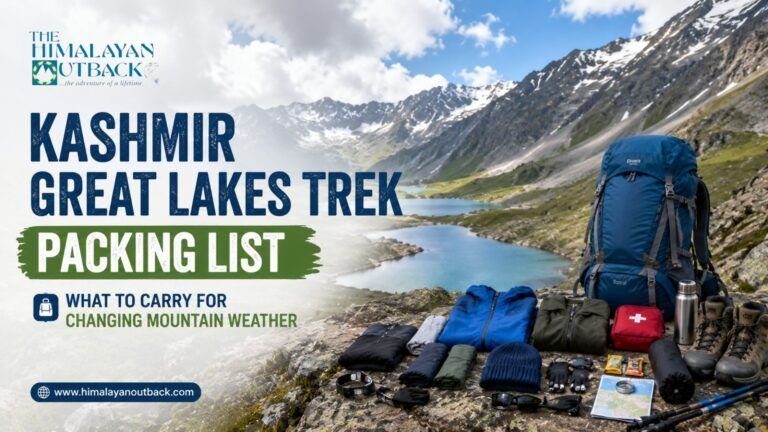
Gear matters too. Sturdy, well broken-in trekking shoes, layered clothing for fluctuating temperatures, rain protection, and warm layers for cold nights at camp are all essential. Staying hydrated, pacing rest breaks sensibly, and following the trek team’s guidance on the trail all contribute to a smoother experience. Because conditions can change quickly in the mountains, flexibility and preparation go hand in hand.
Responsible Trekking: Protecting Kashmir’s Natural Beauty
The alpine lakes and meadows that make this trail so visually striking are also fragile ecosystems. Trekkers play a direct role in keeping them that way. Carrying out all personal waste, rather than leaving it behind at campsites or along the trail, is one of the simplest and most important habits to maintain.
Respecting wildlife and vegetation matters too. Straying off marked paths or disturbing grazing animals and local flora can have lasting effects on areas that take years to recover. Likewise, showing respect toward the nomadic communities who use these meadows seasonally helps preserve the relationship between visitors and the land.
Leaving campsites as clean, or cleaner, than they were found ensures that future trekkers can experience the same unspoiled scenery. Responsible behavior isn’t a side note to Kashmir Great Lakes Treks; it’s part of what keeps the trail worth visiting at all.
Experience the Kashmir Great Lakes Trail with The Himalayan Outback
The Himalayan Outback offers this journey through its official 13-day Kashmir Great Lakes itinerary, built around a moderate difficulty rating, a maximum group size of eight guests, and a highest point of approximately 4,200 meters at Gadsar Pass. This small-group structure allows for a more personalized experience on the trail compared to larger commercial treks.
A well-planned itinerary makes a meaningful difference on a route like this. Built-in acclimatization time, structured daily stages, and local logistics support all help trekkers focus on the experience rather than the uncertainty of self-organizing a high-altitude route. For those considering other trekking and adventure options in the region, The Himalayan Outback’s broader portfolio reflects the same attention to planning and group size.
Readers planning their own Kashmir Great Lakes Treks are encouraged to review the official trek page for the latest details and to contact The Himalayan Outback directly regarding current departure dates, availability, and booking requirements.
Kashmir Great Lakes Trek at a Glance
|
Trek Feature |
Details | Why It Matters to Trekkers |
|
Duration |
13 days | Covers arrival, acclimatization, trekking, and return travel |
| Difficulty | Moderate |
Helps trekkers gauge required fitness and preparation |
|
Highest Altitude |
Gadsar Pass, approximately 4,200 meters | Marks the most physically demanding point on the trail |
| Region | Kashmir |
Situates the trek within the Indian Himalayas |
|
Maximum Group Size |
8 guests | Supports a more personal, manageable trekking experience |
| Trekking Period | Six days of trekking within the itinerary |
Clarifies how much of the 13-day trip is spent on the trail |
| Listed Season | 25 June–10 July and 15 August–15 September |
Indicates the recommended windows for favorable conditions |
A Trail Worth Preparing For
The Kashmir Great Lakes trail offers far more than a backdrop for photographs. It’s a multi-day mountain journey that moves through forests, meadows, high passes, and glacial lakes, each demanding a measure of respect, preparation, and patience from the people who walk it.
For those drawn to high-altitude trekking in India, Kashmir Great Lakes Treks deliver a rare mix of accessibility and genuine mountain challenge. Getting the most out of the experience means training ahead of time, packing thoughtfully, and treating the landscape with the same care it offers back in scenery.
If this trail has caught your attention, reach out to The Himalayan Outback to discuss current departure dates, group availability, and the full itinerary details before you book your own Kashmir Great Lakes Trek.
Frequently Asked Questions
What makes the Kashmir Great Lakes Trek special?
The trek combines alpine lakes, flower-filled meadows, dense forests, and high mountain passes into a single six-day trekking route. This variety of scenery, paired with the changing character of each lake along the way, sets it apart from many other Himalayan treks.
How many days does The Himalayan Outback’s Kashmir Great Lakes Trek take?
The Himalayan Outback runs this trek over 13 days total, including travel to and from Srinagar, acclimatization time, and six consecutive days of trekking through the lakes.
What is the highest point on the Kashmir Great Lakes trail?
The highest point is Gadsar Pass, at approximately 4,200 meters, as listed on The Himalayan Outback’s official trek page.
When can travelers join The Himalayan Outback’s Kashmir Great Lakes Trek?
The listed trekking windows are 25 June to 10 July and 15 August to 15 September. Travelers should confirm current departure dates and availability directly with The Himalayan Outback before booking.