Stories of giant fish lurking beneath river waters have fascinated people for generations. Among the most mysterious is the Devil Catfish, often linked to frightening tales and river legends. Known scientifically as the Goonch Catfish, this enormous freshwater fish has earned a reputation as a river monster. But can it really attack humans, or is the truth far less dramatic?
Quick Answer: Can a Devil Catfish Attack Humans?
While the Goonch Catfish is a large and powerful freshwater fish, stories of deliberate attacks on humans are largely based on folklore, anecdotal reports, and unverified accounts. Scientific evidence remains extremely limited. Ultimately, the species is primarily known as a freshwater predator within river ecosystems, rather than a proven threat to people.
What Is a Goonch Catfish?
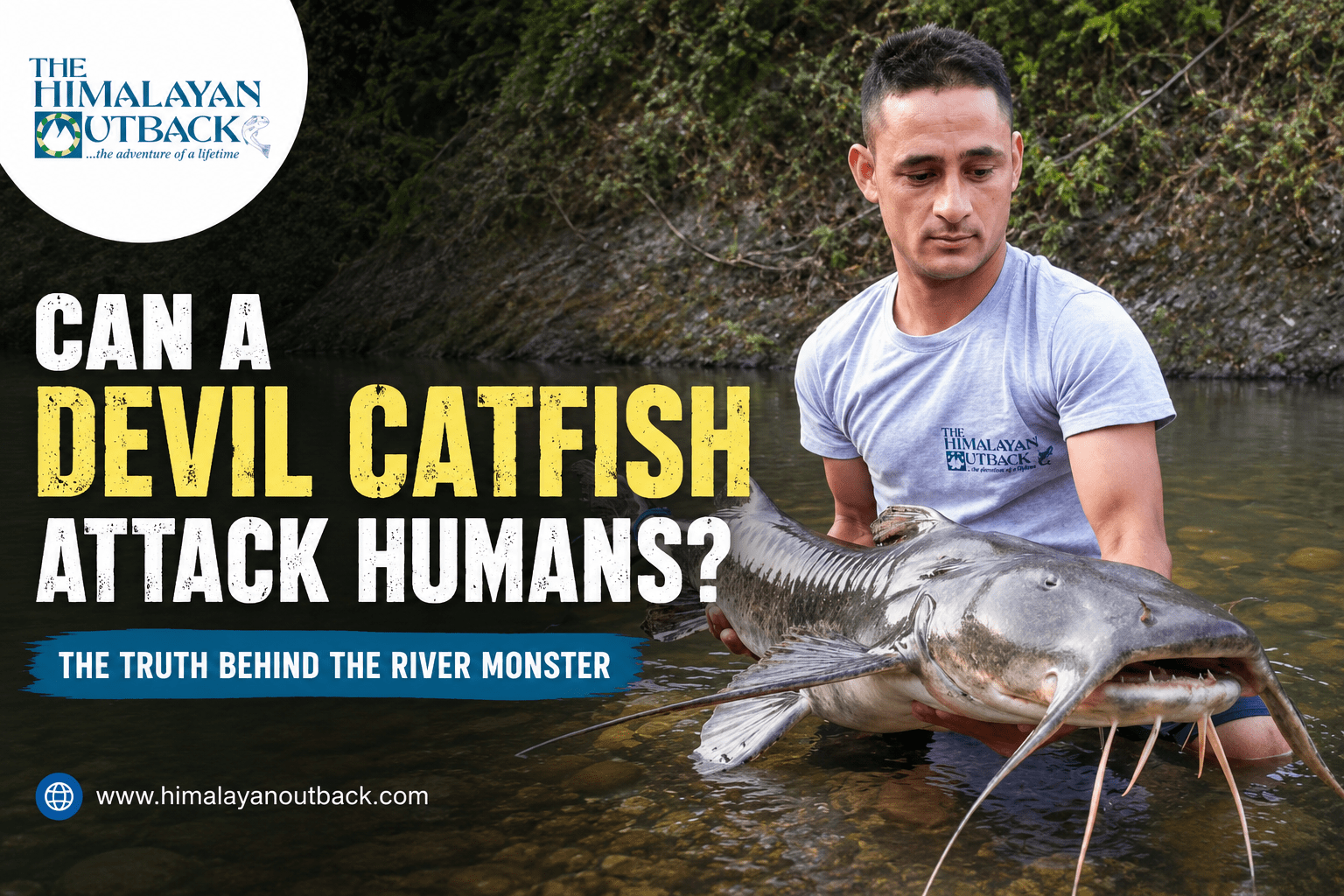
The Goonch Catfish is a fascinating giant freshwater catfish found in South Asia. Scientifically named Bagariusyarrelli, it thrives in fast-flowing waters. It possesses a distinct, prehistoric appearance.
This giant catfish species plays a crucial role in maintaining balance within its habitat. Anglers and wildlife enthusiasts travel worldwide to observe this unique species. It remains a prized sighting for anyone exploring river wildlife India.
Why Is It Called the Devil Catfish?
People often call it the Devil Catfish due to its intimidating look and massive size. It has a broad head, sharp teeth, and rough skin. These physical traits easily inspire frightening local names.
Additionally, the fish often dwells in dark, murky river depths. This mysterious behaviour adds to its ominous reputation. Naturally, such characteristics spark rumors of a river monster fish.
The Origins of the River Monster Stories
Local folklore in regions near the Himalayan rivers frequently mentions giant fish. Stories claim these creatures pull livestock or even people underwater. These tales grew over decades through oral traditions.
During the early 2000s, television shows popularized these stories globally. They linked the Goonch fish to mysterious disappearances in rivers. However, entertainment often exaggerates reality for dramatic effect.
Fact vs Myth: What Does Science Say?
Science paints a very different picture of this aquatic wildlife. Biologists study these fish as vital components of the freshwater ecosystem. They rely on facts rather than sensational myths.
Table 2: Myth vs Reality
| Myth | Reality |
| River Monster Stories | Popularized by TV and folklore; not scientifically proven. |
| Human Attacks | No verified scientific records of deliberate human predation. |
| Aggressive Behaviour | They are ambush predators targeting smaller fish, not humans. |
| Extraordinary Size Claims | They grow large, but weights over 200 lbs are exceedingly rare. |
| Feeding Habits | Primarily scavengers and fish-eaters. |
| River Legends | Based on cultural stories rather than zoological facts. |
Habitat and Distribution of the Goonch Catfish
The Goonch Catfish prefers highly oxygenated, fast-moving waters. You will typically find them in the deep pools of Himalayan rivers. Their range covers parts of India, Nepal, and Southeast Asia.
They use rocks and underwater structures to hide from the strong currents. This specific habitat requirement makes them vulnerable to dam construction. Protecting these environments is vital for their survival.
Size, Appearance, and Feeding Behaviour
This freshwater predator possesses a flattened body to navigate swift currents. Its large mouth features rows of sharp, backward-pointing teeth. It uses camouflage to blend perfectly with riverbeds.
Table 1: Goonch Catfish Facts
| Feature | Goonch Catfish Facts |
| Scientific Classification | Bagariusyarrelli |
| Habitat | Fast-flowing, highly oxygenated rivers |
| Size Range | Typically 1 to 2 meters in length |
| Diet | Fish, crustaceans, and aquatic debris |
| Behaviour | Bottom-dwelling ambush predator |
| Distribution | South Asia, particularly India and Nepal |
| Ecological Role | Apex predator and scavenger |
| Conservation Importance | Indicator of river health |
Could a Goonch Catfish Be Dangerous?
It is highly unlikely that this fish poses a direct danger to humans. They do possess sharp teeth and powerful jaws. Mishandling a caught fish could result in an accidental bite.
However, they do not actively hunt humans. The stories of them dragging people underwater lack definitive proof. Treat them with respect as wild animals, but fear is unnecessary.
Conservation and Ecological Importance
The Goonch Catfish acts as a crucial indicator of a healthy freshwater ecosystem. They help control populations of smaller fish. They also clean the river by scavenging remains.
Unfortunately, their numbers are declining rapidly. Habitat loss, pollution, and overfishing threaten this magnificent species. Conservation efforts are necessary to protect this vital river wildlife.
Where Can Wildlife Enthusiasts Learn More About the Species?
Books, documentaries, and scientific journals offer excellent information. However, nothing beats witnessing their natural habitat firsthand. Field observation provides the most accurate insights into their behaviour.
Connecting with experienced local guides provides invaluable knowledge. Conservation organizations also publish updated research regarding their population status. Education is the first step toward effective wildlife conservation.
Why Adventure Travelers Are Fascinated by the Goonch Catfish
Adventure travelers constantly seek unique and rare experiences. Tracking a legendary giant freshwater catfish offers unmatched excitement. It combines the thrill of exploration with beautiful, remote landscapes.
The mystery surrounding the species adds to the allure. Photographers and anglers respect the challenge required to find them. It is a true test of patience and wilderness skills.
Why Explore Himalayan Wildlife with The Himalayan Outback?
The Himalayan Outback provides expertly guided, responsible expeditions. Our team understands the delicate balance of the Himalayan rivers. We prioritize conservation and ethical wildlife observation.
When you book freshwater wildlife expeditions with The Himalayan Outback, you gain access to seasoned experts. We help you explore river ecosystems responsibly. Contact The Himalayan Outback today to start your adventure.
Conclusion
The Devil Catfish is a marvel of nature, not a monster to fear. While the Goonch Catfish looks intimidating, it plays an essential ecological role. Separating fact from fiction helps us appreciate this incredible creature.
By promoting education and responsible tourism, we can ensure their survival. Embrace the opportunity to learn about these magnificent giants. Discover Himalayan Wildlife Adventures and experience nature through expert-guided exploration.
Tips for Responsible Wildlife Observation
- Respect natural habitats
- Avoid disturbing wildlife
- Follow local regulations
- Support conservation efforts
- Use ethical photography practices
- Learn from expert guides
- Prioritize environmental protection
Wildlife Enthusiast Checklist
- ✓ Research the species beforehand
- ✓ Learn about river ecosystems
- ✓ Travel with experienced guides
- ✓ Respect wildlife boundaries
- ✓ Follow safety guidelines
- ✓ Support conservation-focused tourism
- ✓ Carry appropriate outdoor gear
- ✓ Practice responsible photography
Frequently Asked Questions (FAQs)
How large can a Goonch Catfish grow?
A Goonch Catfish can reach impressive sizes, often measuring between 1 and 2 meters long. While historical accounts claim they can exceed 200 pounds, finding individuals of that massive size is increasingly rare today due to habitat pressures.
Where is the Goonch Catfish found?
This giant catfish species primarily inhabits the fast-flowing, highly oxygenated waters of South Asia. They are most commonly found in the deep, rocky pools of Himalayan rivers running through India and Nepal.
Is the Devil Catfish dangerous to humans?
There is no verified scientific evidence that they actively hunt or attack humans. While they possess sharp teeth and strong jaws, stories of deliberate attacks on people are based on unverified folklore rather than biological facts.
Why is the Goonch Catfish important to river ecosystems?
They act as apex predators and scavengers within their natural habitats. By controlling smaller fish populations and consuming organic debris, they help maintain the health and balance of the complex freshwater ecosystem.