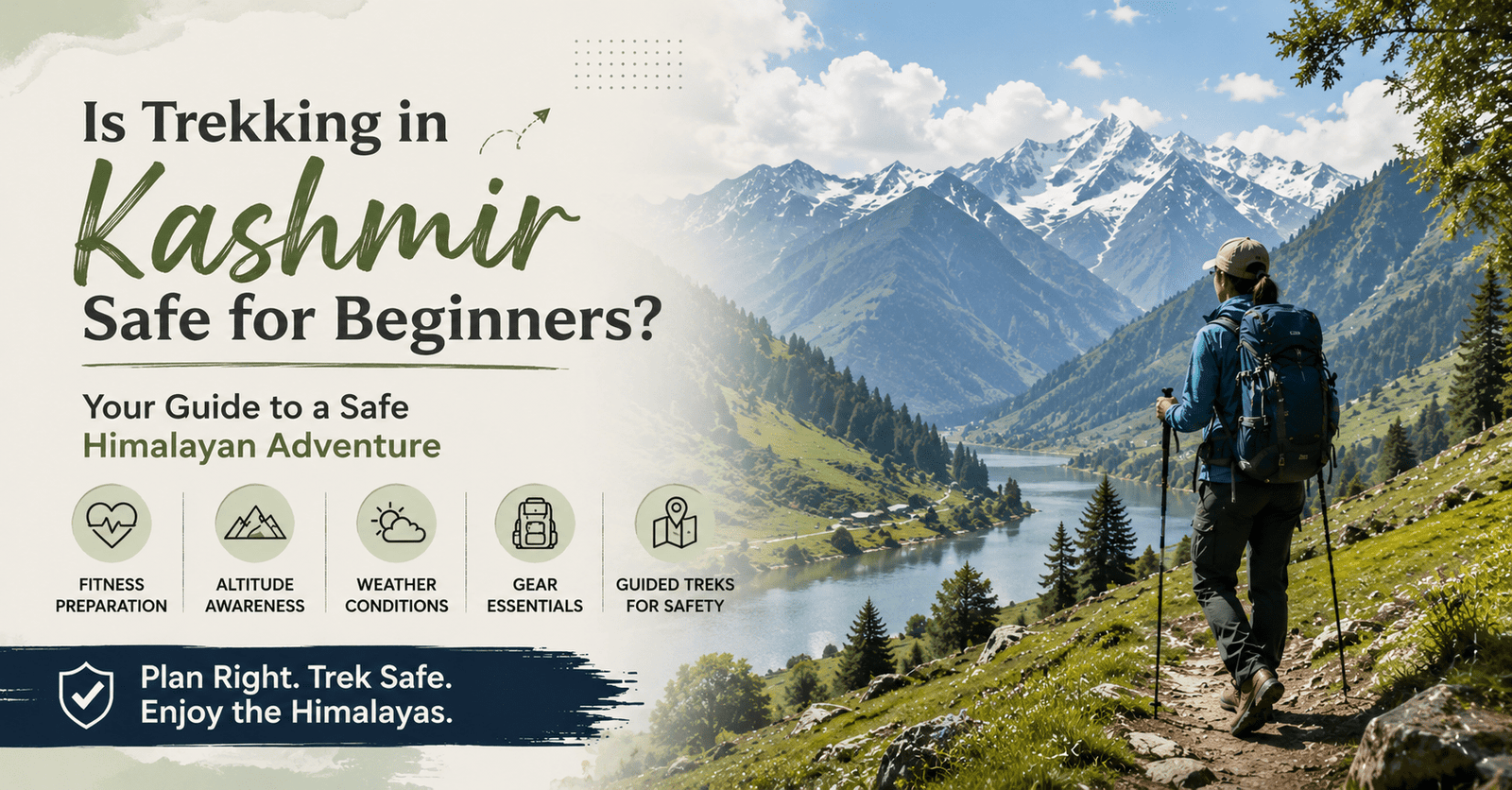
Trekking in Kashmir is often described as one of the most beautiful adventure experiences in India. From alpine lakes and flower-filled meadows to breathtaking mountain views, the region attracts thousands of trekkers every year. However, many first-time trekkers ask the same question: Is trekking in Kashmir safe for beginners? Understanding the realities of trail conditions, preparation requirements, and guided trekking support can help you make an informed decision.
Let’s settle the big concern first. Trekking in Kashmir is generally safe for beginners who prepare well and choose guided support. Most popular routes follow established trails through alpine meadows and lakes. With basic fitness, the right gear, and an experienced trek leader, first-timers can enjoy the Himalayas with confidence.
This guide answers the questions beginners worry about most—safety, fitness, weather, altitude, and guides. You’ll also find checklists, tables, and practical tips to help you plan your first Himalayan adventure.
Quick Answer: Is Trekking in Kashmir Safe for Beginners?
Quick answer: Yes, trekking in Kashmir can be safe for beginners. Proper preparation matters most. Build basic fitness, pack the right gear, and allow time to acclimatize at altitude. Choose a guided trek with an experienced operator. Skilled trek leaders handle navigation, weather decisions, and emergencies, which makes high-altitude trails far safer for first-time trekkers.
Why Trekking in Kashmir Attracts First-Time Trekkers
Kashmir sits in the western Himalayas and offers some of the most scenic trails in India. The landscapes feel almost unreal, yet many routes stay beginner-friendly.
Here’s why first-timers love it:
- Stunning scenery: Glacial lakes, green meadows, and wildflowers fill every day.
- Well-established trails: Popular routes are clear and frequently trekked in season.
- Moderate options: Several treks suit beginners with average fitness.
- Rich culture: Nomadic shepherds and alpine villages add depth to the journey.
The mix of beauty and accessibility makes Kashmir a top pick for a first Himalayan trek.
Understanding the Difficulty Level of Popular Kashmir Treks
Not every Kashmir trek is the same. Difficulty depends on distance, altitude, and daily trekking hours.
Most beginner-friendly treks fall into the moderate category. They involve:
- 4 to 7 hours of walking per day
- Gradual climbs with some steep sections
- Mountain passes above 4,000 meters
- Multiple campsites over several days
The Kashmir Great Lakes Trek, for example, is rated moderate. It’s challenging but achievable for fit beginners who train ahead of time. You don’t need technical climbing skills—just stamina and steady determination.
What Makes the Kashmir Great Lakes Trek Special?
The Kashmir Great Lakes Trek is one of India’s most loved alpine routes. It rewards trekkers with a chain of glacial lakes set against towering peaks.
Route overview: The full journey runs about 13 days, with six days of actual trekking inside a national park. The trek typically runs from late June to mid-September.
Scenic highlights:
- Twin lakes Vishnusar and Kishansar
- Gadsar Pass at 4,200 meters, the highest point
- Gangabal and Nandkol lakes below Harmukh Peak
- Meadows, maple forests, and silver birch slopes
Difficulty level: Rated moderate, with a maximum group size of eight guests. Daily trekking ranges from 4 to 7 hours.
Why beginners love it: The trail mixes gentle meadows with rewarding climbs. Built-in rest and acclimatization days—like a full rest day at Vishnusar—help your body adjust. Experienced trek leaders share mountain safety skills before you hit the harder sections.
This balance of beauty, structure, and support makes it ideal for first-time trekkers seeking a real Himalayan adventure.
Key Safety Factors Every Beginner Should Know
Safety on a Himalayan trek comes down to a few key factors. Understanding them helps you trek smarter.
| Safety Factor | Why It Matters for Beginners |
| Trek Difficulty | Matching the trail to your fitness prevents exhaustion and injury. |
| Weather Awareness | Mountain weather shifts fast; timing and forecasts keep you safe. |
| Altitude Management | Gradual ascent reduces the risk of altitude sickness. |
| Physical Fitness | Good stamina helps you handle long days and steep climbs. |
| Guided Support | Trek leaders make safe decisions and manage risks for you. |
| Emergency Planning | Clear plans ensure quick help if something goes wrong. |
| Navigation | Correct route-finding avoids dangerous off-trail mistakes. |
| Equipment Quality | Reliable gear protects you from cold, rain, and rough terrain. |
Weather Conditions and Seasonal Considerations
Weather plays a huge role in trekking safety. Kashmir’s high-altitude trails are best trekked in summer.
The ideal season runs from late June to mid-September. During these months:
- Days are mostly clear and pleasant.
- Snow has melted on most trails.
- Meadows bloom with wildflowers.
- Lakes reflect the surrounding peaks.
Even in summer, mountain weather can change quickly. Afternoon rain, cold nights, and strong sun are all common. Always check the forecast before you start, and trust your trek leader’s calls on weather.
Altitude Awareness and Acclimatization
High altitude is the most common concern for new trekkers. The Kashmir Great Lakes Trek climbs above 4,000 meters at Gadsar Pass.
At higher elevations, the air holds less oxygen. This can cause altitude sickness if you climb too fast. Symptoms include headaches, nausea, and fatigue.
The good news? Smart planning reduces the risk. Here’s how:
- Acclimatize early: Spend a day or two adjusting before the trek.
- Climb gradually: Well-planned itineraries include rest days.
- Stay hydrated: Drink water throughout the day.
- Listen to your body: Report symptoms to your guide right away.
Quality operators build acclimatization into their schedules. This single factor makes high-altitude trekking far safer for beginners.
Fitness Requirements for Beginner Trekkers
You don’t need to be an athlete to trek in Kashmir. But you do need a base level of fitness.
Start training four to six weeks before your trek. Focus on:
- Cardio: Walking, jogging, or cycling builds endurance.
- Leg strength: Squats and lunges prepare you for climbs.
- Practice hikes: Walk with a loaded backpack on uneven ground.
- Stamina: Aim to walk comfortably for several hours.
If you can climb stairs without heavy breathing and walk for a few hours, you’re on the right track. Steady preparation makes a long trekking day far more enjoyable.
Essential Gear and Preparation Tips
The right gear keeps you warm, dry, and comfortable. Poor equipment is a common cause of trouble on the trail.
Beginner Trekking Safety Checklist
✓ Fitness preparation completed
✓ Proper trekking shoes purchased
✓ Backpack tested before trek
✓ Weather forecast checked
✓ Essential medications packed
✓ Hydration plan prepared
✓ Guided trekking support arranged
✓ Travel insurance considered
Break in your trekking shoes before the trek to avoid blisters. Pack layers for warmth, a rain jacket, and a warm sleeping setup. Carry a basic first-aid kit and any personal medication. When in doubt, ask your operator for a full gear list.
Why Guided Treks Are Recommended for Beginners
Guided treks are the safest choice for first-timers. An experienced team handles the hard parts so you can focus on the experience.
A good guided trek offers:
- Expert trek leaders who know the terrain and weather.
- Safe decision-making on routes, pacing, and rest.
- Emergency support if anyone falls ill or gets hurt.
- Logistics handled, including camps, meals, and permits.
- Mountain safety training before tough sections.
The Himalayan Outback, for instance, provides experienced trek leaders and safety-focused operations. This kind of local expertise removes much of the guesswork for beginners.
Common Mistakes First-Time Trekkers Should Avoid
Many beginner problems are easy to prevent. Watch out for these common mistakes:
- Skipping fitness prep: Long days feel much harder without training.
- Ignoring altitude: Rushing the climb invites altitude sickness.
- Poor footwear: New or worn shoes cause painful blisters.
- Overpacking: A heavy bag drains your energy fast.
- Going unguided: Solo high-altitude trekking adds real risk.
- Ignoring weather: Pushing on in bad weather is dangerous.
| Beginner Concern | Practical Solution |
| Fear of Altitude | Choose itineraries with rest and acclimatization days. |
| Lack of Experience | Join a guided trek with skilled leaders. |
| Physical Fitness | Train for 4 to 6 weeks before your trek. |
| Weather Conditions | Trek in season and follow your guide’s calls. |
| Navigation Issues | Stay with your group and trust expert trek leaders. |
| Packing Concerns | Use a tested gear checklist from your operator. |
| Group Safety | Pick small-group treks for closer support. |
| Emergency Situations | Choose operators with clear emergency plans. |
Common Safety Myths About Trekking in Kashmir
Misinformation stops many people from trying their first trek. Let’s clear up a few myths.
Myth 1: Kashmir treks are only for expert trekkers.
Reality: Many routes are moderate and beginner-friendly with the right prep.
Myth 2: Beginners cannot complete high-altitude treks.
Reality: With gradual ascent and guidance, fit beginners reach passes above 4,000 meters every season.
Myth 3: Guided treks are unnecessary.
Reality: Guides handle safety, navigation, and emergencies. For beginners, this support is invaluable.
Myth 4: Trekking is unsafe throughout the region.
Reality: Popular trekking areas are well-traveled in season. Reputable operators monitor conditions closely.
The Kashmir Great Lakes Trek for Beginners
The Kashmir Great Lakes Trek deserves a closer look. It’s a favorite among first-timers for good reason.
The trek crosses lush meadows, maple and silver birch forests, and a string of glacial lakes. Highlights include the twin Vishnusar and Kishansar lakes, the climb over Gadsar Pass, and the stunning Gangabal and Nandkol lakes.
Its moderate rating and built-in rest days make it manageable for prepared beginners. Small group sizes—up to eight guests—mean more attention from your trek leaders. These leaders share practical mountain safety knowledge before the harder days, which builds confidence on the trail.
For anyone planning their first trekking in Kashmir experience, this route offers the perfect blend of challenge and reward.
Why Choose The Himalayan Outback for Kashmir Treks?
Choosing the right operator shapes your entire experience. The Himalayan Outback stands out for its focus on safety and beginner support.
Here’s what they bring:
- Experienced trek leaders with deep local knowledge.
- Safety-focused operations built into every itinerary.
- Trek planning support from arrival to departure.
- Small group sizes for personal attention.
- Guided Himalayan trekking adventures designed for all levels.
For first-timers, this expertise turns a daunting idea into an achievable adventure. If you’re considering your first Himalayan trek, The Himalayan Outback is a trusted choice for guided trekking in Kashmir.
Ready to start your Kashmir trekking journey? Contact The Himalayan Outback for expert trek guidance and plan your guided trek today.
Your First Himalayan Adventure Starts Here
Trekking in Kashmir can absolutely be safe for beginners. The key is preparation. Build your fitness, pack smart, respect the altitude, and choose a guided trek with an experienced team.
The Kashmir Great Lakes Trek proves that beginners can enjoy world-class scenery without technical climbing skills. With the right support, the Himalayas feel welcoming rather than intimidating.
Take the first step with confidence. Explore beginner trekking experiences and reach out to The Himalayan Outback to plan a safe, unforgettable adventure.
Frequently Asked Questions (FAQs)
- Is trekking in Kashmir suitable for complete beginners?
Yes, trekking in Kashmir suits complete beginners who prepare properly. Choose a moderate, beginner-friendly route and join a guided trek. With four to six weeks of basic fitness training, the right gear, and experienced trek leaders, first-timers can safely enjoy the Himalayas. - What fitness level is required for the Kashmir Great Lakes Trek?
You need moderate fitness for the Kashmir Great Lakes Trek. The trail involves 4 to 7 hours of walking daily. Prepare with cardio, leg strength, and practice hikes for four to six weeks. If you can walk several hours comfortably, you’re ready. - What is the best season for trekking in Kashmir?
The best season runs from late June to mid-September. During these months, snow has melted, meadows bloom, and skies stay mostly clear. Summer offers the safest, most scenic conditions for high-altitude treks like the Kashmir Great Lakes Trek. - Why should beginners choose a guided trek?
Beginners should choose guided treks because experienced leaders manage safety, navigation, and emergencies. They plan acclimatization, handle logistics, and make smart weather decisions. This support removes guesswork and stress, letting first-timers enjoy the experience while staying safe on high-altitude trails.