The Himalayas invoke a sense of wonder that few other places on Earth can match. For adventure seekers and nature enthusiasts, the challenge isn’t finding a mountain to climb, but finding a path where silence still reigns supreme. Far away from the crowded commercial trails lies a hidden gem in the Kullu district of Himachal Pradesh: The Great Himalayan National Park (GHNP).
Established in 1984 and declared a UNESCO World Heritage Site in 2014, this park is a sanctuary in the truest sense of the word. It protects a fragile ecosystem that supports over 31 mammal species and 200 bird species. Unlike popular trekking hubs that teem with tea houses and tourists, this park offers a raw, unfiltered connection with nature. You aren’t just walking through a landscape; you are stepping into a protected biodiversity hotspot.
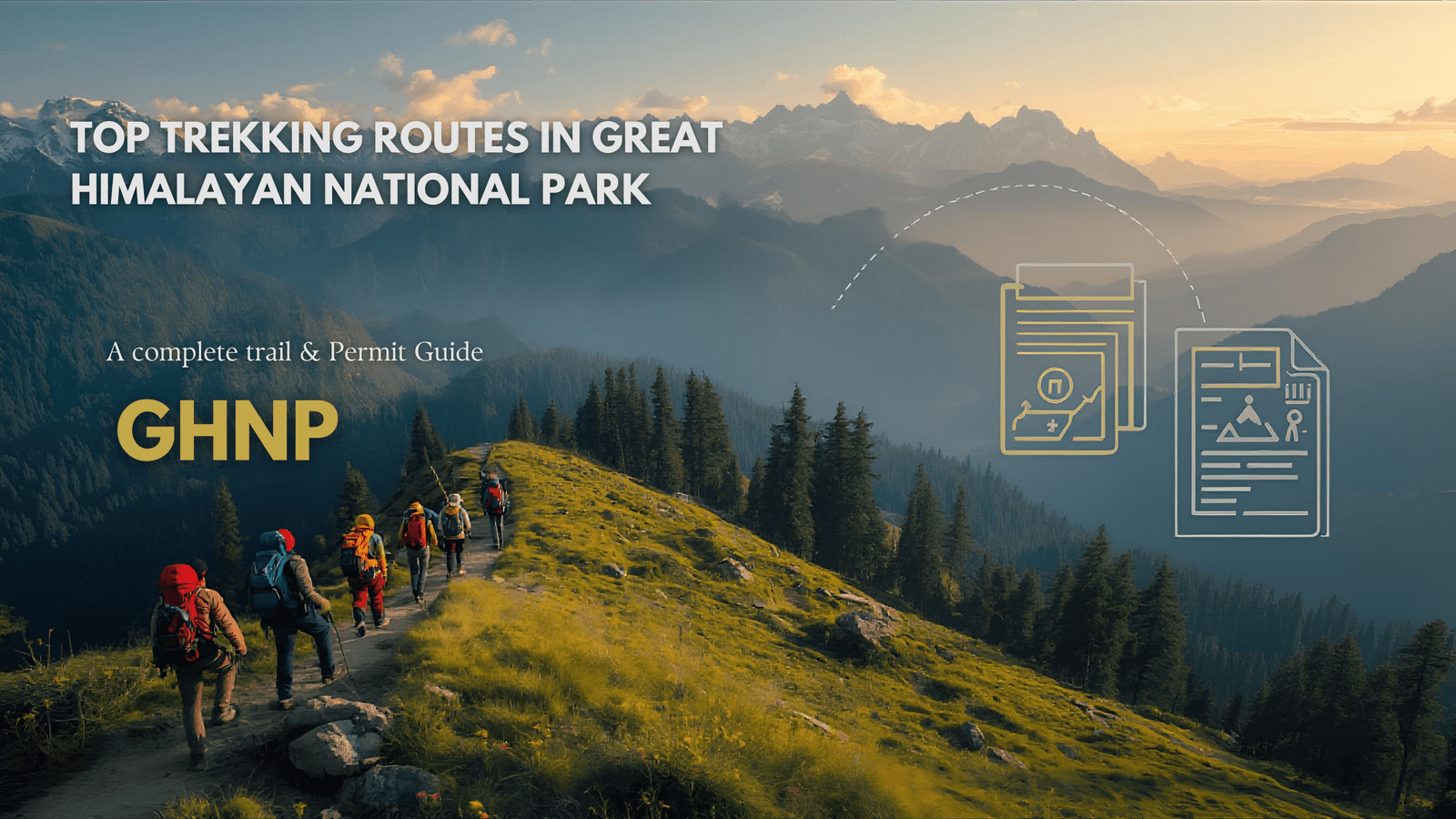
Navigating this vast wilderness requires preparation and local knowledge. The terrain ranges from dense pine forests to high-altitude meadows, offering spectacular views and chances to spot rare wildlife. If you are looking to escape the noise and experience the mountains as they were centuries ago, exploring the trekking routes in Great Himalayan National Park is the answer.
Why Trek in the Great Himalayan National Park?
The GHNP is distinct from other trekking destinations in India because of its strict conservation status. This isn’t a place for casual tourism; it is a serious destination for those who respect the environment.
The park covers a massive area of varied altitudes, but its core zones are where the magic happens. Here, the “Blue Poppy” blooms, and the elusive snow leopard prowls. The trails are pristine, largely because the number of trekkers is regulated. You won’t find discarded plastic wrappers lining the path here. Instead, you will find undisturbed trails that wind through oak and deodar forests, opening up to vast alpine pastures.
Choosing to explore the trekking routes in Great Himalayan National Park means choosing solitude. It is common to hike for days without seeing another group, allowing for a deeply personal experience with the mountains.
The Signature Route: Gushaini to Rakhundi Top
While there are several entry points into the park, the route starting from the quaint village of Gushaini offers one of the most comprehensive experiences. This trail takes you from the eco-zone buffer right into the heart of the park’s core zone.
Here is a breakdown of what this spectacular trail entails.
The Gateway: Gushaini (1,500m)
Your journey begins in Gushaini, a small hamlet sitting on the banks of the Tirthan River. This river is famous for trout fishing, and the village serves as the perfect acclimatization point. Before heading into the higher altitudes, spending a day here allows you to adjust to the mountain air while exploring the riverbanks.
Step 1: The Eco-Zone Walk to Rolla (2,100m)
The trek officially starts with a 30-minute drive from Gushaini to the road head. From there, you step onto the trail. The first leg towards Rolla is relatively gentle, following the Tirthan Nallah. This section walks you through the park’s eco-zone. It is a fantastic introduction to the terrain, offering slight inclines without being overly strenuous. The sound of the river is your constant companion as you make your way to the campsite at Rolla.
Step 2: The Climb to Shilt (3,100m)
This is where the adventure truly begins. The trek from Rolla to Shilt involves a steep climb covering about 7 kilometers. You will ascend through dense, mixed forests that feel ancient and untouched.
This particular stretch of forest is significant for birdwatchers. It is a known habitat for the Western Horned Tragopan, the state bird of Himachal Pradesh. These birds are rare and shy, so keep your voice low and your eyes peeled. Emerging from the forest into the meadow at Shilt feels like a triumph, offering your first high-altitude vistas of the trip.
Step 3: The Summit Views at Rakhundi (3,622m)
The push from Shilt to Rakhundi Top is a gradual climb, but the rewards are immense. At 3,622 meters, Rakhundi offers a panoramic view of the Great Himalayan National Park in all directions.
The terrain here shifts from forest to alpine meadow. This high-altitude landscape is the domain of the Himalayan Tahr and the iridescent Monal Pheasant. The campsite at Guntro, located just beyond the peak, provides a front-row seat to the night sky. With zero light pollution, the Milky Way is often visible to the naked eye, especially around the new moon.
Wildlife Encounters on the Trail
The biodiversity along the trekking routes in Great Himalayan National Park is its crowning glory. Because the trails are quiet, your chances of spotting wildlife increase significantly compared to busier treks.
- Mammals: Keep a lookout for the Himalayan Black Bear, the Himalayan Musk Deer, and the Blue Sheep (Bharal). In the higher rocky outcrops, you might spot the sure-footed Himalayan Tahr.
- Birds:The park is a birder’s paradise. Aside from the Western Horned Tragopan and Monal, the skies are often patrolled by Golden Eagles and Bearded Vultures (Lammergeiers).
- Flora:The park is home to over 1,000 plant species, including rare medicinal herbs that grow exclusively in this region.
Best Time to Visit
Timing is everything when planning a high-altitude trek. The park has specific windows where the weather is favorable and the trails are accessible.
According to local experts, the prime seasons for accessing the trekking routes in Great Himalayan National Park are:
- Summer: 25th June to 10th July.
- Post-Monsoon: 15th August to 15th September.
During these windows, the flora is in full bloom, and the visibility is generally excellent. The monsoon rains preceding the August window leave the meadows lush and vibrant green.
Logistics: Getting There and Permits
Accessing this remote paradise requires some logistical planning. The nearest airport is Bhuntar (Kullu).
- By Air: Take a flight from Delhi to Bhuntar Airport.
- By Road: From the airport, it is approximately a 2-hour drive to the lodge at Gushaini.
Because this is a protected area, you cannot simply wander in. Permits are mandatory for entering the core zone of the park. These regulations help maintain the park’s pristine condition and limit the number of visitors.
The best way to manage logistics, permits, and safety is to travel with a reputable operator. Companies like The Himalayan Outback specialize in this region. They handle the complex logistics, including airport transfers, luxury lodge accommodation in Gushaini, camping gear, and experienced guides who know the terrain and wildlife behavior. Their itineraries are designed to ensure safety while maximizing your chances of spotting wildlife.
Experience the Himalayas Untouched
The mountains have a way of putting life into perspective, and nowhere is this truer than in the silent valleys of the Kullu district. A trek here is more than a physical challenge; it is a reset button for the mind.
If you are ready to trade the noise of the city for the call of the Western Horned Tragopan and the rush of the Tirthan River, the Great Himalayan National Park is waiting. Whether you are a seasoned trekker or a nature lover looking for your next great escape, this UNESCO World Heritage Site offers an adventure that remains etched in memory long after the descent.
To plan your expedition and ensure you have the correct permits and guides, reach out to The Himalayan Outback and start your journey toward the clouds.