Most travelers flock to the mountains during the balmy summer months, seeking escape from the scorching plains. However, a growing community of adventurers knows that the true magic of the Himalayas reveals itself only when the mercury drops. The landscapes transform into a pristine white canvas, the crowds disperse, and the silence becomes profound. This is the allure of winter trekking in India—a challenge that rewards you with views and experiences that summer simply cannot match.
Embarking on a journey through snow-laden trails requires a different mindset and preparation level compared to fair-weather hiking. The air is crisper, the days are shorter, and the physical demands are higher. Yet, standing atop a summit with a panoramic view of frozen peaks makes every breathless step worthwhile. Whether you are a seasoned mountaineer or a novice looking for your first snow experience, the Indian Himalayas offer a diverse range of trails suited for various skill levels.
The Unique Appeal of a Winter Expedition
Why choose the colder months? For starters, the atmosphere is entirely different. Popular trails that are teeming with hikers in June are often empty in January, offering a sense of solitude that is hard to find elsewhere. The visual drama is also heightened; forests of pine and oak are dusted with frost, and the stark contrast between the blue sky and white snow creates a photographer’s paradise.
Furthermore, winter trekking in India allows you to witness the resilience of mountain culture. You see how local villages adapt to the harsh conditions, keeping their hearths warm and their traditions alive. It is an immersive experience that goes beyond mere sightseeing.
Top Destinations for Snow Treks
India’s northern frontier is vast, and choosing the right trail is crucial for a successful winter trek. Here are some of the premier regions and routes to consider.
Uttarakhand: The Land of Gods and Snow
Uttarakhand is perhaps the most popular destination for winter trekking in India due to its accessibility and the variety of trails available.
- DayaraBugyal: Mentioned as a highlight by The Himalayan Outback, this trek is famous for its sprawling meadows. In winter, these green pastures turn into endless slopes of snow, making it an ideal choice for beginners and families. The panoramic view of the Gangotri range from the top is unforgettable.
- Kedarkantha: Known for its classic summit climb, this trek offers a satisfying challenge without requiring technical mountaineering skills. The campsites, located within pine forests, are stunning when covered in fresh snow.
- Brahmatal: This route is unique because it offers views of the majestic Mt. Trishul and Nanda Ghunti right from the trail. The frozen lake at the top adds a mystical element to the journey.
Himachal Pradesh: Alpine Beauty
Himachal Pradesh offers a rugged terrain that becomes an adventure playground in winter.
- Prashar Lake: A shorter trek that is perfect for a weekend getaway. The lake, with its floating island and the ancient pagoda-style temple dedicated to Sage Prashar, looks ethereal surrounded by snow.
- Hampta Valley (Winter Edition): While the full pass crossing is a monsoon favorite, the lower reaches of the Hampta Valley offer excellent snow trekking opportunities in the winter months, surrounded by towering rock faces.
Ladakh: The Frozen Frontier
For those seeking an extreme adventure, Ladakh offers the Chadar Trek. This is not a climb but a walk on the frozen Zanskar River. It is a test of endurance against sub-zero temperatures, walking through a gorge with vertical cliffs on both sides. It remains one of the most unique experiences of winter trekking in India.
Essential Gear for Surviving the Cold
The success of your trek depends heavily on your gear. In the mountains, being cold is not just uncomfortable; it can be dangerous.
The Layering System
Forget the single heavy coat. The key to regulating body temperature is layering.
- Base Layer: Moisture-wicking thermals (top and bottom) that keep sweat away from your skin.
- Mid Layer: Fleece jackets or wool sweaters that trap body heat.
- Insulation Layer: A down or synthetic jacket for when you are at the campsite or taking a break.
- Outer Shell: A windproof and waterproof jacket to protect you from snowstorms and biting winds.
Footwear
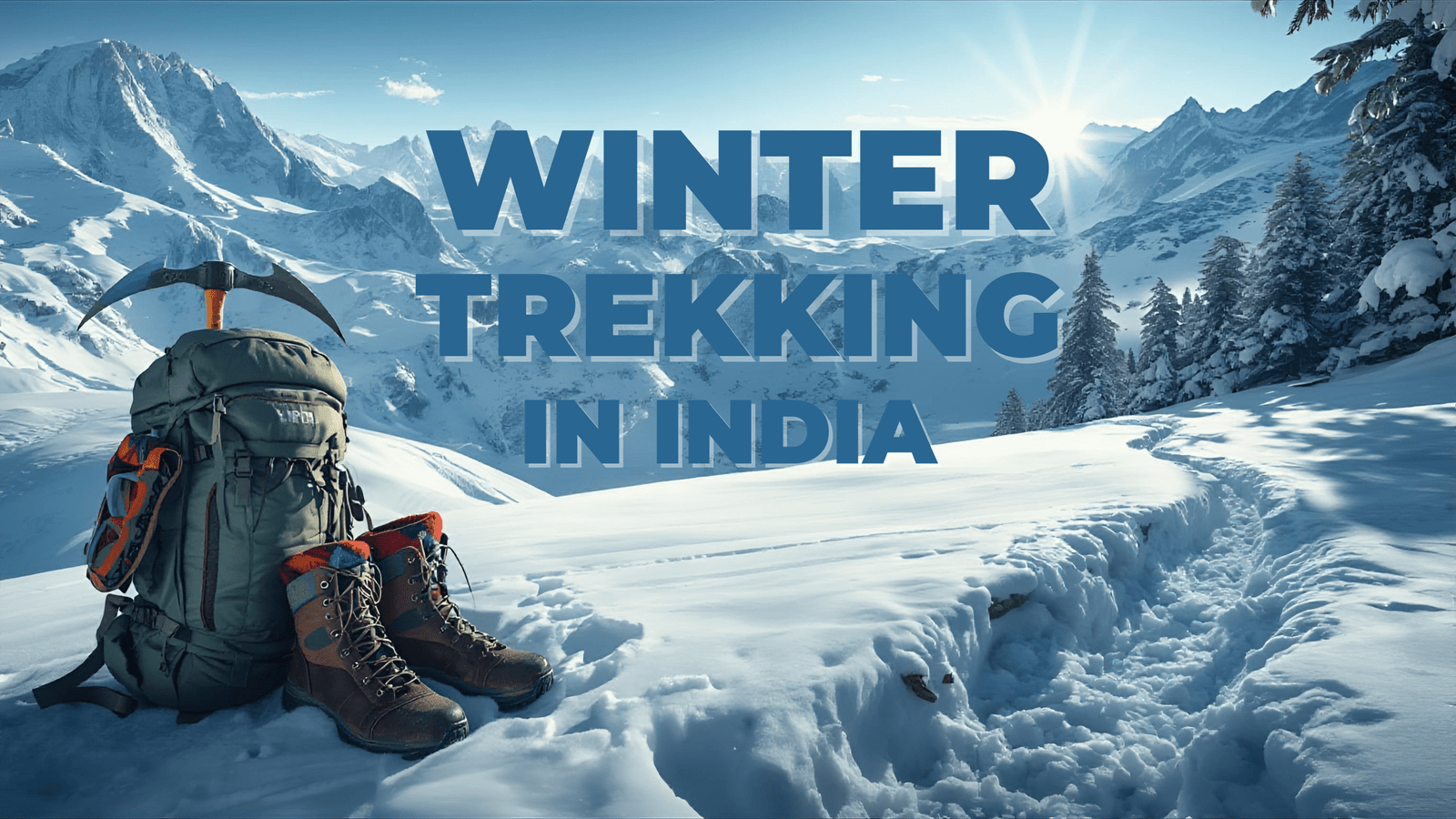
Your feet are your mode of transport, so treat them well. You need high-ankle trekking boots with waterproofing. In deep snow, gaiters are essential to prevent snow from entering your boots. Always carry extra pairs of woolen socks to ensure you have a dry pair for sleeping.
Safety Tips for Winter Treks
Winter trekking in India is safe if approached with respect for the mountains and proper planning.
Acclimatization and Hydration
The cold air is dry, and you lose significant moisture just by breathing. You often won’t feel thirsty, but dehydration accelerates altitude sickness and hypothermia. Force yourself to drink water regularly. Additionally, allow your body time to adjust to the altitude. Winter approaches should be slow and steady.
Weather Awareness
Mountain weather is unpredictable, more so in winter. A sunny morning can turn into a blizzard by afternoon. Always check forecasts before heading out, but be prepared for changes. If the weather turns bad, the smartest decision is often to turn back. The mountain will always be there; you need to be there to climb it another day.
Physical Fitness
Walking through snow is significantly more tiring than walking on hard ground. It engages different muscle groups and requires more cardiovascular endurance. Start a fitness regimen involving cardio and leg strength exercises at least a month before your trip.
The Importance of a Guided Experience
While some summer treks can be done solo, winter trekking in India generally requires professional support. Trails disappear under snow cover, making navigation difficult. Water sources freeze, requiring knowledge of how to melt snow safely for drinking.
Expert guides, like those at The Himalayan Outback, provide the necessary infrastructure—from high-quality tents that withstand snow loads to nutritious meals that keep your energy up. They also possess the local knowledge to assess avalanche risks and make critical safety calls.
Planning Your Adventure
If you are ready to trade the comfort of your blanket for the thrill of the mountains, planning is your next step. Determine your fitness level and the number of days you can spare. Research the current snow conditions of your desired trail.
The Himalayas offer a perspective on life that is hard to find in the city. The cold strips away the unnecessary, leaving you with a sense of clarity and accomplishment. Whether it is the frozen river of Zanskar or the snow-swept meadows of Uttarakhand, the mountains are calling.
For a seamless and safe experience, it is highly recommended to travel with experts who know the terrain inside out. To plan your itinerary or ask specific questions about gear and routes, contact us at The Himalayan Outback. Let us help you chart a journey into the heart of adventure this winter.