Completing a Himalayan trek is a remarkable achievement. However, the journey does not end when you reach the trailhead. Long trekking hours, steep ascents, high altitudes, and changing weather conditions place significant stress on the body. Proper recovery is essential to restore energy, prevent injuries, and prepare for your next trekking adventure.
Trekking in India offers some of the most rewarding mountain experiences on the planet. From the glacial trails of Uttarakhand to the rugged passes of Ladakh, every route tests your endurance. But recovery is where the real magic happens. It rebuilds your muscles, sharpens your mind, and keeps you ready for the next summit.
This guide shares practical, science-backed recovery strategies for beginners and experienced trekkers alike. You will learn how to hydrate, eat, sleep, and move smarter after a tough trek. Let’s help you recover faster and trek stronger.
Quick Answer: How Do You Recover After Trekking in the Himalayas?
To recover after trekking in the Himalayas, rehydrate fully, eat protein-rich meals, and sleep 7–9 hours nightly. Stretch gently to ease muscle soreness, replenish electrolytes, and rest for one to three days. Return to exercise gradually. High-altitude treks need extra recovery time, so listen to your body and avoid intense activity too soon.
Why Your Post-Trek Recovery Matters More Than You Think
Recovery is not just about resting. It is how your body repairs the damage caused by days of hard effort. Skip it, and you risk fatigue, injury, and burnout.
During a trek, your muscles develop tiny tears. Your glycogen stores empty out. Your body also loses fluids and key minerals. Good post-trek recovery restores all of these.
Strong recovery improves your trekking fitness over time. It helps your body adapt, so each future trek feels easier. In short, recovery makes you a better trekker.
Common Physical Effects After a Himalayan Trek
After mountain trekking, your body shows clear signs of strain. Knowing them helps you respond the right way.
Common effects include:
- Sore, stiff muscles from steep climbs and descents
- Joint fatigue, especially in the knees and ankles
- Dehydration from dry mountain air and exertion
- Disrupted sleep caused by altitude and tiredness
- Mental exhaustion after long, demanding days
These effects are normal. With the right recovery plan, they fade within days.
Essential Recovery Tips for Faster Healing
Smart recovery follows simple, proven steps. Use the tips below to bounce back quickly after any trek.
Rehydrate Properly
Dehydration is common after high altitude trekking. Drink water steadily throughout the day. Aim for clear or pale urine as your guide.
Add electrolytes to replace lost salts. Coconut water, lemon water, and oral rehydration solutions all work well. Proper hydration after trekking speeds up healing.
Focus on Nutrition
Your body needs fuel to repair itself. Eat protein-rich foods like eggs, lentils, paneer, chicken, and fish. Protein helps with muscle recovery after trekking.
Pair protein with healthy carbs to refill energy stores. Add fruits and vegetables for vitamins and antioxidants. Avoid heavy junk food during recovery.
Prioritise Sleep
Sleep is your most powerful recovery tool. Aim for 7–9 hours each night after your trek. Deep sleep repairs muscles and restores energy.
Keep your room dark and cool. Avoid screens before bed. Quality rest supports both physical and altitude recovery.
Stretch and Improve Mobility
Gentle stretching eases tight muscles and boosts blood flow. Focus on your calves, hamstrings, hips, and back. Hold each stretch for 20–30 seconds.
Light yoga also helps with mobility work. It releases tension and improves flexibility. This lowers your risk of stiffness the next day.
Manage Muscle Soreness
Muscle soreness usually peaks one to two days after a trek. Use a foam roller to release tight spots. A warm bath can also relax sore muscles.
A gentle massage improves circulation and reduces pain. Stay lightly active to keep blood flowing. Avoid lying still for long stretches.
Gradually Return to Exercise
Do not jump back into intense workouts. Start with easy walks or light stretching. Let your body fully recover first.
Build your activity level over several days. This protects your joints and muscles. A slow return improves long-term trekking endurance.
Support Mental Recovery
Trekking challenges your mind as much as your body. Take time to relax and reflect after your trip. Journaling or reviewing photos can help.
Reconnect with friends and family. Celebrate your achievement. Strong mental recovery keeps your passion for adventure alive.
Recovery Methods and Their Benefits
This table compares key recovery methods and what each one does for your body.
| Recovery Method | Benefit After Trekking |
| Hydration | Restores fluids and supports altitude recovery |
| Sleep | Repairs muscles and rebuilds energy |
| Stretching | Eases stiffness and improves flexibility |
| Nutrition | Fuels muscle repair and refills energy stores |
| Active Recovery | Boosts blood flow and reduces soreness |
| Massage | Relaxes tight muscles and improves circulation |
| Mobility Work | Restores range of motion and prevents injury |
| Rest Days | Allows full tissue repair and reduces fatigue |
How High Altitude Affects Recovery
High altitude makes recovery harder than at sea level. The air holds less oxygen, so your body works overtime. This slows muscle repair and tires you faster.
At altitude, you also lose more fluids through breathing. Dehydration sets in quickly. That is why hydration after trekking matters even more on Himalayan trails.
Give your body extra time after high-altitude treks. Rest, hydrate, and avoid alcohol for a few days. These steps support healthy altitude recovery.
How Long Does It Take to Recover After a Himalayan Trek?
Recovery time depends on the trek’s difficulty. Easier treks need less rest. Tough, high-altitude expeditions need more.
Use this table as a general guide.
| Trek Difficulty | Typical Recovery Time |
| Easy Trek | 1 day |
| Moderate Trek | 1–2 days |
| Difficult Trek | 3–4 days |
| High Altitude Trek | 4–6 days |
| Multi-Day Expedition | 1 week or more |
Listen to your body above all. Some trekkers recover faster than others. Fitness, age, and altitude all play a role.
The Recovery Mistakes Most Trekkers Make
Even experienced trekkers make recovery errors. Avoid these common mistakes for faster healing.
- Skipping hydration once the trek ends
- Returning to intense exercise too quickly
- Eating poorly instead of refuelling with real food
- Ignoring sleep during the first few nights
- Skipping stretches and mobility work
- Drinking alcohol soon after high-altitude treks
Fixing these habits speeds up your post trek recovery. It also protects you from injury.
Preparing Your Body for Your Next Trekking Adventure
Recovery and preparation go hand in hand. A well-recovered body trains better and trekks stronger. Use your rest period to plan ahead.
Once you feel fully recovered, rebuild your trekking fitness. Add cardio, strength training, and regular walks. Practise on local Himalayan trails when you can.
Smart trekking preparation lowers injury risk on future trips. It also boosts your endurance and confidence. Each trek then feels more enjoyable than the last.
What Experienced Trekkers Do After Every Expedition
Seasoned trekkers treat recovery as part of the adventure. They follow a clear routine after every trip.
Their habits usually include:
- Rehydrating and refuelling within hours of finishing
- Sleeping deeply for several nights
- Doing light stretches and short walks
- Booking a massage or recovery session
- Reviewing the trek and planning the next one
These simple steps keep them strong, healthy, and ready for more.
Post-Trek Recovery Checklist
Use this quick checklist after every Himalayan trek.
- Drink enough water
- Replenish electrolytes
- Eat protein-rich meals
- Sleep 7–9 hours
- Perform gentle stretches
- Avoid intense workouts immediately
- Monitor signs of fatigue
Tick each box, and your body will thank you.
Why Guided Trekking Experiences Matter
A good guide makes recovery easier from start to finish. Expert leaders manage pacing, hydration, and rest stops. This reduces strain on your body during the trek.
Guided trips also improve trekking safety. Trained leaders spot early signs of altitude sickness and fatigue. They adjust the plan to keep you healthy.
This is why many travellers choose guided trekking experiences for the Himalayas. Good planning means better treks and faster recovery.
Why Choose The Himalayan Outback for Trekking in India
The Himalayan Outback is a trusted name in adventure travel India. The team designs curated treks across the best trekking destinations in India. Every trip blends adventure, safety, and comfort.
With experienced trek leaders, The Himalayan Outback puts your wellbeing first. They plan smart routes, manage altitude carefully, and support recovery throughout. Their expert planning takes the guesswork out of your trip.
Whether you dream of Uttarakhand’s meadows or Ladakh’s high passes, The Himalayan Outback delivers. Explore their full range of Himalayan trekking adventures and start planning today.
Recover Smarter, Trek Stronger
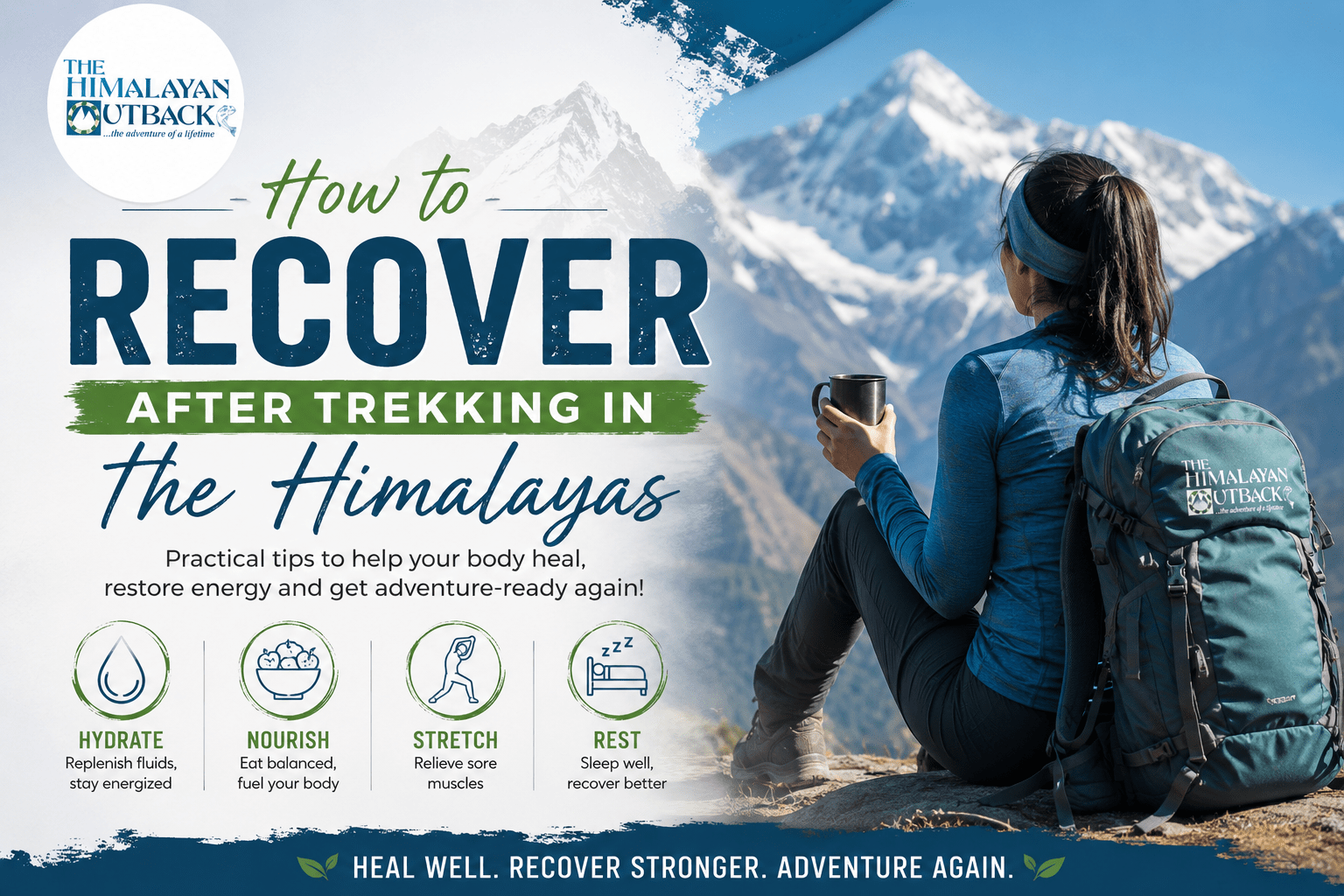
Recovery is the secret to long-lasting trekking success. Hydrate well, eat right, sleep deeply, and rest enough. These simple habits help your body heal and grow stronger after every climb.
Trekking in India rewards those who respect both the journey and the recovery. Treat your body well, and the mountains will keep calling you back. Your next adventure starts with how you recover today.
Ready to plan your next Himalayan adventure? Explore India’s most incredible trekking routes with expert support. Contact The Himalayan Outback today and trek with confidence.
Frequently Asked Questions (FAQs)
How long should I rest after a Himalayan trek?
Rest time depends on the trek’s difficulty. Easy treks may need just one day, while high-altitude expeditions can require a week or more. Focus on hydration, sleep, and nutrition during this period. Always listen to your body and return to activity gradually for safe, full recovery.
What should I eat after trekking for faster recovery?
Eat protein-rich foods like eggs, lentils, paneer, chicken, and fish to support muscle recovery after trekking. Pair them with healthy carbs to refill energy stores. Add fruits and vegetables for vitamins and antioxidants. Stay hydrated and avoid heavy, processed foods during your recovery period.
Is high altitude trekking harder to recover from?
Yes. High altitude trekking is harder on the body because the air holds less oxygen. This slows muscle repair and increases fluid loss. Give yourself extra rest, hydrate well, and avoid alcohol for a few days. Proper altitude recovery keeps you healthy and ready for your next trek.
Why is trekking in India ideal for adventure seekers?
Trekking in India offers incredible variety, from Himalayan peaks to lush Western Ghats trails. The diverse landscapes suit beginners and experts alike. With trusted partners like The Himalayan Outback, you gain expert guidance, safety, and curated routes. It is one of the best ways to enjoy adventure travel in India.