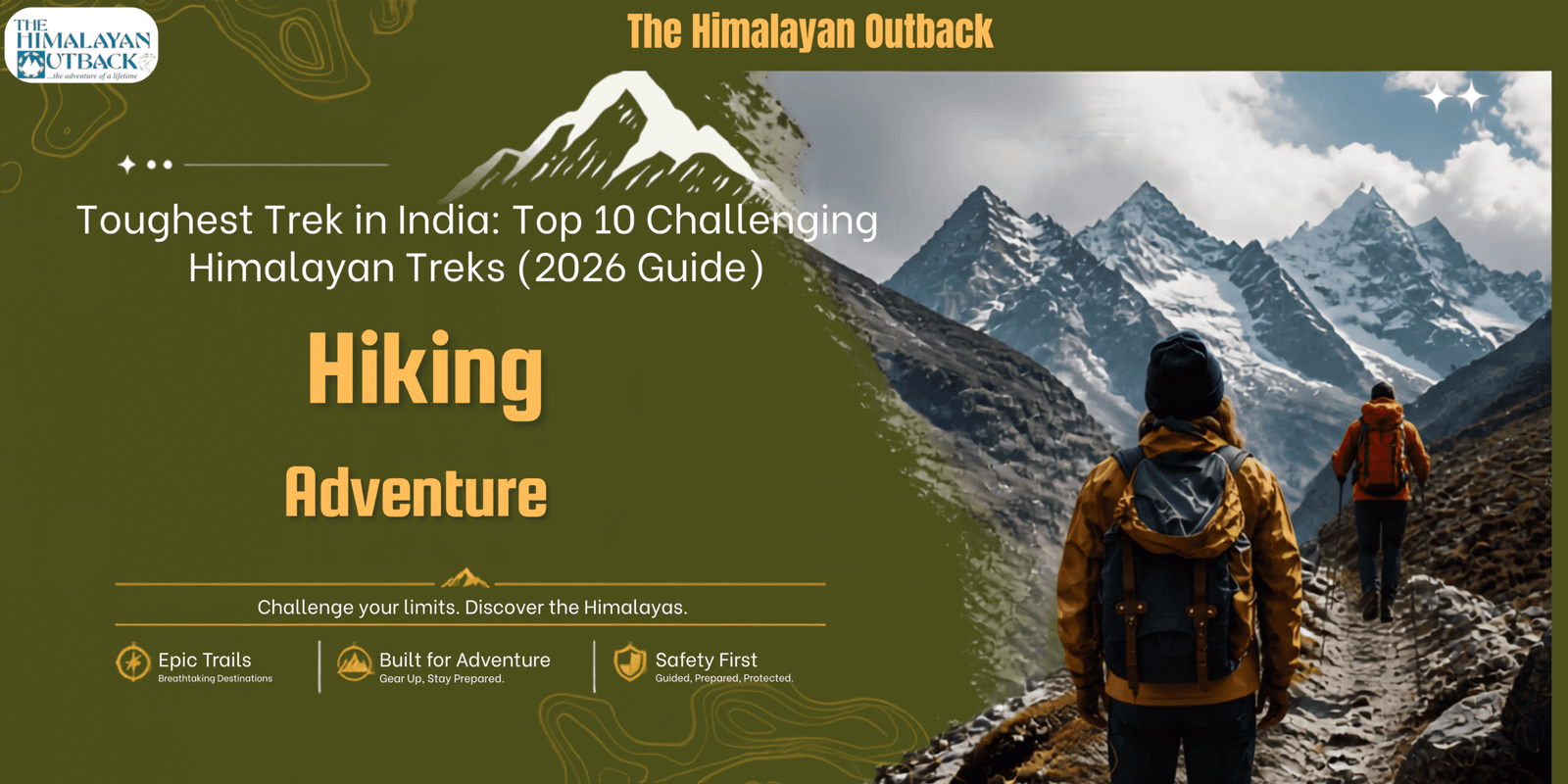
Quick answer: The toughest treks in India are found deep in the Himalayas, where extreme altitude, unpredictable weather, and technical terrain combine to test even seasoned trekkers. Routes like the Chadar Trek, Snowman Trek, and Pin Bhaba Pass rank among the most physically and mentally demanding Himalayan treks available in 2026.
What separates a hard trek from a truly brutal one? It comes down to five factors: altitude, terrain type, weather conditions, trail remoteness, and the level of physical endurance required. The Indian Himalayas offer some of the world’s most challenging high-altitude trekking routes—spanning Ladakh, Uttarakhand, Himachal Pradesh, Sikkim, and Jammu & Kashmir.
This guide covers the 10 most challenging Himalayan treks in India for 2026. Each entry breaks down the location, altitude, difficulty, duration, key challenges, and who each trek suits best. Whether you are an experienced mountaineer or an adventure traveller seriously researching your next big objective, this guide will help you choose wisely.
Trekking in India at this level demands respect—for the mountains, for your body, and for your preparation. Read on before you commit.
What Makes a Himalayan Trek Truly Challenging?
Before listing the routes, it helps to understand what earns a trek the label “difficult” or “extreme.” Most challenging Himalayan treks share several common traits:
- High altitude: Most routes exceed 4,500 metres, with several pushing past 5,000 metres and above. Acute Mountain Sickness (AMS) becomes a real risk.
- Remote terrain: Limited rescue access, no mobile connectivity, and sparse human settlements mean self-sufficiency is essential.
- Unpredictable weather: Sudden snowstorms, sub-zero temperatures, and rapid weather shifts are common, particularly above 4,000 metres.
- Technical sections: River crossings, glacier travel, steep snow slopes, and loose scree require physical coordination and experience.
- Long duration: Most difficult treks last 10 to 21 days, demanding sustained cardiovascular fitness and mental stamina.
Understanding these factors helps you honestly assess your readiness before choosing one of these routes.
Top 10 Most Challenging Himalayan Treks in India (2026)
-
Chadar Trek — Frozen River Trek, Ladakh
Altitude: Up to 3,400 m | Duration: 9–10 days | Difficulty: Very High
The Chadar Trek follows the frozen Zanskar River in Ladakh during deep winter. Temperatures regularly drop to −30°C. Trekkers walk on ice for hours daily, crossing sections where the frozen surface is unstable. The route is physically exhausting and mentally demanding. It suits experienced cold-weather trekkers with strong fitness and prior Himalayan exposure. The season window is narrow—typically January and February only.
-
Snowman Trek — Bhutan-Border Himalayas, Sikkim / Arunachal
Altitude: Up to 5,320 m | Duration: 18–25 days | Difficulty: Extreme
Widely considered one of the hardest long-distance treks anywhere in the Himalayas, the Snowman Trek crosses multiple high passes above 5,000 metres. The route demands exceptional stamina, altitude acclimatisation, and technical readiness. Very few trekkers complete it each year. It suits only experienced, well-prepared trekkers with prior high-altitude exposure above 4,500 metres.
-
Pin Bhaba Pass Trek — Himachal Pradesh
Altitude: 4,865 m | Duration: 6–7 days | Difficulty: High
This cross-Himalayan route connects the green Kullu Valley with the stark, cold-desert landscape of Spiti. The dramatic terrain shift within a single trek makes it unique—and challenging. River crossings, loose boulder fields, and a steep final ascent to the pass test trekkers thoroughly. It suits fit trekkers with prior Himalayan experience above 4,000 metres.
-
Goecha La Trek — Sikkim
Altitude: 4,940 m | Duration: 10–11 days | Difficulty: High to Very High
Goecha La sits at the base of Kangchenjunga, the world’s third highest peak. The approach involves long daily distances through dense rhododendron forests, glacier moraines, and exposed ridges. Altitude gain is rapid in the final days. The views from Goecha La are extraordinary—but reaching them demands consistent fitness and strong altitude tolerance. Best suited to experienced trekkers comfortable on mixed terrain.
-
Rupin Pass Trek — Uttarakhand to Himachal Pradesh
Altitude: 4,650 m | Duration: 8–9 days | Difficulty: High
The Rupin Pass Trek is a favourite among advanced trekkers in India. It features a steep snow wall climb near the summit, dense forested valleys, hanging villages, and waterfalls. The altitude gain over consecutive days is aggressive. Trekkers need solid cardiovascular fitness and prior experience on snow and ice. It is one of the best high-altitude treks in India for those stepping up from intermediate-level routes.
-
Kang La Pass Trek — Spiti to Kinnaur, Himachal Pradesh
Altitude: 5,250 m | Duration: 10–12 days | Difficulty: Very High
Kang La is one of the highest passes trekkers can legally cross in India. The route passes through remote Himalayan valleys with minimal trail infrastructure. Navigation is difficult, and the high altitude brings genuine AMS risk. Weather shifts quickly at this elevation. Only highly experienced trekkers with proper guide support should attempt this route.
-
Miyar Valley Trek (Chhudong Glacier) — Lahaul, Himachal Pradesh
Altitude: 5,000+ m | Duration: 12–15 days | Difficulty: Very High
The Miyar Valley is one of the least-explored trekking regions in the Indian Himalayas. The approach involves glacier travel on the Chhudong Glacier, with crevasse hazard and highly technical terrain. Remote campsites, scarce resupply options, and extreme weather exposure make this route genuinely difficult. Suitable only for experienced trekkers or mountaineers who have prior glacier travel experience.
-
Lamkhaga Pass Trek — Uttarakhand to Himachal Pradesh
Altitude: 5,282 m | Duration: 10–11 days | Difficulty: Very High to Extreme
Lamkhaga Pass connects the Baspa Valley in Kinnaur with the Har Ki Dun Valley in Uttarakhand. This high-altitude trek involves multiple glacier crossings, steep snowfields, and very exposed camp locations. The terrain is unforgiving. Rescue access is extremely limited. This route suits only technically experienced trekkers with prior glacier and high-altitude training.
-
Zanskar Valley Trek — Ladakh
Altitude: Up to 4,400 m | Duration: 14–20 days | Difficulty: High to Very High
The Zanskar Valley Trek is a remote and physically demanding multi-day route through some of the most isolated terrain in trekking in India. Days are long, river crossings are frequent, and the landscape is unrelentingly rugged. The cultural richness of Zanskar’s Buddhist monasteries rewards those who persist. Trekkers need a high level of endurance and prior Himalayan experience.
-
Nanda Devi Sanctuary Trek — Uttarakhand
Altitude: 3,600 m (sanctuary entry) | Duration: 16–20 days | Difficulty: Very High
The Nanda Devi Sanctuary is a protected core zone in the Garhwal Himalayas. Access requires special permits, and the trail involves crossing the Rishi Ganga Gorge—one of the most technically demanding approach routes in the Indian Himalayas. Dense jungle, unstable ridges, and boulder fields precede the glacier-ringed sanctuary. It remains one of the most exclusive and challenging trekking destinations in India.
Trek Comparison Table: At a Glance
| Trek | Region | Max Altitude | Duration | Difficulty |
| Chadar Trek | Ladakh | 3,400 m | 9–10 days | Very High |
| Snowman Trek | Sikkim / Border | 5,320 m | 18–25 days | Extreme |
| Pin Bhaba Pass | Himachal Pradesh | 4,865 m | 6–7 days | High |
| Goecha La | Sikkim | 4,940 m | 10–11 days | High–Very High |
| Rupin Pass | Uttarakhand/HP | 4,650 m | 8–9 days | High |
| Kang La Pass | Himachal Pradesh | 5,250 m | 10–12 days | Very High |
| Miyar Valley | Himachal Pradesh | 5,000+ m | 12–15 days | Very High |
| Lamkhaga Pass | Uttarakhand/HP | 5,282 m | 10–11 days | Very High–Extreme |
| Zanskar Valley | Ladakh | 4,400 m | 14–20 days | High–Very High |
| Nanda Devi Sanctuary | Uttarakhand | 3,600 m | 16–20 days | Very High |
How to Assess Your Readiness for a Difficult Himalayan Trek
Choosing the right trek matters as much as training for it. Before committing to any route on this list, assess yourself honestly across five areas:
Fitness level: Difficult Himalayan treks require cardiovascular endurance and leg strength. Train consistently for at least three to four months beforehand. Include long hikes with a loaded pack, stair climbing, and aerobic conditioning.
Prior altitude experience: If you have never trekked above 3,500 metres, do not begin with a 5,000-metre route. Work up progressively.
Technical skills: Several treks on this list involve glacier travel, river crossings, and snow slopes. Learn basic ice axe use and rope techniques before attempting extreme-level routes.
Weather awareness: Study the seasonal patterns for your chosen region. Most high Himalayan treks are only safe between May–June and September–October. Chadar Trek is a winter exception.
Guide and logistics: For remote, technical routes, engage a qualified Himalayan guide. For professional guidance on mountain trekking in India, The Himalayan Outback offers experienced-led expeditions with safety protocols designed for serious trekkers.
Practical Preparation Tips for 2026
- Get a fitness assessment at least four months before your trek departure date.
- Acclimatise properly. Add rest days above 3,000 metres and follow the golden rule: climb high, sleep low.
- Pack for extremes. Layering systems, quality trekking boots, trekking poles, and a high-rated sleeping bag are non-negotiable on difficult Himalayan treks.
- Carry altitude medication. Consult a doctor about Diamox (acetazolamide) before high-altitude trekking in India.
- Purchase travel insurance that explicitly covers high-altitude rescue and evacuation.
Plan Your Himalayan Trek with the Right Support
These 10 routes represent some of the most demanding trekking in India. Each one rewards commitment with unforgettable landscapes, genuine achievement, and a deeper understanding of the Himalayas. However, none of them should be taken lightly.
The Himalayan Outback specialises in professionally guided Himalayan trekking experiences. Whether you need help selecting the right route for your fitness level, understanding altitude risks, or planning the full logistics of a challenging Himalayan trek, The Himalayan Outback’s team brings local expertise and a strong safety-first approach to every expedition.
Contact The Himalayan Outback today to discuss your 2026 trekking goals. Their team will help you find the right route, prepare properly, and experience the Himalayas with the support and knowledge you need to succeed.
📞 +91 9815605847 | ✉️info@himalayanoutback.com
Frequently Asked Questions
What is the toughest trek in India?
The Snowman Trek and Lamkhaga Pass Trek are widely regarded as among the toughest treks in India. Both involve extreme altitudes above 5,000 metres, technical terrain, glacier crossings, and multi-week durations with very limited rescue access.
Which challenging Himalayan trek is best for first-time advanced trekkers?
The Rupin Pass Trek or Pin Bhaba Pass Trek are good entry points for trekkers stepping up to advanced-level routes. Both are challenging and high-altitude, but shorter in duration and more accessible than extreme routes like the Snowman or Lamkhaga Pass.
What is the best time for high-altitude trekking in India?
May–June and September–October are the most reliable windows for most high-altitude treks in India. The Chadar Trek is a specific exception, taking place in January–February on the frozen Zanskar River.
Do I need a guide for these difficult Himalayan treks?
For most routes on this list—particularly the remote and technically demanding ones—a qualified guide is strongly recommended. Trekking without local expertise on routes like the Miyar Valley or Nanda Devi Sanctuary significantly increases safety risk.