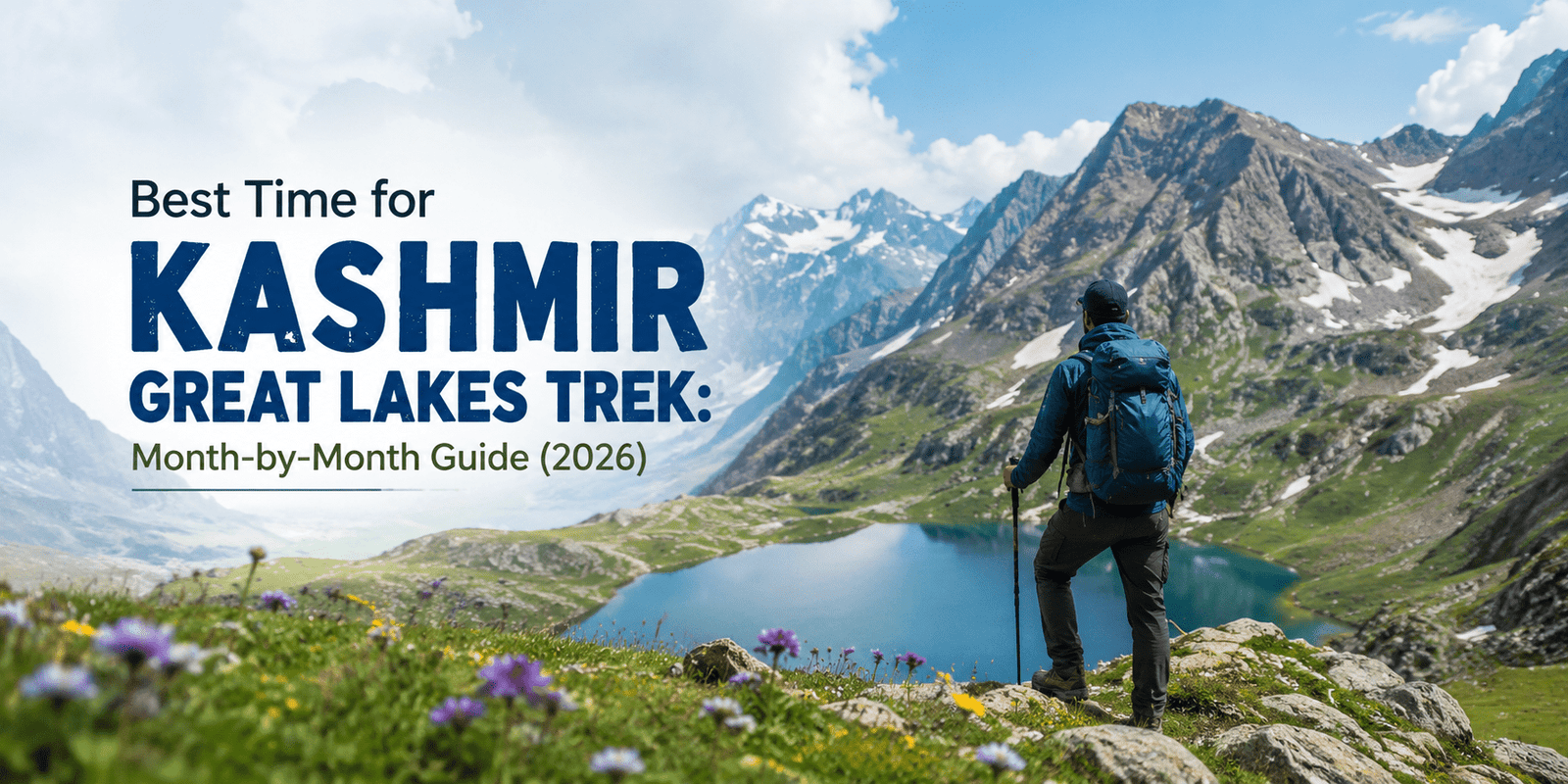
Quick answer: The best time for the Kashmir Great Lakes Trek is July and August, when trails are fully open, wildflowers are in peak bloom, and alpine lakes are crystal clear. The trekking season runs from late June to mid-September. July offers the most vibrant scenery, while August provides stable weather and fewer crowds than peak season.
Planning the Kashmir Great Lakes Trek in 2026? Choosing the right month can completely transform your trekking experience. From blooming alpine meadows and crystal-clear lakes to pleasant weather and safer trail conditions, every month offers something different. Understanding the best season for Kashmir Trekking helps you enjoy one of India’s most spectacular Himalayan adventures with greater confidence.
The Kashmir Great Lakes Trek is widely regarded as one of the finest high-altitude treks in India. Spanning approximately 70 kilometres through the Sindh Valley and Gangabal region of the Western Himalayas, the route passes through seven alpine lakes, including the stunning Vishnusar, Kishansar, and Gangabal. The highest point—Gadsar Pass—sits at 4,200 metres above sea level.
But here’s what most first-time trekkers overlook: timing is everything. Set out too early in the season and you may encounter snow-blocked passes and unstable trails. Go too late and the weather can turn cold, unpredictable, and challenging. Get the timing right, and you’ll walk through meadows carpeted with wildflowers, reflect in still alpine lakes, and camp under some of the clearest skies in the Himalayas.
This guide breaks down every trekking month in detail—covering weather patterns, trail conditions, scenic highlights, crowd levels, and photography opportunities—so you can plan your Kashmir Great Lakes Trek with confidence.
What Is the Best Time for the Kashmir Great Lakes Trek in 2026?
The Kashmir Great Lakes Trek is accessible from late June to mid-September. Outside this window, heavy snowfall, frozen passes, and extreme cold make the route unsafe and impractical.
Here’s a quick month-by-month overview:
| Month | Weather | Trail Conditions | Scenic Highlights | Recommended For |
| June (late) | Cool to mild, some snowmelt | Opening trails, patchy snow on passes | Early wildflowers, snowfields, quiet meadows | Experienced trekkers, photographers |
| July | Mild and pleasant, 10–20°C | Fully open, excellent trail clarity | Peak wildflowers, vibrant alpine meadows, clear lakes | All trekkers, especially beginners |
| August | Warm days, cooler nights, occasional rain | Generally stable, some wet sections | Lush green landscapes, blooming flora, full lakes | All trekkers, photographers, groups |
| September (early–mid) | Crisp and cool, 5–15°C | Dry and firm, excellent underfoot | Autumn tones, golden meadows, reflective lakes | Experienced trekkers, photographers |
Why Does Timing Matter for Kashmir Trekking?
The Kashmir Great Lakes Trek sits at high altitude—between 3,150 and 4,200 metres above sea level. At this elevation, weather conditions shift rapidly. Understanding how each season affects your experience is essential for both safety and enjoyment.
| Trekking Factor | Why It Matters |
| Weather | Determines trail safety, visibility, and overall comfort throughout the trek |
| Wildflowers | Peak bloom transforms alpine meadows into vivid natural landscapes |
| Lake Views | Snowmelt and rainfall affect lake levels, clarity, and reflection quality |
| Crowd Levels | Affects campsite availability, solitude, and overall trail experience |
| Photography | Light quality, flora, and landscape conditions vary significantly by month |
| Temperature | Impacts sleeping comfort, energy levels, and gear requirements |
| Difficulty Level | Snow, rain, and mud increase physical and technical difficulty |
| Fitness Preparation | Higher altitude and longer daily distances demand cardiovascular conditioning |
Month-by-Month Guide to the Kashmir Great Lakes Trek
Is June a Good Month for the Kashmir Great Lakes Trek?
Late June marks the opening of the trekking season. Snow begins melting from the high passes, and the first wildflowers start pushing through the valley floors.
What to expect in late June:
- Temperatures range from 8–18°C during the day, dropping to 2–5°C at night
- Gadsar Pass may still carry residual snow—expect some post-holing
- Trails are less crowded than July and August
- The landscape has an early-season freshness that is hard to replicate
Late June suits experienced trekkers who are comfortable navigating snow-covered sections. Beginners should consider waiting until July for more manageable trail conditions. Always check trail status before departing, as snow conditions vary year to year.
The Himalayan Outback typically schedules departures from 25th June, once the key passes are deemed safe and accessible.
Why Is July the Most Popular Month for Kashmir Trekking?
July is peak season on the Kashmir Great Lakes Trek—and for good reason. The wildflowers are at their most vivid, the lakes are at their clearest, and the weather is reliably mild.
What to expect in July:
- Daytime temperatures range from 12–22°C
- Alpine meadows burst with colour: blue iris, yellow buttercups, purple primulas
- Vishnusar and Kishansar lakes shimmer in brilliant turquoise tones
- Trail conditions are excellent throughout the route
- Longer daylight hours give trekkers more flexibility each day
July is the top recommendation for first-time trekkers. The conditions are forgiving, the scenery is extraordinary, and the weather provides a comfortable window for the full 13-day itinerary. For photographers, this is the most rewarding month—every section of the trail offers compelling compositions.
What Makes August a Reliable Month for the Kashmir Great Lakes Trek?
August sits in the heart of the trekking season. It offers similar conditions to July but with the added benefit of lusher vegetation, as rainfall keeps the meadows green and full.
What to expect in August:
- Daytime temperatures range from 10–20°C
- Occasional afternoon showers are common—a rain jacket is essential
- Wildflowers begin to transition toward late-season varieties
- Lakes remain full and visually striking
- Slightly fewer trekkers than peak July, offering more peaceful campsites
August is a strong choice for group trekkers and families. The trails are well-worn, campsites are established, and support services are at full capacity. Packing waterproof gear is critical during this month, as afternoon rain is a regular occurrence at altitude.
The Himalayan Outback runs departures from 15th August to 15th September—making this an ideal window for those planning a late-summer adventure.
Is September a Good Month for an Experienced Kashmir Trekker?
Early to mid-September offers a different kind of beauty. The crowds thin out, the air turns crisp, and the landscape shifts into warm autumnal tones.
What to expect in September:
- Temperatures cool noticeably: 5–15°C during the day, 0–3°C at night
- Meadows transition from green to gold and amber
- Skies are often clearer than August, offering outstanding mountain views
- Lake reflections improve with calmer, cooler air
- Trail conditions are dry and firm underfoot
September is ideal for experienced trekkers who prefer solitude and sharper mountain views. The cooler nights demand warmer sleeping gear, and trekkers should be prepared for early-season cold snaps. After mid-September, conditions deteriorate quickly and guided treks conclude for the season.
What Are the Best Months for Photography on the Kashmir Great Lakes Trek?
Each month has its photographic merits—but certain conditions stand out.
- Late June: Snowfields against early wildflowers create dramatic contrasts. Low light levels and mist add atmosphere.
- July: Peak wildflower bloom and high water levels in the lakes make this the most visually spectacular month for landscape photography.
- August: Lush, saturated greens dominate. Dramatic cloud formations over Gadsar Pass are a highlight.
- September: Clear blue skies, golden meadows, and still lake reflections offer exceptional conditions for alpine photography.
For photographers specifically, July and early September present the most rewarding opportunities—July for colour and life, September for clarity and solitude.
Best Time for Beginners vs Experienced Trekkers on the Kashmir Great Lakes Trek
When Should a First-Time Trekker Attempt the Kashmir Great Lakes Trek?
July is the best month for beginner trekkers. Trail conditions are stable, temperatures are manageable, and support infrastructure is at its strongest. The weather provides a comfortable margin for acclimatisation, and the wildflower bloom keeps morale high throughout the itinerary.
If July departures are unavailable, early August is an equally valid option. Avoid late June unless you have prior high-altitude trekking experience.
What Is the Best Month for Experienced Himalayan Trekkers?
Experienced trekkers have more flexibility. Late June offers the most adventurous conditions—snow on the passes, fewer crowds, and a raw, early-season feel. Early September rewards experienced hikers with solitude, autumnal beauty, and exceptional mountain clarity.
Both months require warmer gear, stronger navigation skills, and physical conditioning beyond what July and August demand.
Essential Packing Tips for the Kashmir Great Lakes Trek
Packing correctly is as important as choosing the right month. The high-altitude environment demands specific gear regardless of when you trek.
Kashmir Great Lakes Trek Preparation Checklist
✔Trekking shoes — Waterproof, ankle-supporting boots with solid grip for rocky and wet terrain
✔Warm clothing — Insulated mid-layer, thermal base layers, and a down jacket for cold nights
✔Rain jacket — Waterproof and windproof outer shell; essential in July and August
✔Backpack — 50–60 litre capacity with a rain cover; padded hip belt for long carry days
✔Water bottle — Minimum 2-litre capacity; carry water purification tablets or a filter
✔First-aid kit — Include altitude sickness medication (consult your doctor beforehand), blister treatment, and basic wound care
✔Fitness preparation — Begin cardiovascular and strength training at least 8 weeks before departure; include uphill walks and stair climbing
✔Essential documents — Valid photo ID, trekking permits, travel insurance documents, and emergency contacts
Why Choose The Himalayan Outback for Kashmir Trekking?
Selecting the right trekking company shapes every aspect of your experience. The Himalayan Outback is a specialist guided trekking company with deep experience leading groups through the Kashmiri Himalayas.
Their Kashmir Great Lakes Trek is a fully supported 13-day itinerary designed with safety, comfort, and authentic mountain experience at its core. The trek accommodates a maximum of 8 guests per group—a deliberate choice that ensures personal attention, minimal environmental impact, and a genuine sense of expedition.
What sets The Himalayan Outback apart:
- Experienced, certified trek leaders with extensive local knowledge of Kashmiri terrain
- Well-planned itineraries that build in acclimatisation time and rest days
- A safety-first approach backed by thorough risk assessment protocols
- Organised camp setups with quality equipment and full meal service
- Personalised pre-trek support to help you prepare physically and logistically
The Himalayan Outback runs departures from 25th June to 10th July, and again from 15th August to 15th September. This carefully selected schedule ensures trekkers experience the Kashmir Great Lakes Trek in optimal seasonal conditions.
Contact The Himalayan Outback today to check upcoming departure dates, discuss itinerary details, or get personalised booking assistance.
📞 +91 9815605847 | ✉️info@himalayanoutback.com
What Do Google Reviews Say About The Himalayan Outback’s Kashmir Trekking Tours?
Many travellers planning a Kashmir trekking holiday rely on Google reviews to evaluate and compare guided trekking companies before committing to a booking. Searching for a trekking company with strong credentials and consistent feedback matters—especially for high-altitude adventures. Visiting The Himalayan Outback’s Google Business Profile allows prospective trekkers to read genuine client reviews, browse trek photos, check ratings, view contact details, and enquire about upcoming Kashmir Great Lakes Trek departures. It’s one of the most reliable ways to assess a company’s track record before you lace up your boots.
Start Planning Your Himalayan Adventure Today
The Kashmir Great Lakes Trek is one of India’s most rewarding high-altitude journeys. The route through alpine meadows, glacial lakes, and Himalayan passes offers a trekking experience that stays with you long after you return home.
The right month makes a significant difference. July delivers wildflowers, warmth, and clarity. August brings lush landscapes and reliable trail conditions. Late June suits the adventurous early-season trekker. September rewards those who seek solitude and crisp mountain views.
Whichever month you choose, preparation is key. Train consistently, pack smart, and trek with experienced guides who know the terrain.
Book your Kashmir Great Lakes Trek with The Himalayan Outback and experience this Himalayan adventure with expert support every step of the way.
For those planning broader Himalayan adventures beyond Kashmir, explore this guide to trekking in India for a comprehensive overview of India’s most spectacular trekking destinations.
Frequently Asked Questions About the Kashmir Great Lakes Trek
What is the best time of year for Kashmir Trekking on the Great Lakes route?
The best time for Kashmir Trekking on the Great Lakes route is July and August. Trails are fully open, wildflowers are at peak bloom, and temperatures are comfortable. Late June and early September are also viable options for more experienced trekkers seeking fewer crowds.
How difficult is the Kashmir Great Lakes Trek for beginners?
The Kashmir Great Lakes Trek is rated moderate in difficulty. It involves 5–7 hours of daily hiking at altitudes between 3,150 and 4,200 metres. Beginners with reasonable fitness and 8 weeks of prior cardiovascular training can complete it comfortably, particularly in July.
Do I need any permits to trek the Kashmir Great Lakes Trek?
Yes. The trek passes through Dachigam National Park and requires an entry permit. Your trekking company will typically arrange this on your behalf. Carry a valid photo ID at all times, as checkpoints along the route require documentation.
How long does the Kashmir Great Lakes Trek take to complete?
The standard Kashmir Great Lakes Trek itinerary spans 13 days in total. This includes travel days between Delhi and Srinagar, one acclimatisation day in Srinagar, six full trekking days inside the national park, and return travel to Delhi.