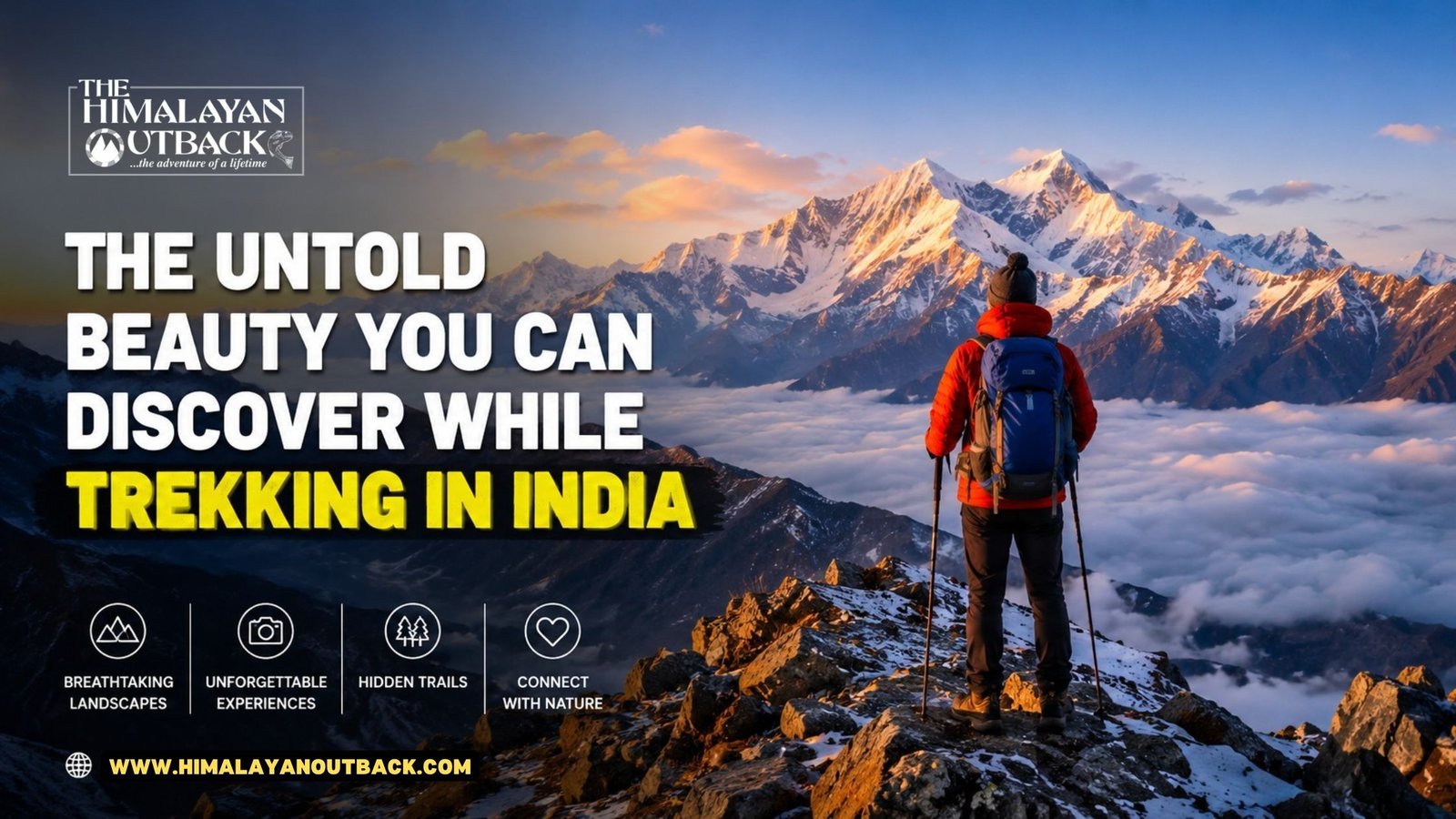
Quick answer: Trekking in India reveals landscapes, light, sounds, and cultural moments that highways and hotels simply cannot offer. From changing forests and quiet meadows to mountain villages and shifting light across valleys, trekking in India uncovers a slower, more intimate version of the country’s natural beauty.
Most travellers see India through a car window, a hotel balcony, or a crowded viewpoint. These are beautiful in their own way, but they only show a fraction of what the country holds. The real depth of India’s landscapes, from the Himalayan foothills to its forested valleys, often sits beyond the reach of conventional sightseeing.
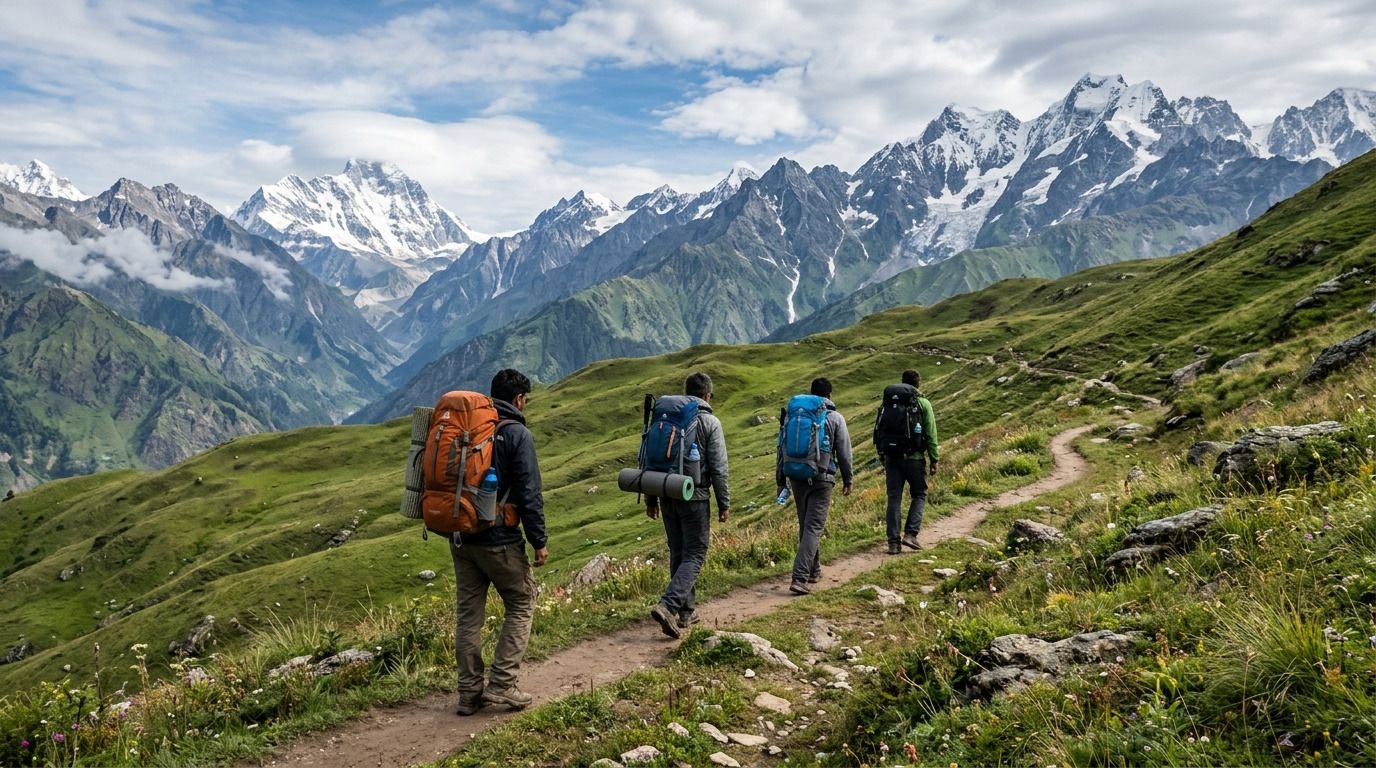
Trekking in India changes that. It replaces the pace of a tour bus with the rhythm of footsteps, and in doing so, opens up a version of the country that most travellers never get to witness. Ridgelines appear slowly. Villages come into view gradually, not as a stop on an itinerary, but as a lived-in part of the trail. Light shifts across a valley in ways that are impossible to notice from a moving vehicle.
This article explores the untold beauty that trekking in India can reveal, from the landscapes and sounds of the trail to the small, unplanned moments that often become the most memorable part of the journey.
Why Trekking Reveals a Different Side of India
Travelling on foot changes the relationship between a traveller and the land around them. Instead of passing through a landscape, trekkers move with it. Every rise in elevation, every bend in the trail, and every change in the weather becomes part of the experience, not just a backdrop to it.
Trekking in India brings travellers physically closer to mountains, forests, valleys, rivers, and meadows than almost any other form of travel. It also creates natural opportunities to pass through local villages and observe mountain life as it exists, not as it is staged for visitors. The pace is slower, which means there is more time to notice details: the sound of a stream, the smell of pine after rainfall, or the way clouds move across a ridge.
This is why trekking in India feels fundamentally different from conventional tourism. It is not about reaching a location as quickly as possible. It is about experiencing the space between destinations, where much of the country’s untold beauty actually lives.
The Untold Beauty You Can Discover While Trekking in India
Landscapes You Cannot Experience From the Road
Many of India’s most striking landscapes are simply inaccessible by vehicle. Mountain passes, remote valleys, forested ridgelines, and panoramic viewpoints often require hours, or even days, of walking to reach.
Trekking in India takes travellers beyond the roadside viewpoints that most tourists see. A ridge that overlooks a valley, a forest trail that opens onto a wide meadow, or a mountain pass that reveals a new range entirely, these are the kinds of discoveries that only happen on foot. The effort required to reach them is part of what makes the experience feel earned rather than handed over.
The Changing Landscape Along One Trek
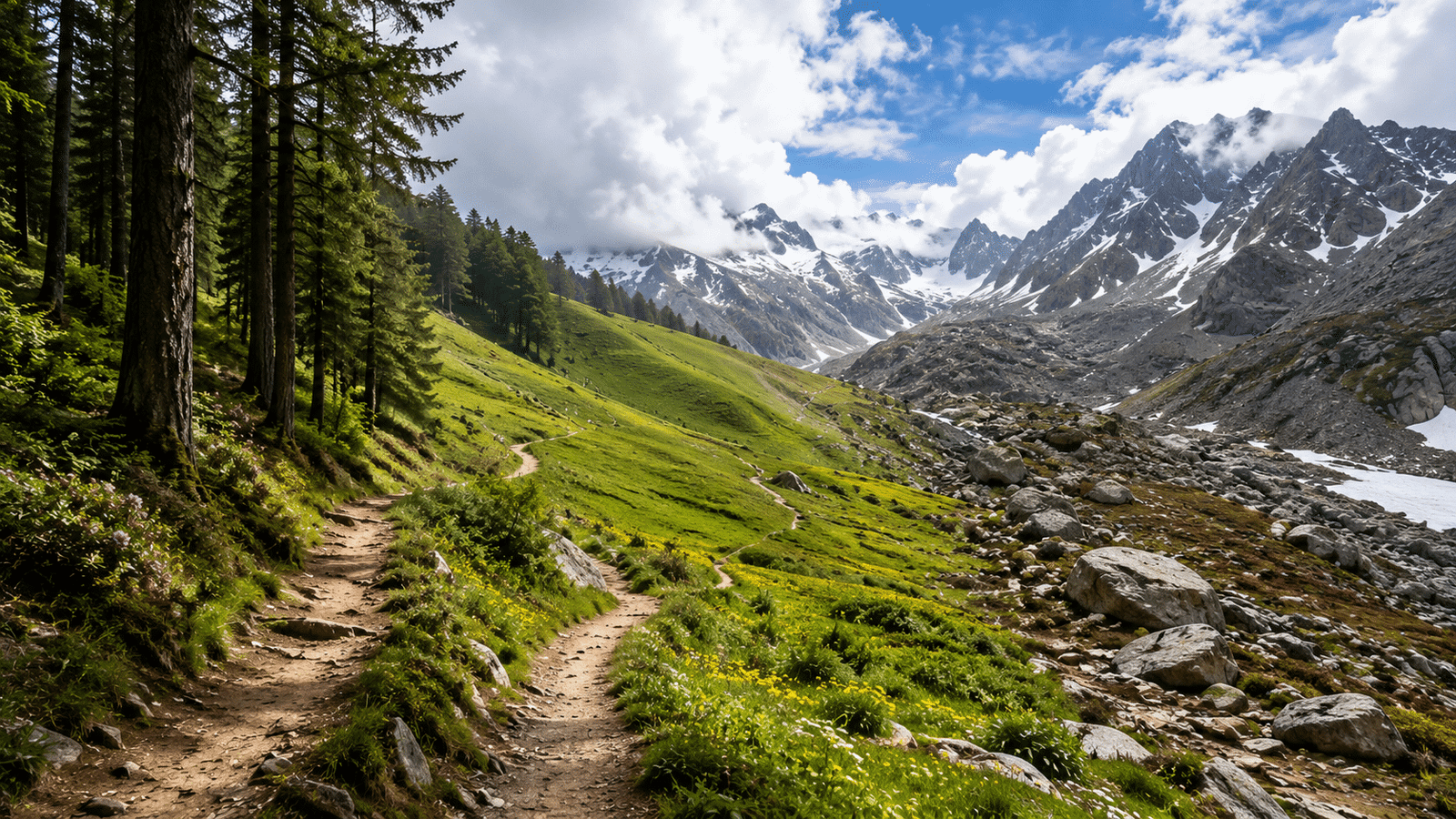
A single trekking trail in India can pass through several distinct environments in the space of a few hours. Dense forests can give way to open grasslands. Rocky terrain can lead into quiet mountain valleys. In higher-altitude regions and during the right season, trekkers may even encounter snow-covered stretches that contrast sharply with the greenery lower down the trail.
This variation is one of the defining features of mountain trekking in India. No two sections of a trail look the same, and the landscape rarely stays static for long. A trekker who starts the day walking through pine forest might end it crossing a stream in an open valley, with the terrain shifting almost continuously in between.
Sunrise, Sunset and Changing Mountain Light
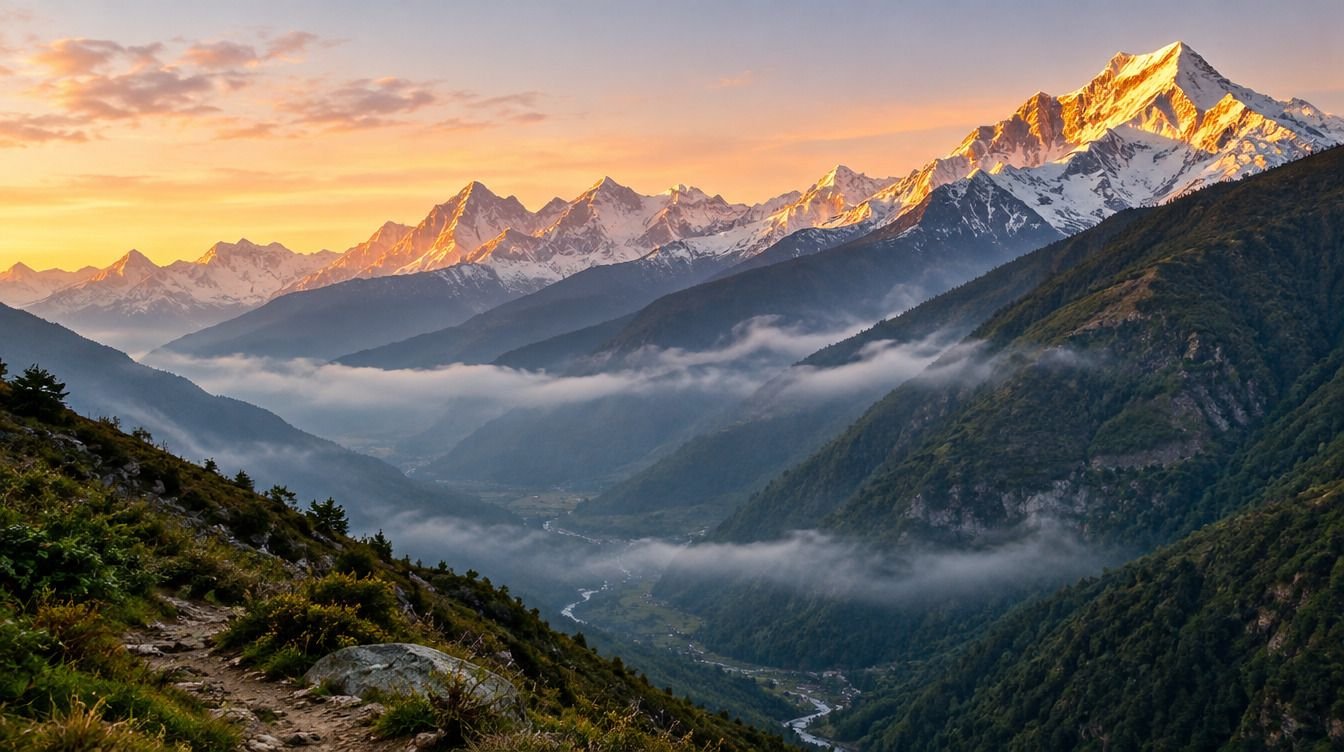
Light transforms mountain landscapes in ways that are easy to miss during ordinary sightseeing. Early morning light often casts long shadows across valleys, while sunset can turn entire mountain ranges shades of gold and pink. Clouds moving through a valley can obscure a view one moment and reveal it dramatically the next.
Trekkers who camp overnight or walk during early morning hours often witness these shifts firsthand. It is one of the quieter rewards of trekking in India: the same viewpoint can look completely different depending on the hour, the season, or the weather that day.
Hidden Valleys, Meadows and Quiet Viewpoints
Some of the most memorable parts of a trek are the sections that most travellers never see. Hidden valleys, open meadows, and quiet viewpoints sit along many Indian trekking routes, often reachable only after a demanding climb or a long walk through forest.
These are not necessarily untouched or undiscovered places. But reaching them still requires effort, and that effort changes how they feel. A meadow seen after a three-hour climb carries a different weight than one seen from a car park. This sense of discovery is part of what draws travellers to trekking destinations in India again and again. The Kashmir Great Lakes trek offers another perspective on the dramatic valleys, alpine lakes, and mountain scenery found along India’s trekking routes.
Forests, Rivers and the Sounds of Nature
Trekking is not only a visual experience. Forest trails bring their own sounds: birdsong, wind moving through trees, and the steady rush of a nearby stream. As the trail changes, so does the vegetation and the ambient noise around it.
Walking beside a mountain river, through changing forest cover, or across a quiet, exposed ridge offers a sensory range that is hard to replicate through any other kind of travel. These are the smaller details that define nature trekking in India, the ones that rarely make it into a photograph but stay with a traveller long after the trip ends.
Local Villages and Cultural Experiences
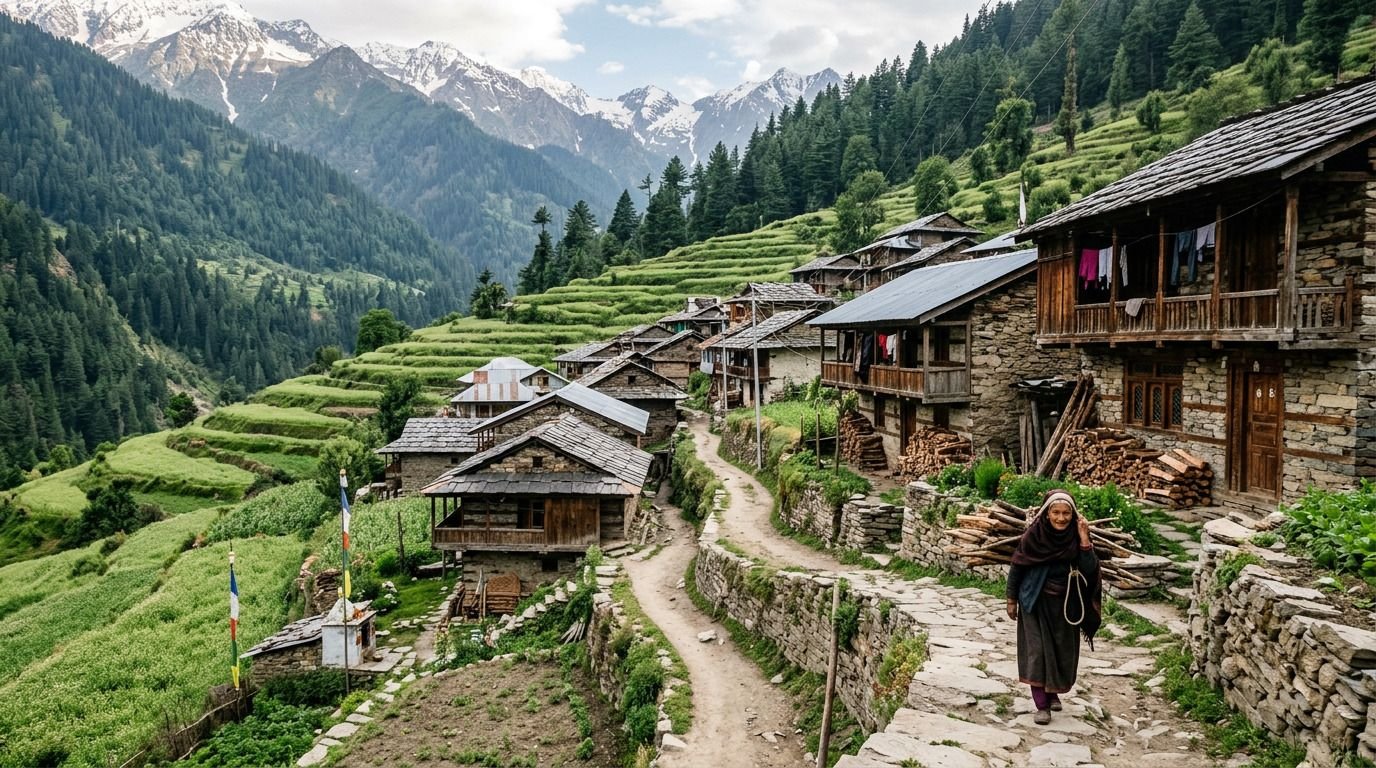
Many trekking routes in India pass through or near mountain villages, offering a respectful glimpse into regional life. Traditional stone or wooden architecture, local food, and the rhythm of community life in these areas often stand in contrast to life in India’s cities.
Trekkers who pass through these villages may observe daily routines, local customs, and regional building styles that vary significantly from one mountain region to another. These moments add a cultural layer to the physical journey, reminding travellers that trekking in India is not only about landscapes, but also about the communities who call these mountains home.
Small Moments That Become the Biggest Memories
Ask any experienced trekker what they remember most, and it is rarely the summit alone. It is often a sudden view that appears after a steep climb, clouds drifting through a valley below, or a short conversation with a local shepherd along the trail.
These unplanned moments tend to stay with travellers longer than the itinerary itself. A quiet stretch of trail with no one else in sight, or a few minutes spent sitting beside a mountain stream, often becomes the story people tell when they get home.
The Beauty of Slowing Down
Trekking forces a different pace. There are no schedules to rush toward, no queues to beat, just the steady rhythm of walking. This slower pace naturally encourages travellers to notice details they might otherwise overlook: the texture of a rock face, the pattern of light through tree cover, or the sound of their own footsteps on a quiet trail.
This shift in pace is part of why trekking in India appeals to travellers seeking something more immersive than conventional sightseeing. It is not about covering more ground. It is about experiencing the ground more fully.
The Personal Journey Behind the Physical Journey
Beyond the scenery, trekking also tests patience, preparation, and adaptability. Unpredictable weather, changing terrain, and physical effort all require trekkers to adjust as they go. Reaching a challenging viewpoint or completing a demanding section of trail often brings a quiet sense of achievement that stays with travellers well after the trek ends.
This personal element, built through preparation and perseverance rather than guaranteed outcomes, is part of what makes trekking in India more than just a scenic walk. It becomes a journey of capability as much as a journey through landscape.
What Makes Trekking in India So Diverse?
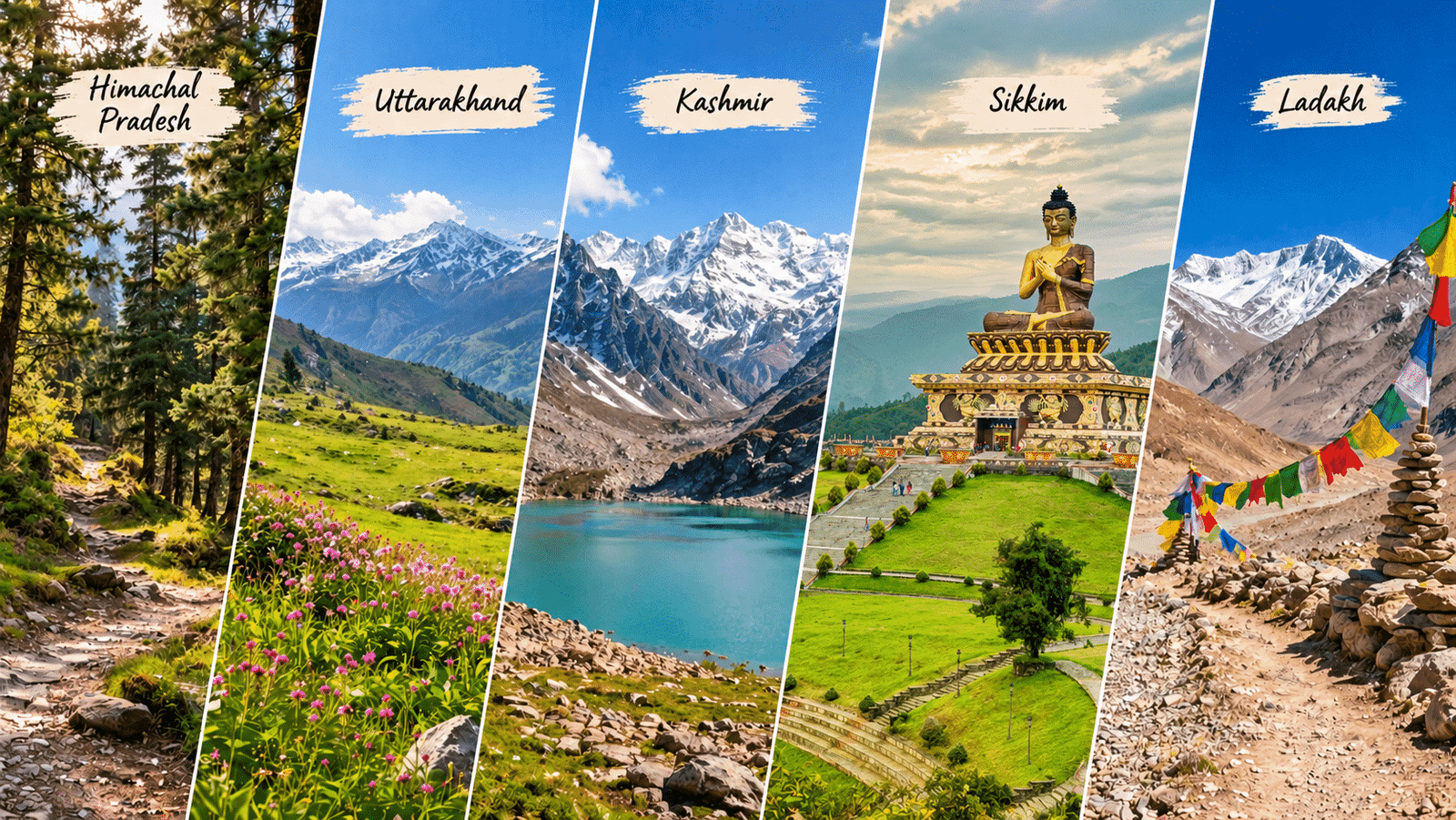
India’s geography is unusually varied for a single country, and this is reflected directly in its trekking experiences. The Himalayan range alone stretches across several states, each with its own climate, terrain, and character.
Himachal Pradesh offers alpine meadows and forested valleys. Uttarakhand is home to river valleys, pilgrimage routes, and high-altitude terrain. Jammu & Kashmir presents dramatic mountain scenery and remote high passes. Sikkim brings dense forests and views toward some of the world’s highest peaks. Ladakh offers stark, high-altitude desert landscapes unlike anywhere else in the country. Northeast India, meanwhile, provides a greener, less-explored trekking landscape shaped by heavy rainfall and dense vegetation.
This diversity means that trekking trails in India rarely feel repetitive. A trekker who has walked through Himachal’s meadows will find an entirely different experience in Ladakh’s high desert, or in Sikkim’s forested slopes. It is this range of terrain and climate that makes Indian trekking routes so difficult to summarise in a single description. To compare different regions and explore more routes, browse our guide to mountain trekking in India.
What Should You Consider Before Choosing a Trek?
Choosing the right trek starts with an honest look at a few key factors.
Trek difficulty and altitude matter most. Some trails are suited to beginners, while others involve steep climbs, high-altitude sections, and multiple days of sustained effort. Duration also plays a role, since treks can range from a single day to several weeks, depending on the region and route.
Season and weather conditions vary significantly across India’s trekking regions, and the right time to visit one trail may not suit another. Terrain, fitness level, and prior trekking experience should also factor into the decision, since rocky, high-altitude trails demand a different level of preparation than forested lower-altitude routes.
Equipment needs will vary by season and elevation, and travellers should also consider whether they want the support of a guide or trekking operator, particularly for routes that involve remote terrain or changeable weather. Responsible travel practices are worth factoring in from the planning stage, not as an afterthought.
The Beauty of Responsible Trekking
The landscapes that make trekking in India so rewarding also depend on how travellers treat them. Simple habits make a meaningful difference: carrying waste back rather than leaving it on the trail, staying on designated paths where applicable, and avoiding unnecessary disturbance to local wildlife.
Respecting local communities matters just as much as respecting the land. This means being mindful of customs, asking before photographing people, and supporting local economies where possible. Reducing environmental impact, whether through responsible water use or careful campsite selection, helps preserve these trails for the travellers who will walk them next.
Responsible trekking is not a separate consideration from the experience itself. It is part of what keeps India’s trekking landscapes beautiful for the long term.
Untold Beauty |
What Travellers May Experience |
Why It Makes Trekking Special |
|
Mountain landscapes |
Valleys, ridges and panoramic views | A closer connection with nature |
|
Forest trails |
Changing vegetation and natural sounds |
Immersive surroundings |
|
Meadows |
Open mountain landscapes |
Peaceful and scenic experience |
|
Local villages |
Regional lifestyles and architecture |
Cultural discovery |
|
Mountain weather |
Clouds, light and changing views |
Different scenery throughout the day |
| Remote viewpoints | Less accessible landscapes |
Sense of exploration |
Why a Guided Trek Can Make the Experience Better
While not every trek requires a guide, experienced support can meaningfully improve the overall experience, particularly on longer or more remote routes. Route planning benefits from local knowledge of terrain, weather patterns, and seasonal conditions that are not always obvious to first-time visitors.
Trek logistics, including group coordination, safety preparation, and understanding changing terrain, are areas where experienced operators can add real value. For travellers less familiar with high-altitude trekking or unfamiliar regions, this kind of support can make the difference between a stressful trip and an enjoyable one.
Explore Trekking Experiences With The Himalayan Outback
The Himalayan Outback is a trekking and adventure travel company working across India’s mountain regions. For travellers planning a trekking experience, exploring the mountain trekking options available through The Himalayan Outback is a useful starting point for understanding what different trails and regions involve.
Whether a traveller is drawn to the high passes of Ladakh, the forested valleys of Uttarakhand, or the remote terrain of the Zanskar range, seeking professional guidance can help match the right trek to individual interests, experience level, and travel plans.
Travellers researching trekking experiences and local trekking operators can also find The Himalayan Outback through its Google Business Profile, where available business information can help with learning more about the company and making an initial enquiry. This is a useful way to explore trekking in India options alongside direct research on specific trails and regions.
Why Trekking Is About More Than Reaching the Destination
It is easy to think of a trek as a path toward a single goal: a summit, a viewpoint, or a final destination. But the real value of trekking in India often lies in everything that happens along the way.
The changing landscapes, the shifting light, the sound of a forest trail, and the brief encounters with mountain communities all contribute to an experience that a single viewpoint cannot capture on its own. The challenges faced along the trail, and the quiet moments found in between, are just as much a part of the journey as the destination itself.
Planning Your Next Trekking Experience in India
For travellers considering their next trek, a few questions are worth thinking through early. What kind of landscape holds the most appeal, forested valleys, high-altitude passes, or open meadows? What is the traveller’s current trekking experience, and how does that match the difficulty of the routes being considered?
Preferred season, trip duration, and difficulty level all shape which trekking destinations in India will be the best fit. For travellers who want support navigating these decisions, The Himalayan Outback offers a starting point for exploring suitable trekking options based on individual plans and experience.
Conclusion: The Beauty Worth Walking For
The beauty of trekking in India is not limited to famous viewpoints or mountain summits. It lives in the changing landscapes along a single trail, the quiet of a forest path, the light moving across a valley at sunrise, and the brief conversation with a villager along the way.
These are the details that stay with travellers long after a trip ends, and they are only accessible to those willing to slow down and walk. For those ready to explore this kind of experience, The Himalayan Outback offers a place to start researching suitable trekking options across India’s mountain regions.
Ready to Plan Your Trek?
If you are considering a trekking experience in India and want help choosing the right route for your interests and experience level, The Himalayan Outback can help you think through your options and plan your next mountain journey.
Frequently Asked Questions
What makes trekking in India a unique travel experience?
Trekking in India combines dramatic geographic diversity, from Himalayan passes to forested valleys, with close access to local mountain communities. This combination of varied terrain and cultural proximity is difficult to find in many other trekking destinations worldwide.
What kind of beauty can travellers discover while trekking in India?
Travellers can experience changing landscapes, shifting mountain light, forest sounds, remote valleys, and glimpses of local village life, much of which is inaccessible by road and only visible to those walking the trail.
What should beginners consider before choosing an Indian trek?
Beginners should look at trek difficulty, altitude, duration, and season, while also being honest about their fitness level and prior trekking experience. Choosing a trail suited to these factors helps ensure a safer, more enjoyable experience.
How can a trekking operator help with planning a trek?
An experienced trekking operator can assist with route selection, local knowledge of terrain and weather, logistics, and group coordination, which is particularly useful for travellers unfamiliar with a specific region or high-altitude trekking in general.